
Barbotine Oyster Plate
Vintage French Barbotine Oyster Plate, Faïence de St Amand
Period
Mid-20th century, French
Size
9⅜ inches across, 1⅛ inches thick
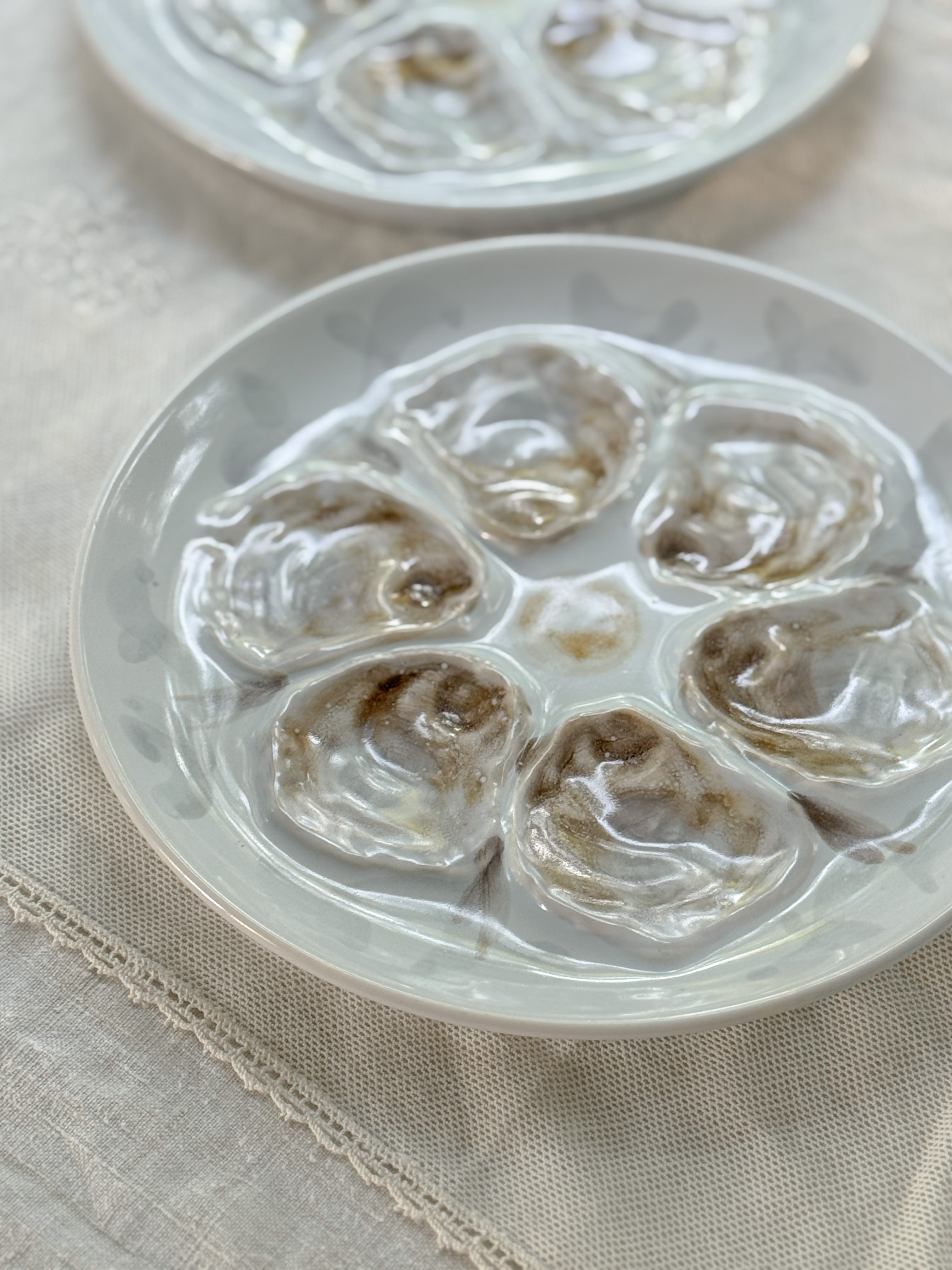
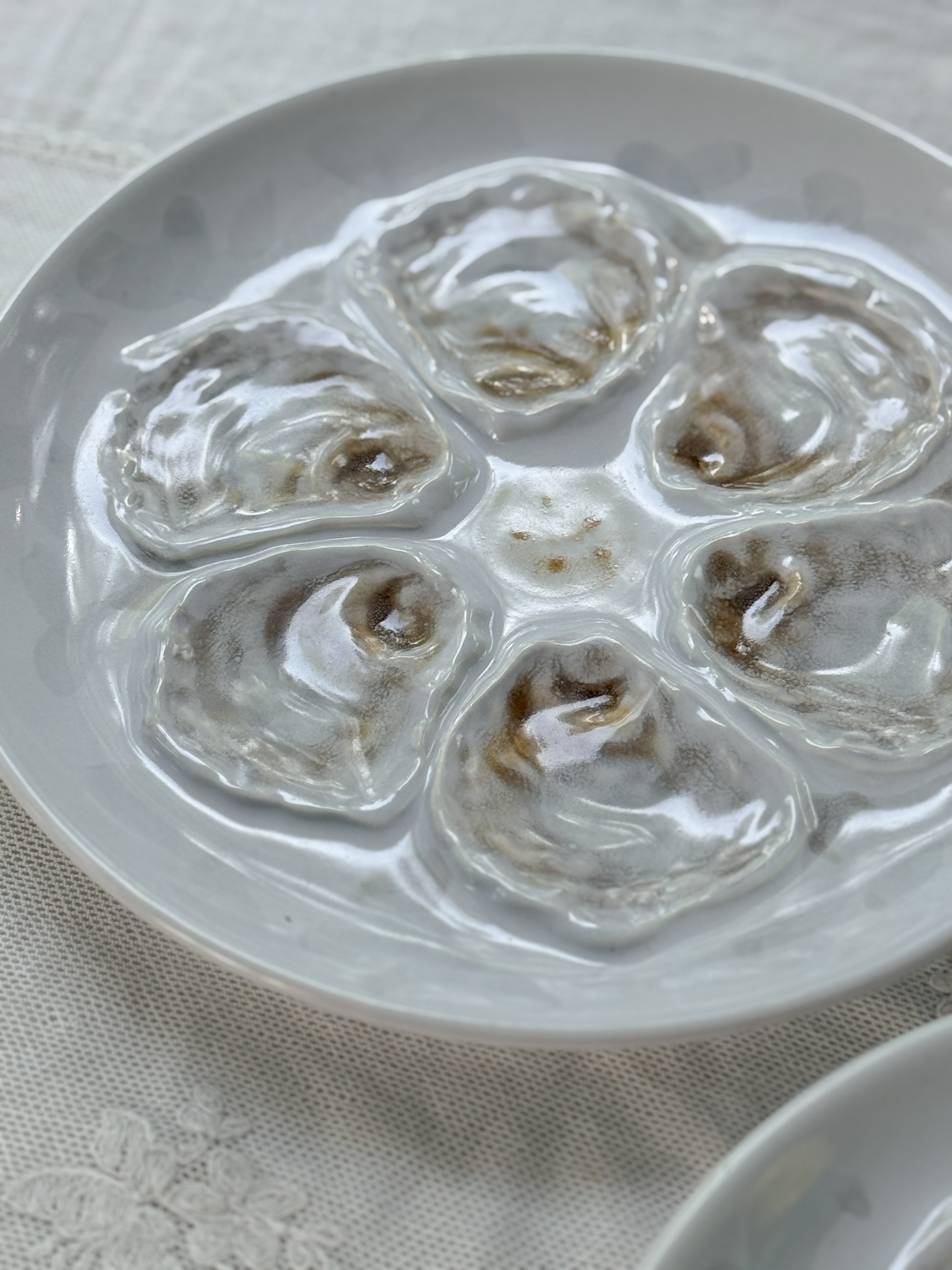
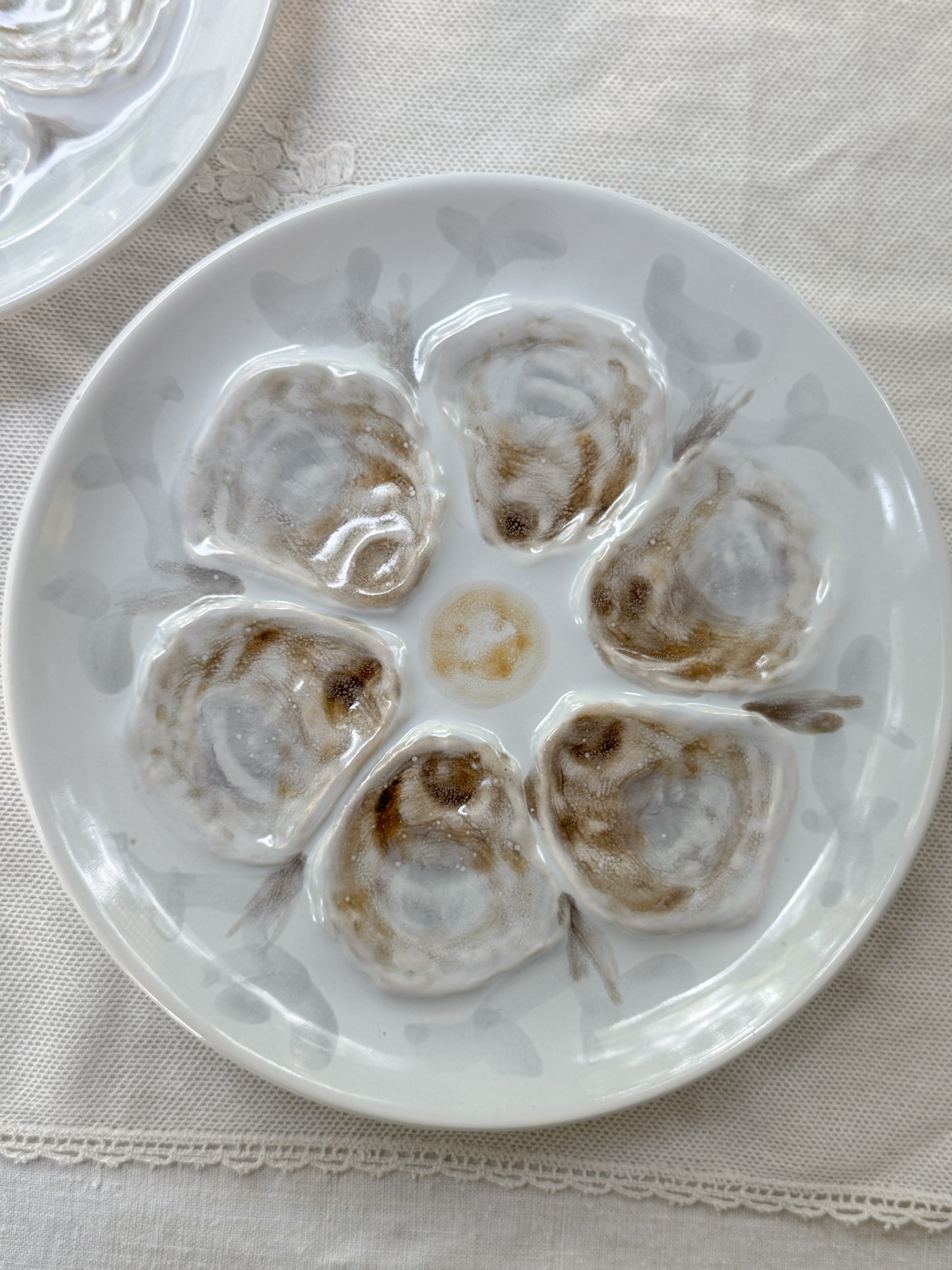
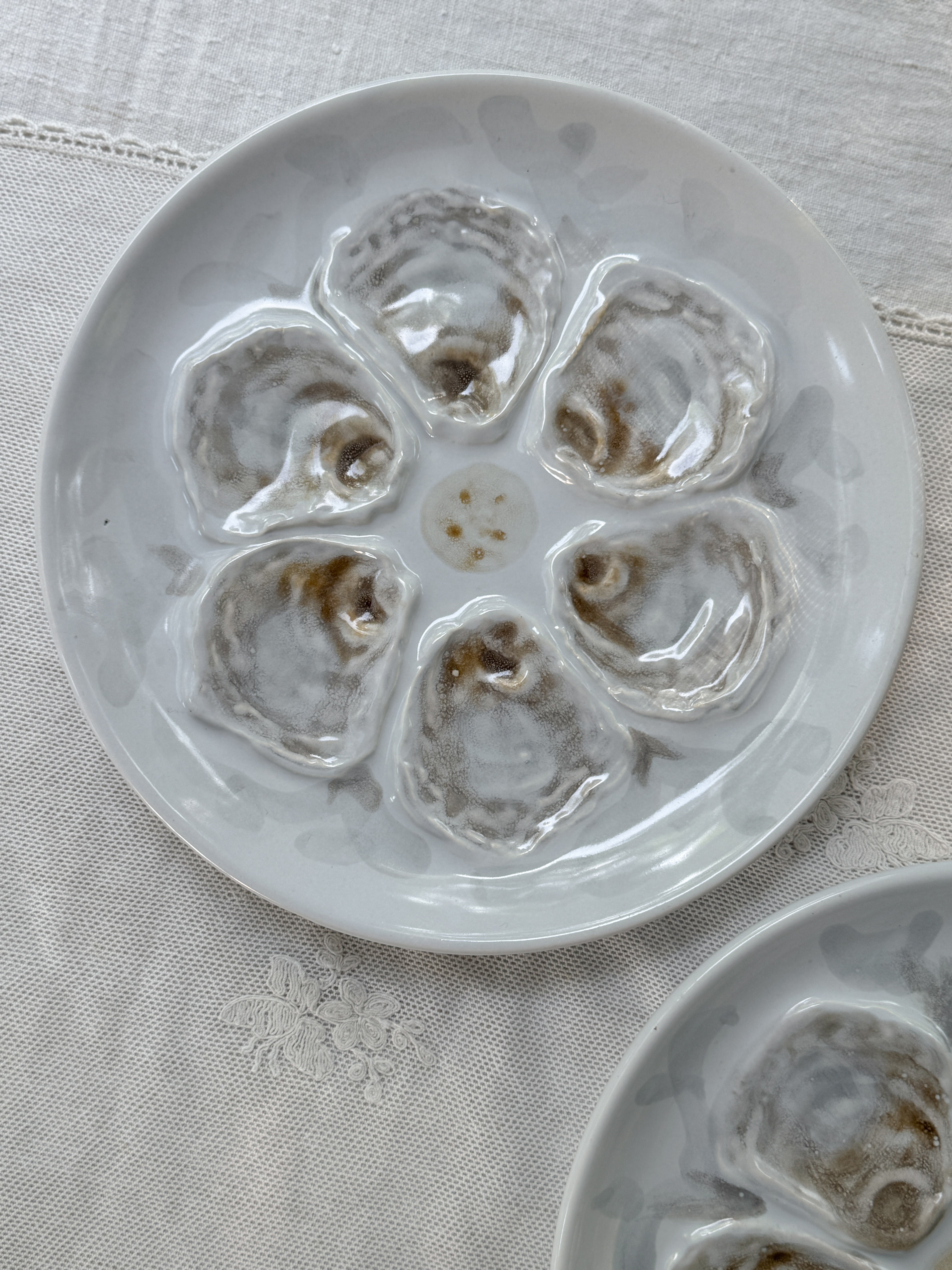
A French barbotine oyster plate from Faïence de St Amand, which is majolica by technique and form, molded relief earthenware finished in a hand-painted glaze.
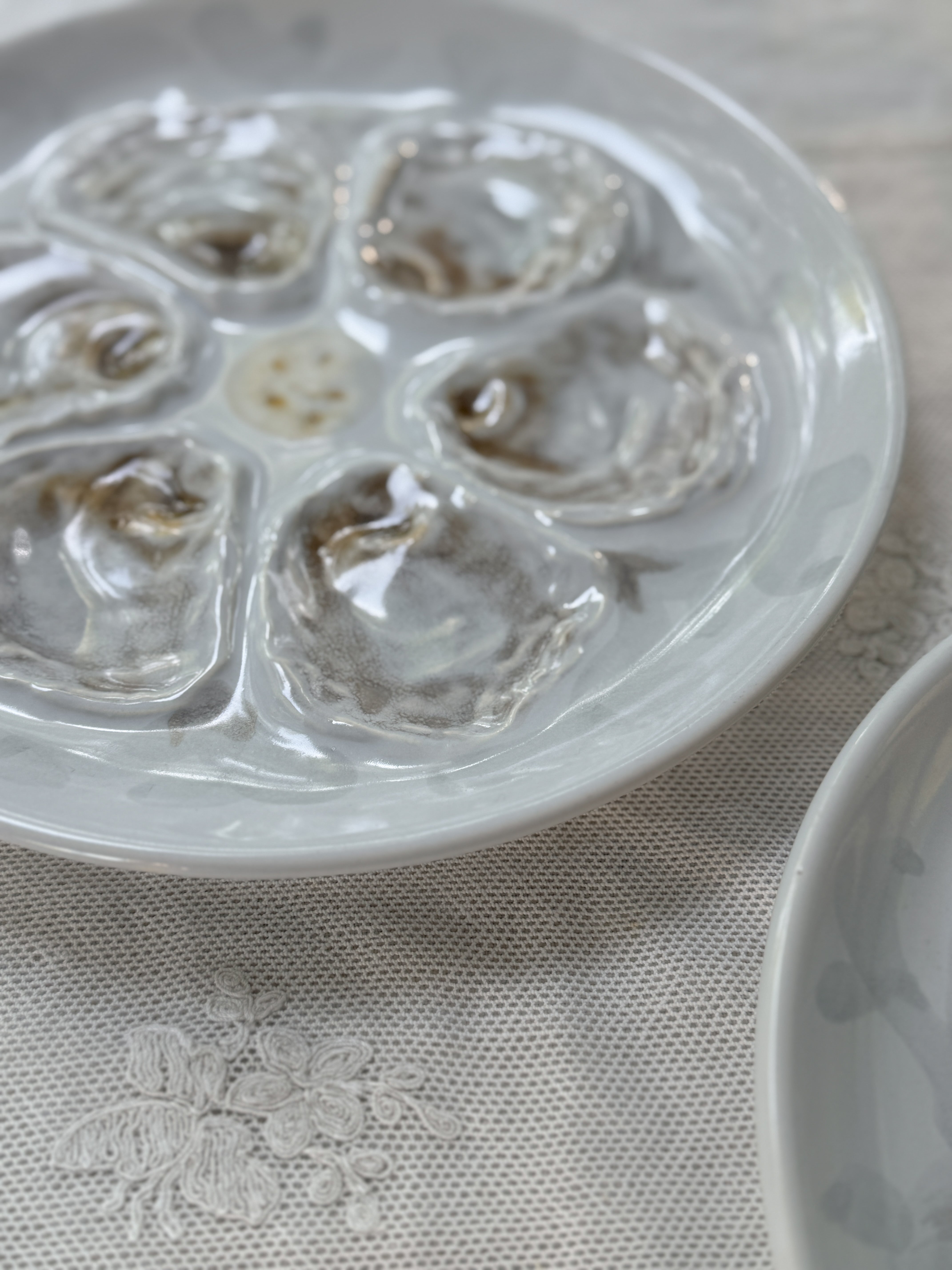
Six wells are shaped and sculpted into individual oyster shells, radiating around a small central well for sauce or a lemon half. The glaze is a soft taupe and grey-brown wash over cream, with faint grey sprigs of seaweed painted between the wells, and it pools a little heavier in the low points of each shell.
The glaze is clean throughout, with no chips or hairlines. Sold as found.
Historical Context
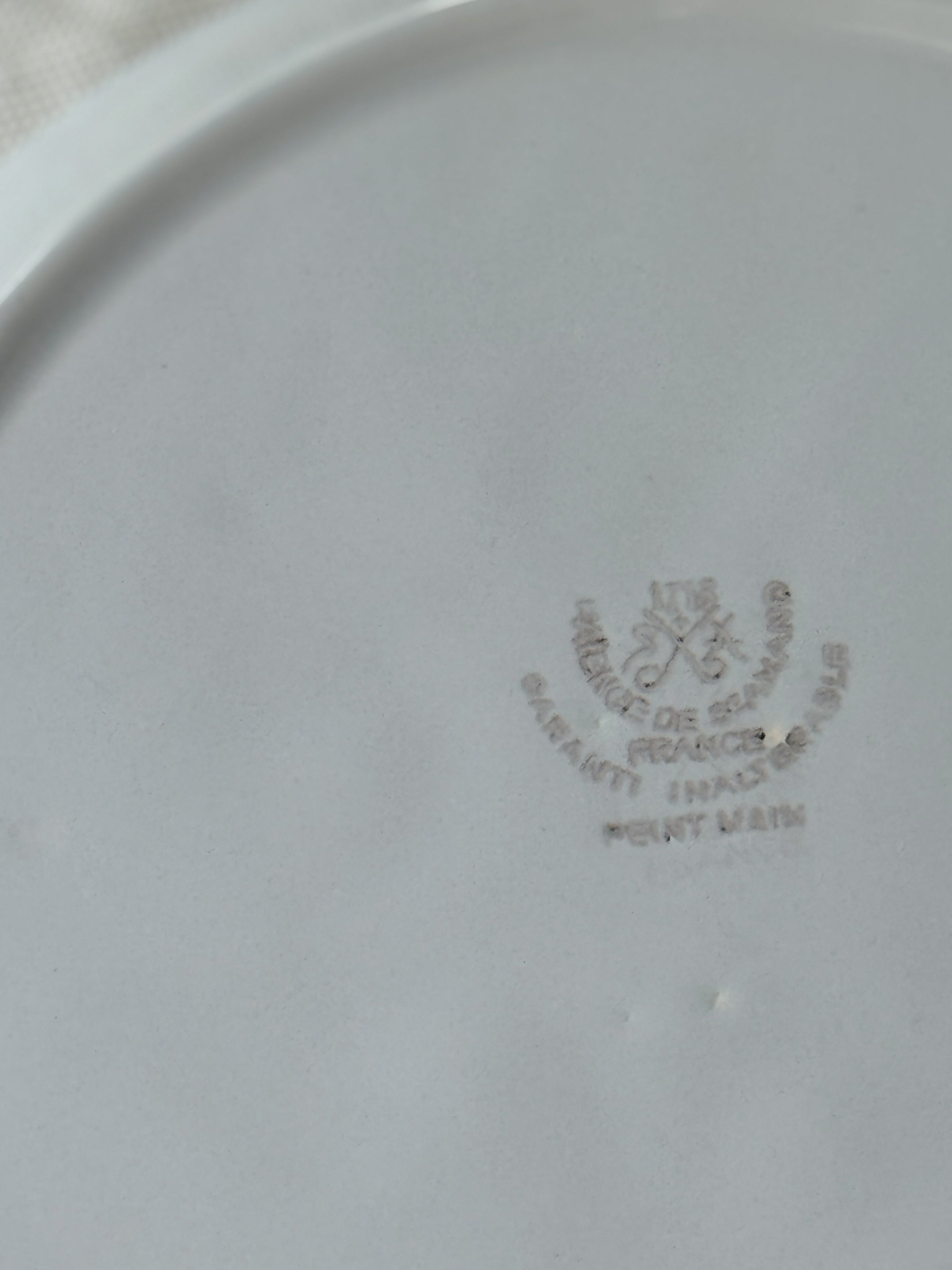
Saint-Amand-les-Eaux, in the French Nord near the Belgian border, has made ceramics since 1705, when Nicolas Desmoutiers first set up a faience works there, and the town is still best known for it. Garanti inaltérable was the guarantee against fading printed on French tableware backstamps through the twentieth century, and peint main marks the piece as hand-painted rather than transfer-decorated. Oyster plates took their sculpted form in France in the nineteenth century, when eating oysters directly from a shell-shaped well became standard at the table, and factories kept the molds in production for decades after. Most Saint-Amand oyster plates on the market today are glazed green and white. This taupe and grey palette is the less common of the two.
Styling Ideas
Serve oysters on it the way it was made to, one in each well and the sauce or a lemon half in the center. Off the table, it works as a catchall for rings and studs, or hung on its own where the sculptural wells catch the light.
Choose options