
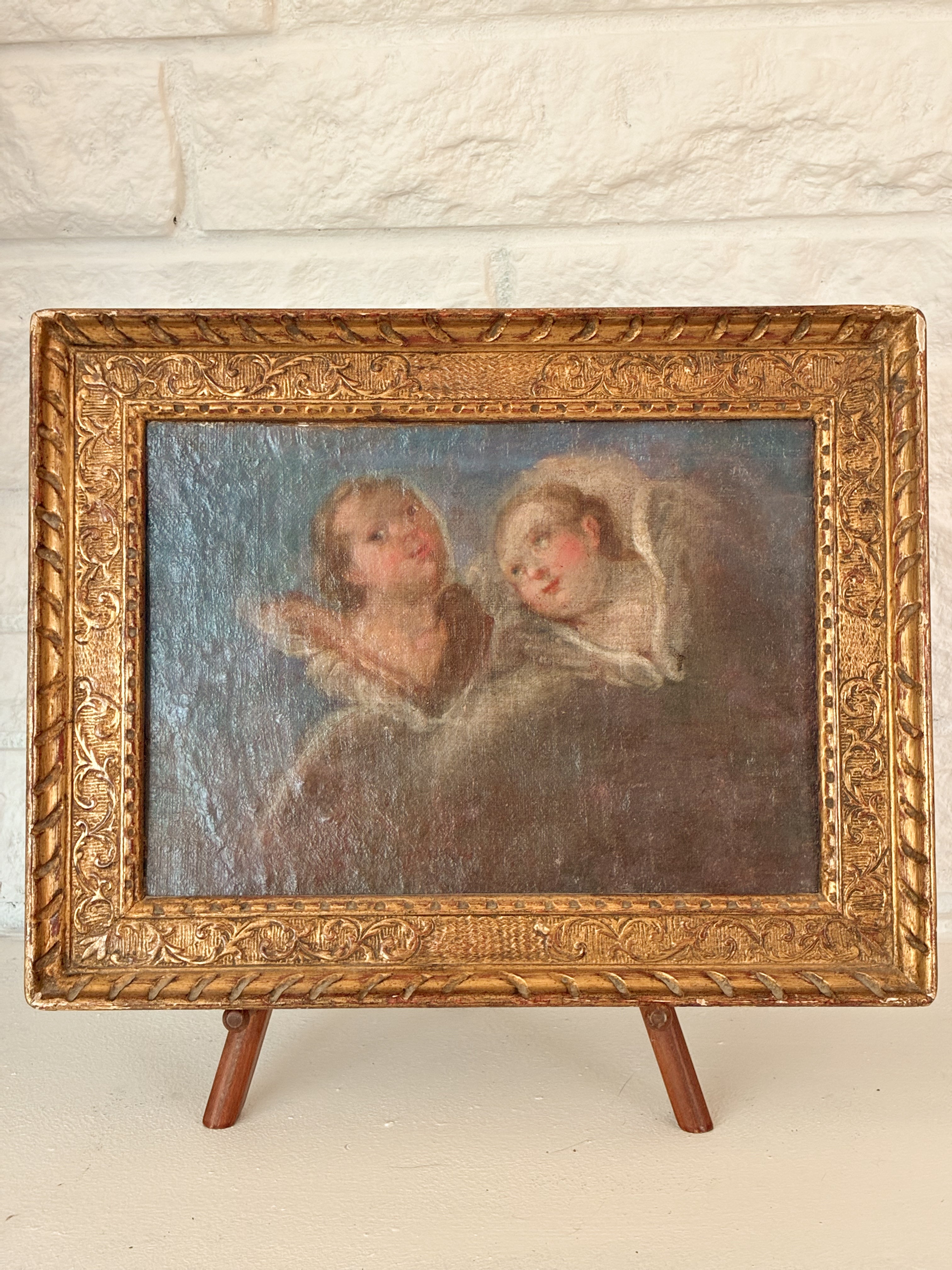
Two Cherubs — 18th-Century Oil on Panel
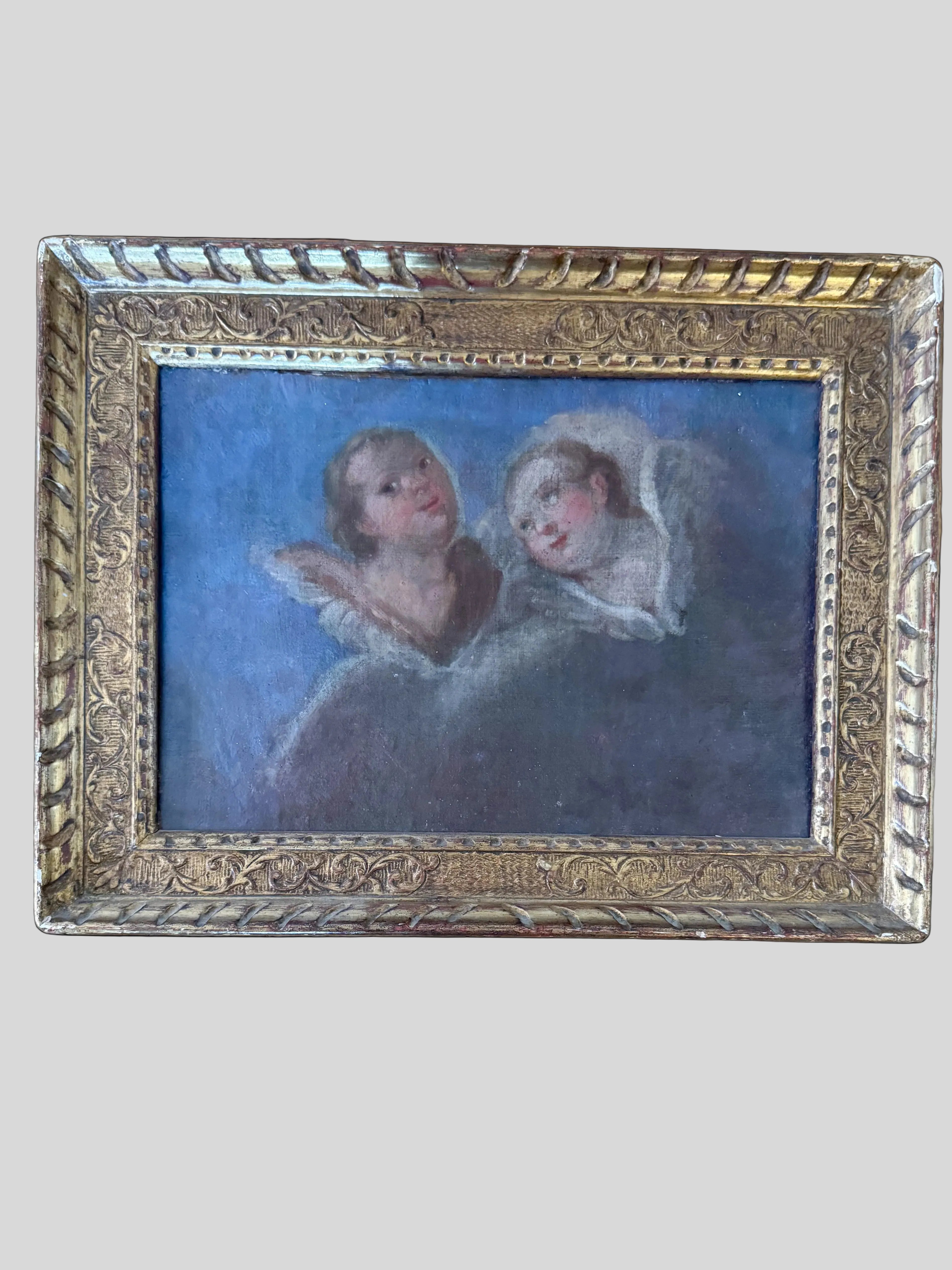
Têtes de Chérubins École française ou italienne, XVIIIe siècle / Two Cherubs
French or Italian School, 18th century
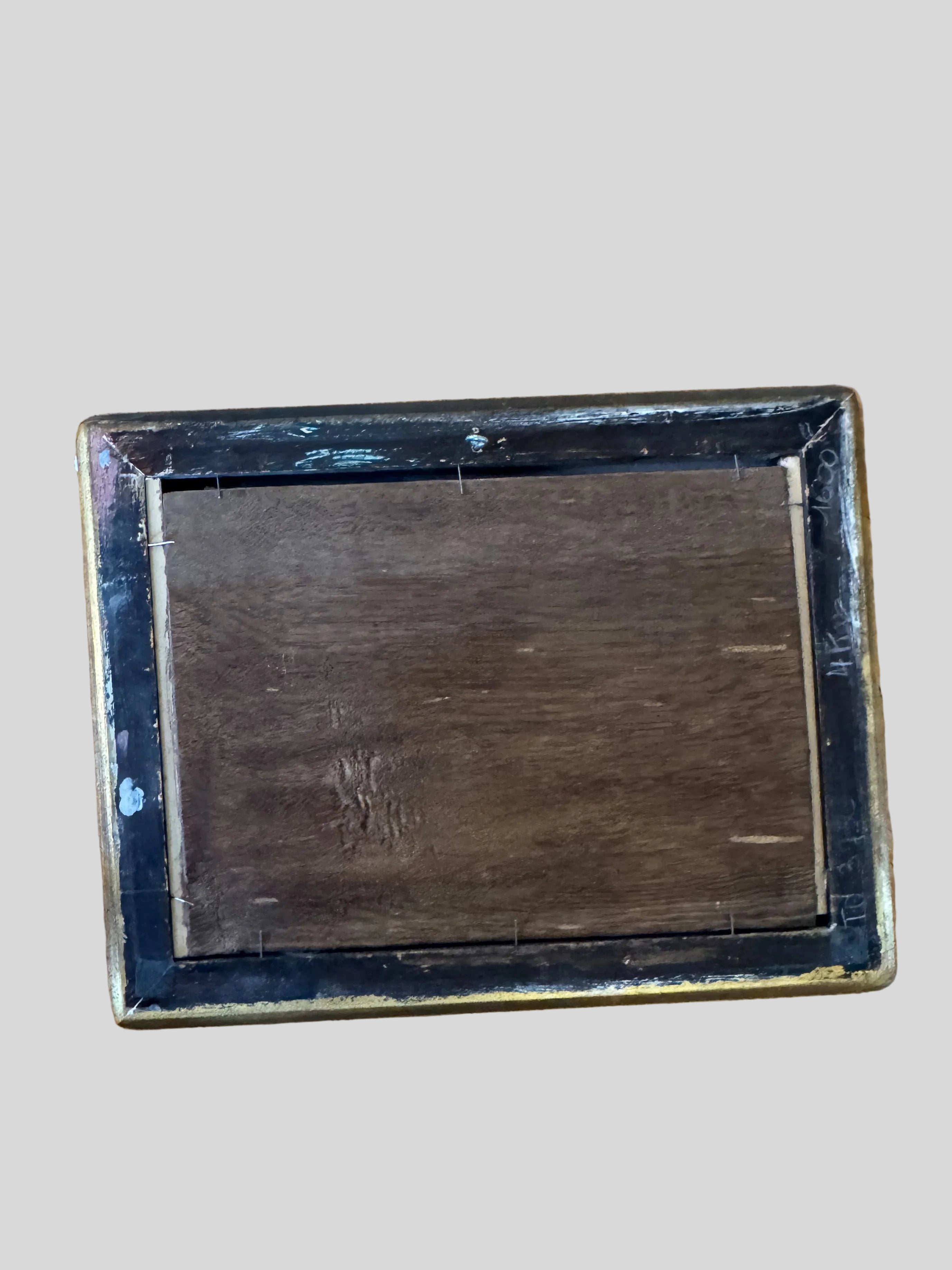
18th-century oil on canvas, marouflée sur panneau. Unsigned. Carved giltwood frame, early 19th century. Framed: 12.5 × 16 in.
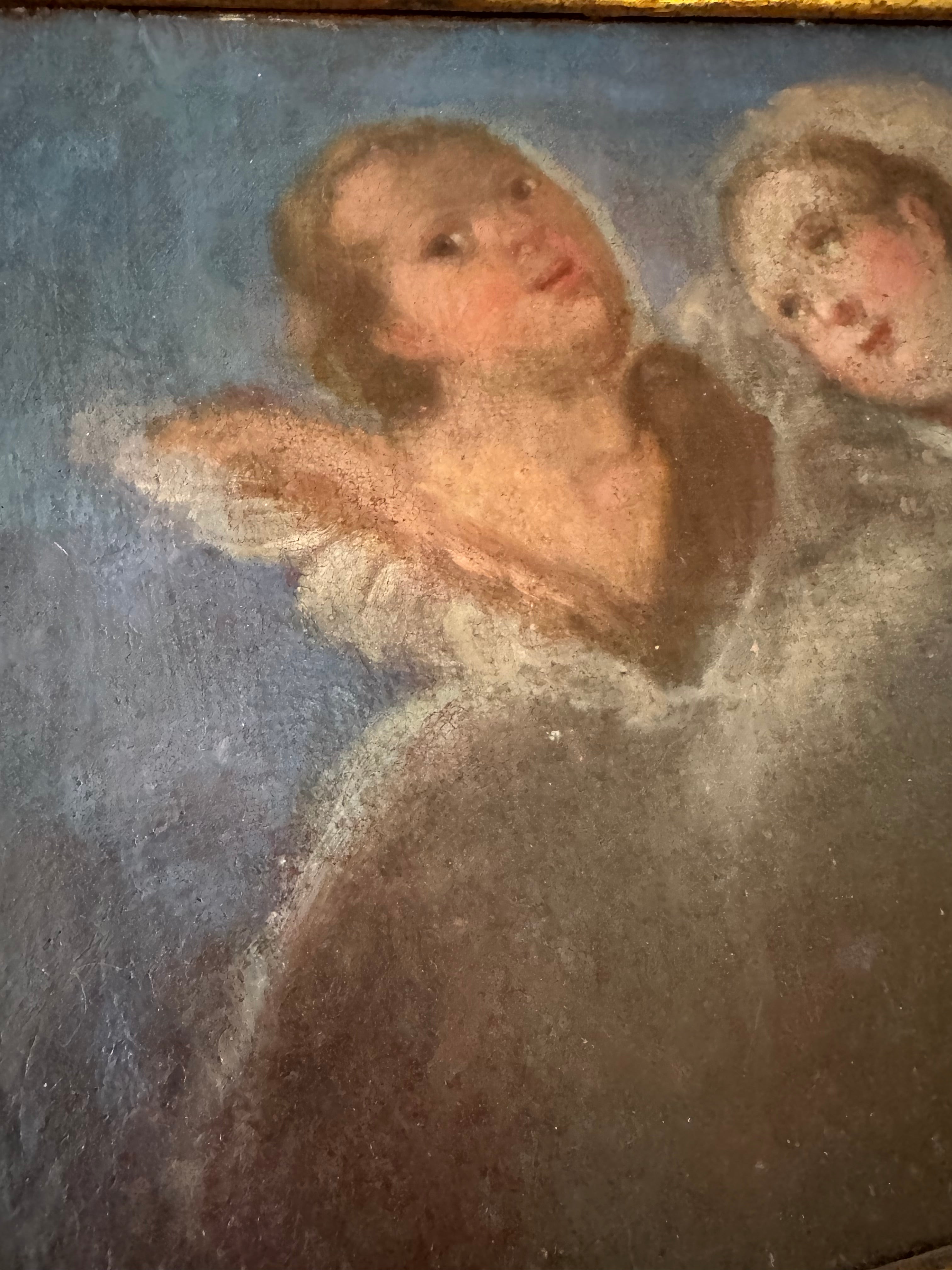
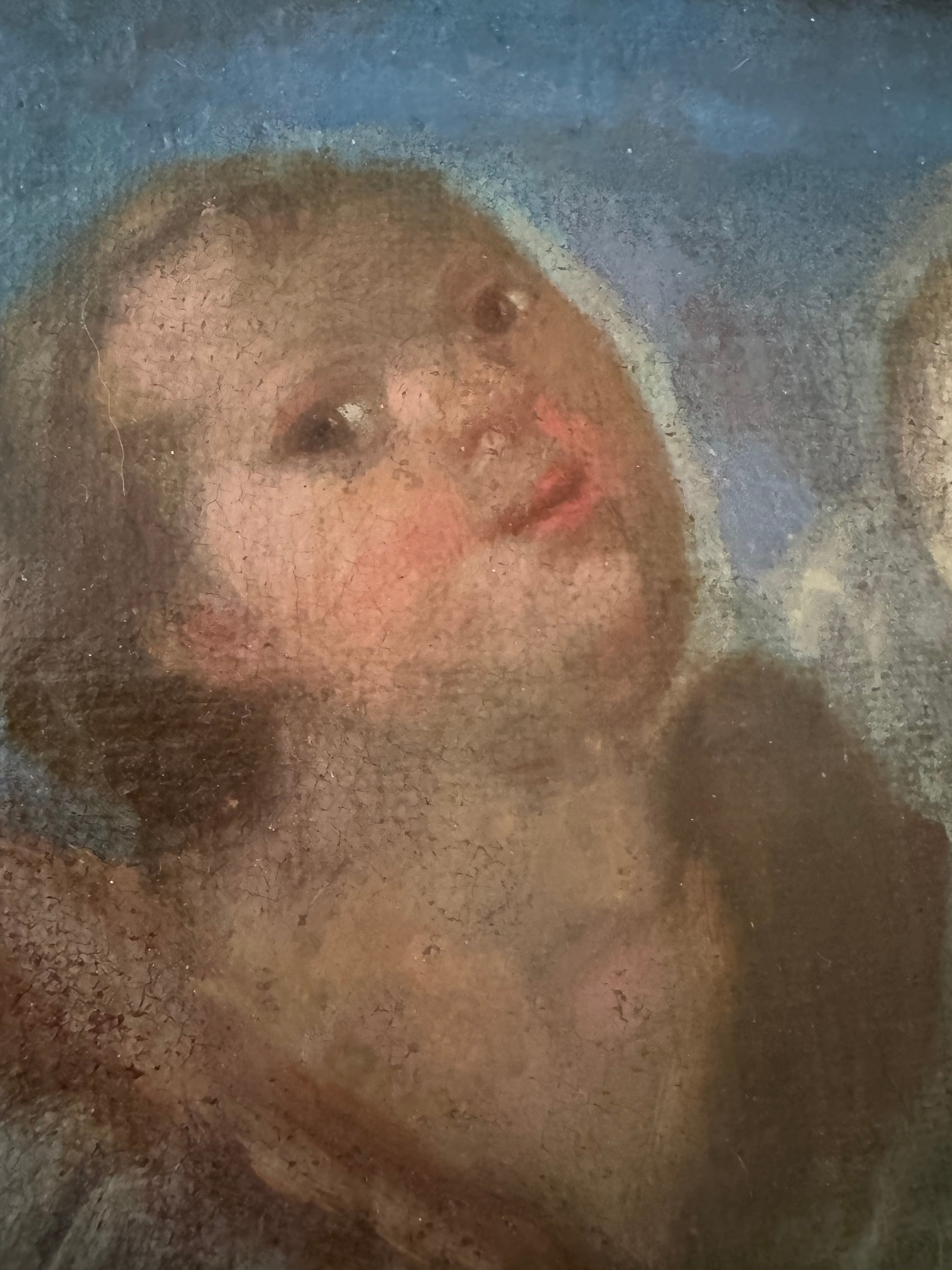
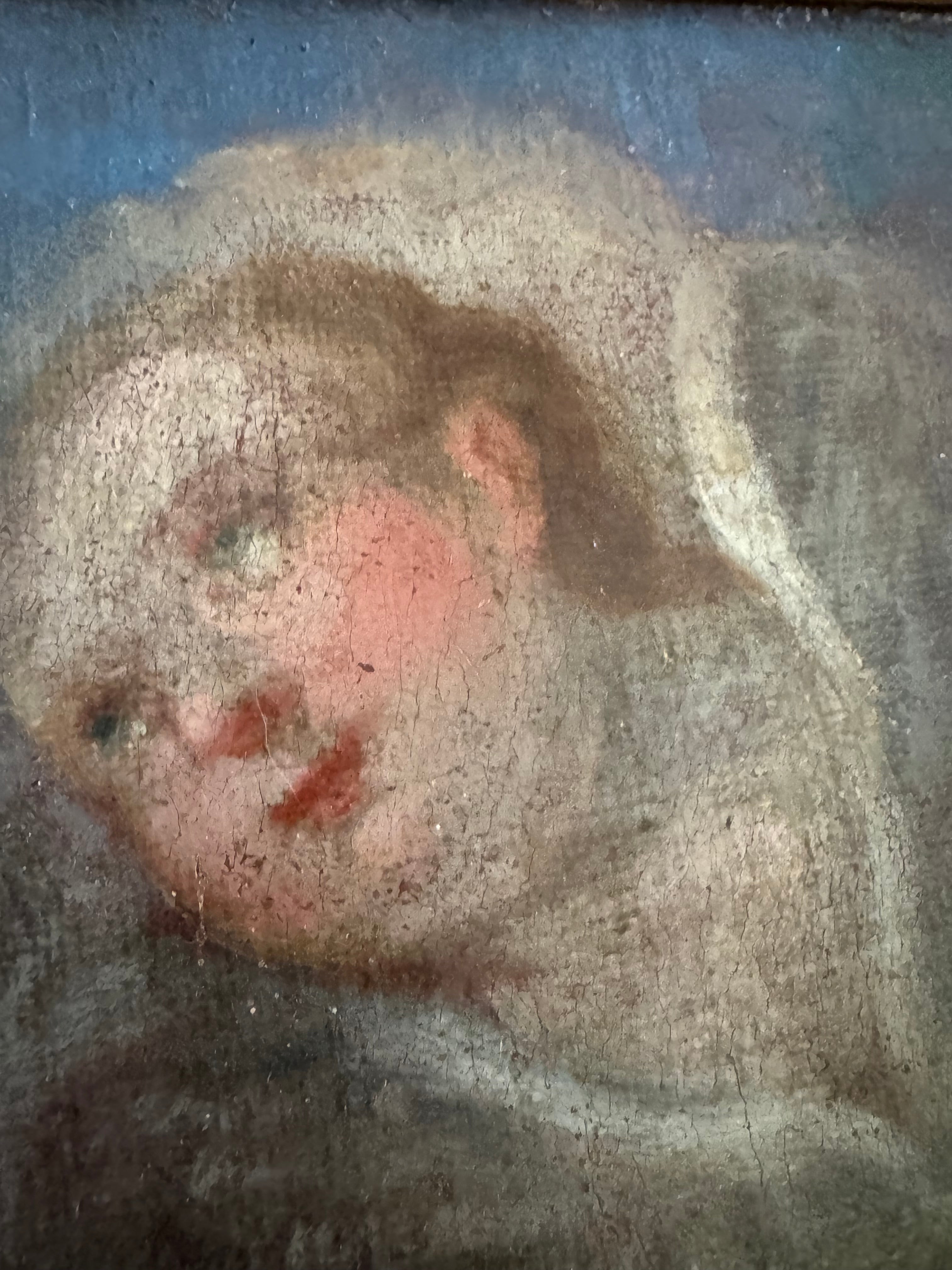
The subject is two cherub heads (têtes de chérubins) emerging from cloud against a celestial blue ground. The left figure gazes upward with one arm extended; the right peers from behind, partly obscured by cloud or drapery. Flesh tones are built up in thin translucent layers of soft pinks and warm creams, consistent with French and Italian Baroque and Rococo decorative painting practice.
The cherub as a motif in Western sacred painting derives from the biblical cherubim, celestial attendants to the divine. In French and Italian decorative painting of the 17th and 18th centuries, the tête de chérubin became a standard compositional element in altarpieces, church ceilings, and devotional canvases, typically appearing in the lower register of larger compositions to support or attend a central sacred figure. The upward gaze, the celestial blue ground, and the cropped format of this painting are consistent with a fragment or preparatory study (bozzetto) from such a program, in the tradition of painters such as Boucher and Natoire on the French side and the Tiepolo school on the Italian.
The technique of marouflage refers to the process of adhering a painted canvas onto a rigid panel support using an adhesive. It is a well-documented French conservation practice, undertaken to stabilize a canvas that had become fragile or damaged. The fine, deep craquelure visible across the paint surface is consistent with the natural aging of oil paint over more than two centuries.
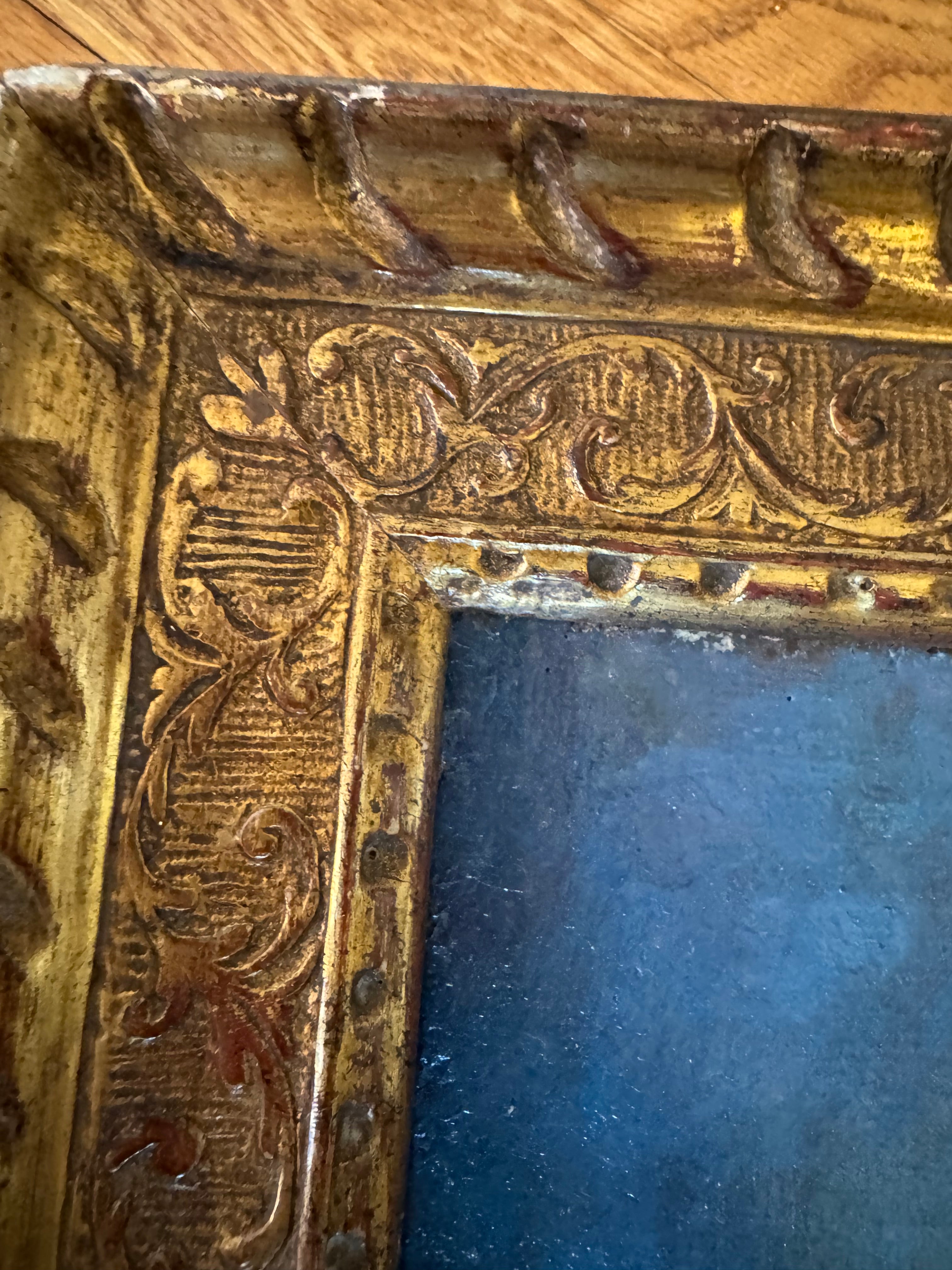
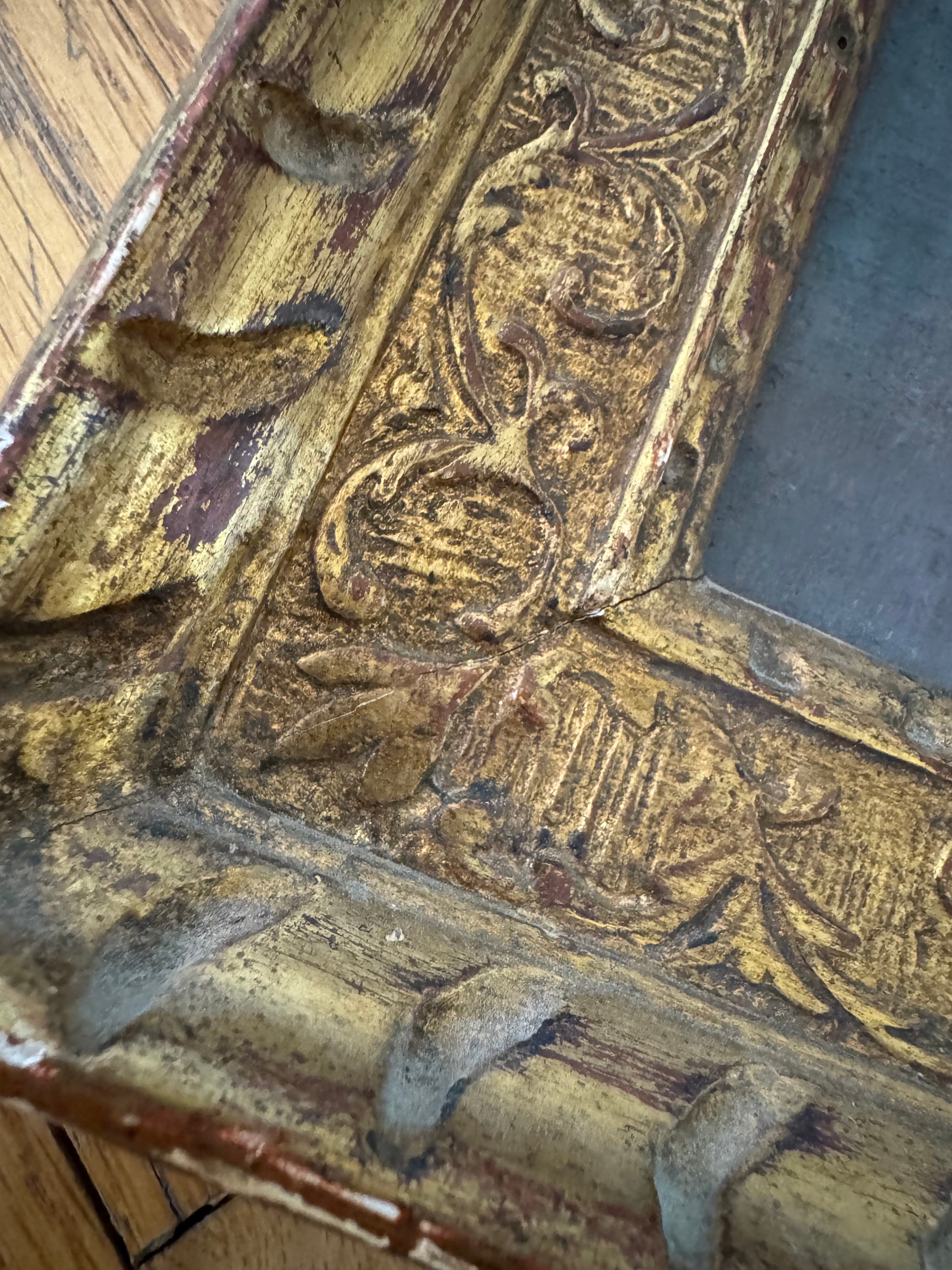
The frame is carved giltwood, early 19th century, executed in a vocabulary that remained continuous with 18th-century French decorative carving. The outer molding is gadrooned, a classical ornamental motif derived from fluting in reverse, common in French furniture and frame-making from the Louis XVI period onward. The intermediate field is carved with a continuous scrolling foliate vine (rinceaux), a motif with roots in ancient Roman ornament that entered the French decorative vocabulary through the Renaissance and remained standard through the Empire and Restauration periods. The inner sight edge is beaded. The gilding is water gilding applied over a traditional red clay bole ground; the bole is visible where the gilding has worn, which is consistent with age and not restoration. Corner join separation and surface accumulation are present throughout.
Choose options