
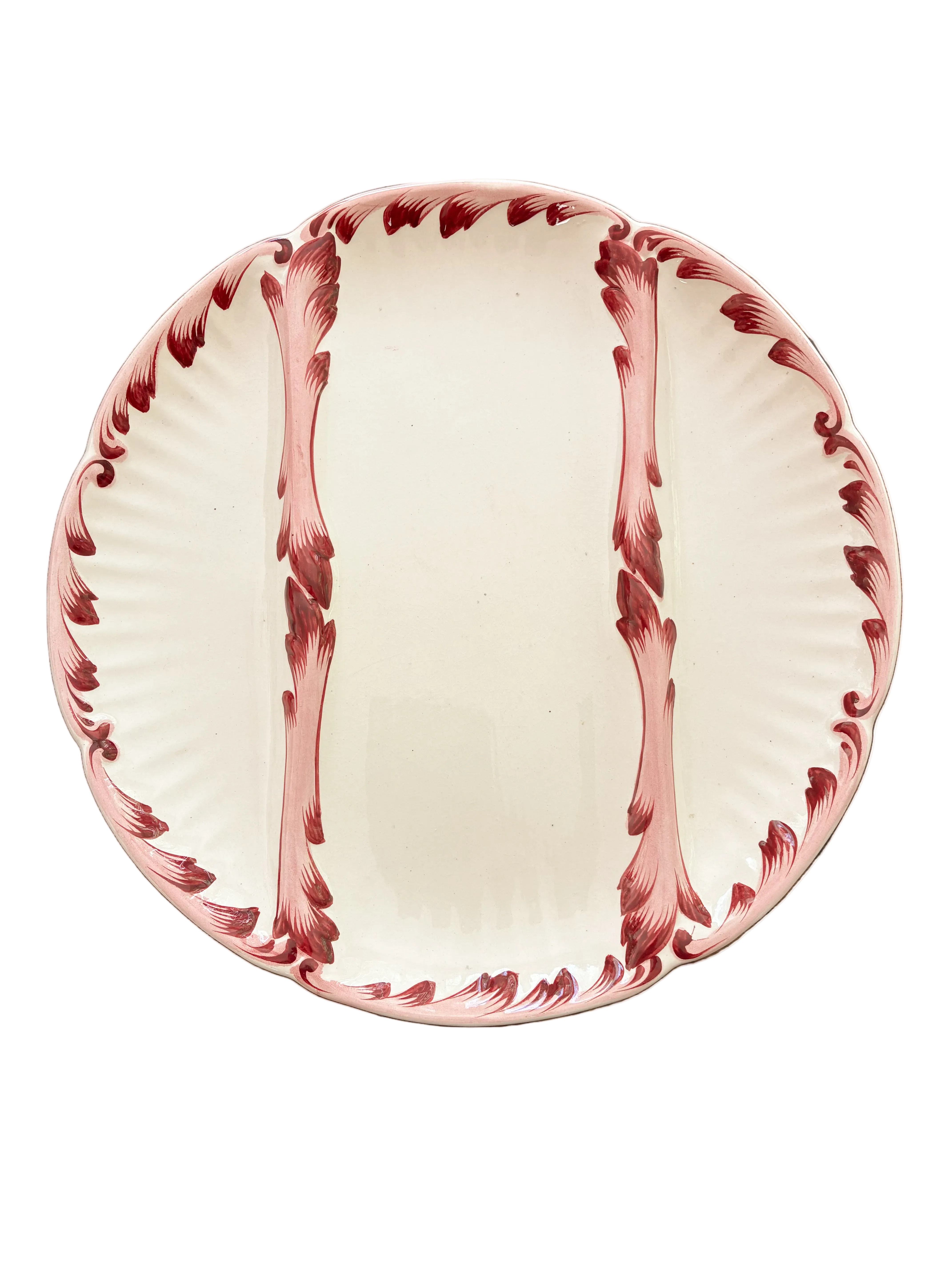
Red Barbotine Asparagus Plate, Sarreguemines
Period
Circa 1880 to 1900, French
Size
9⅞ inches across
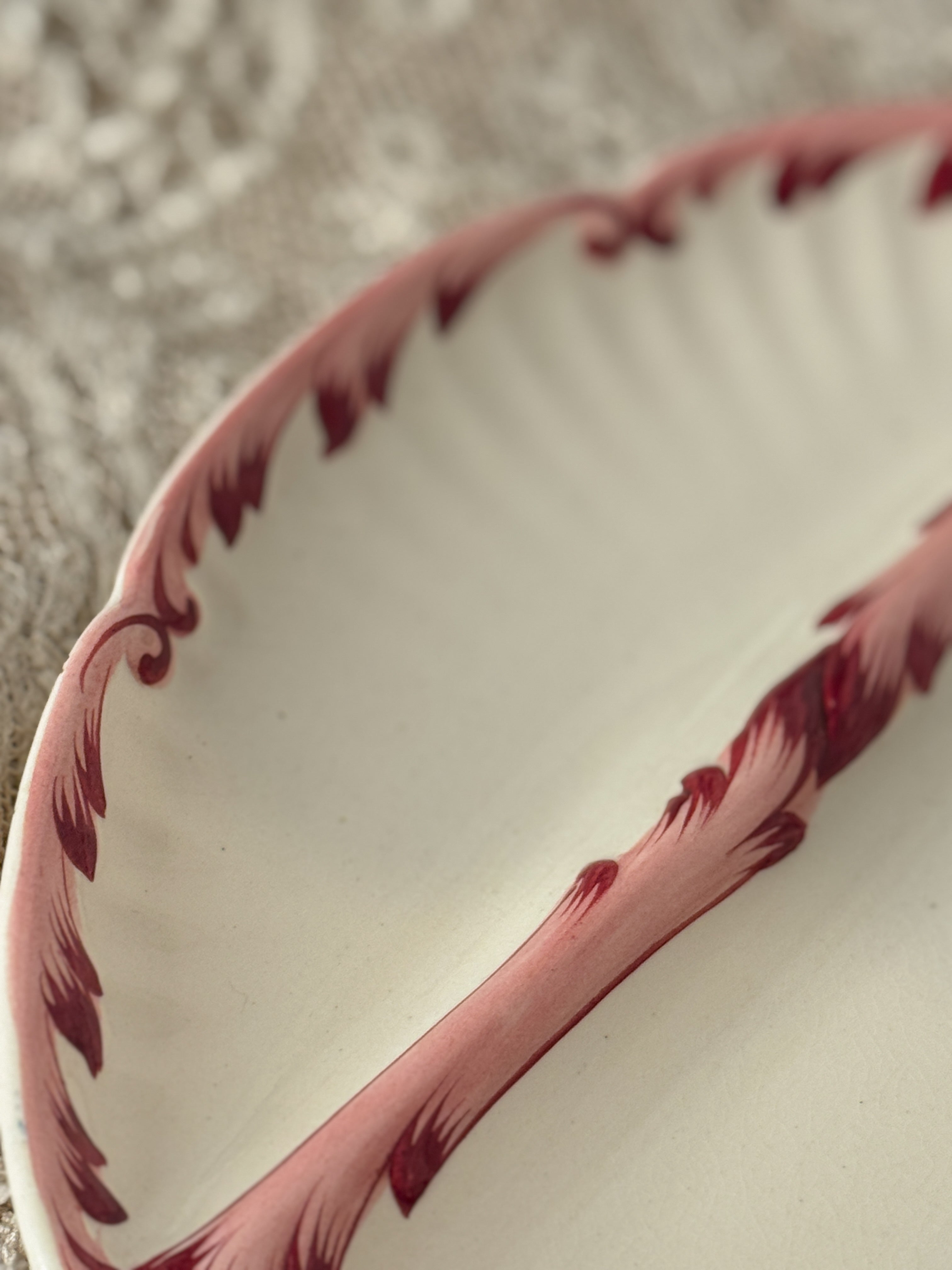
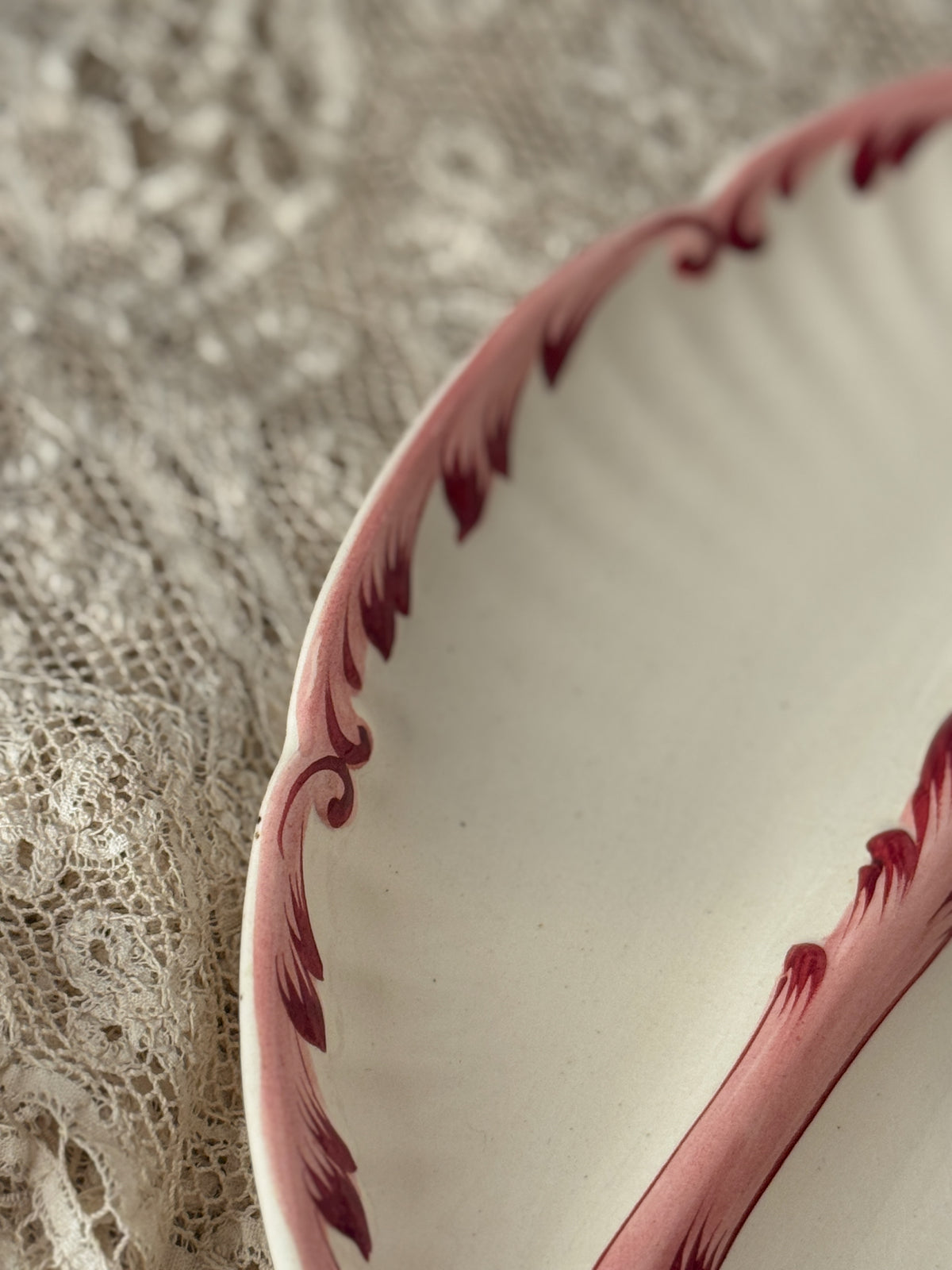
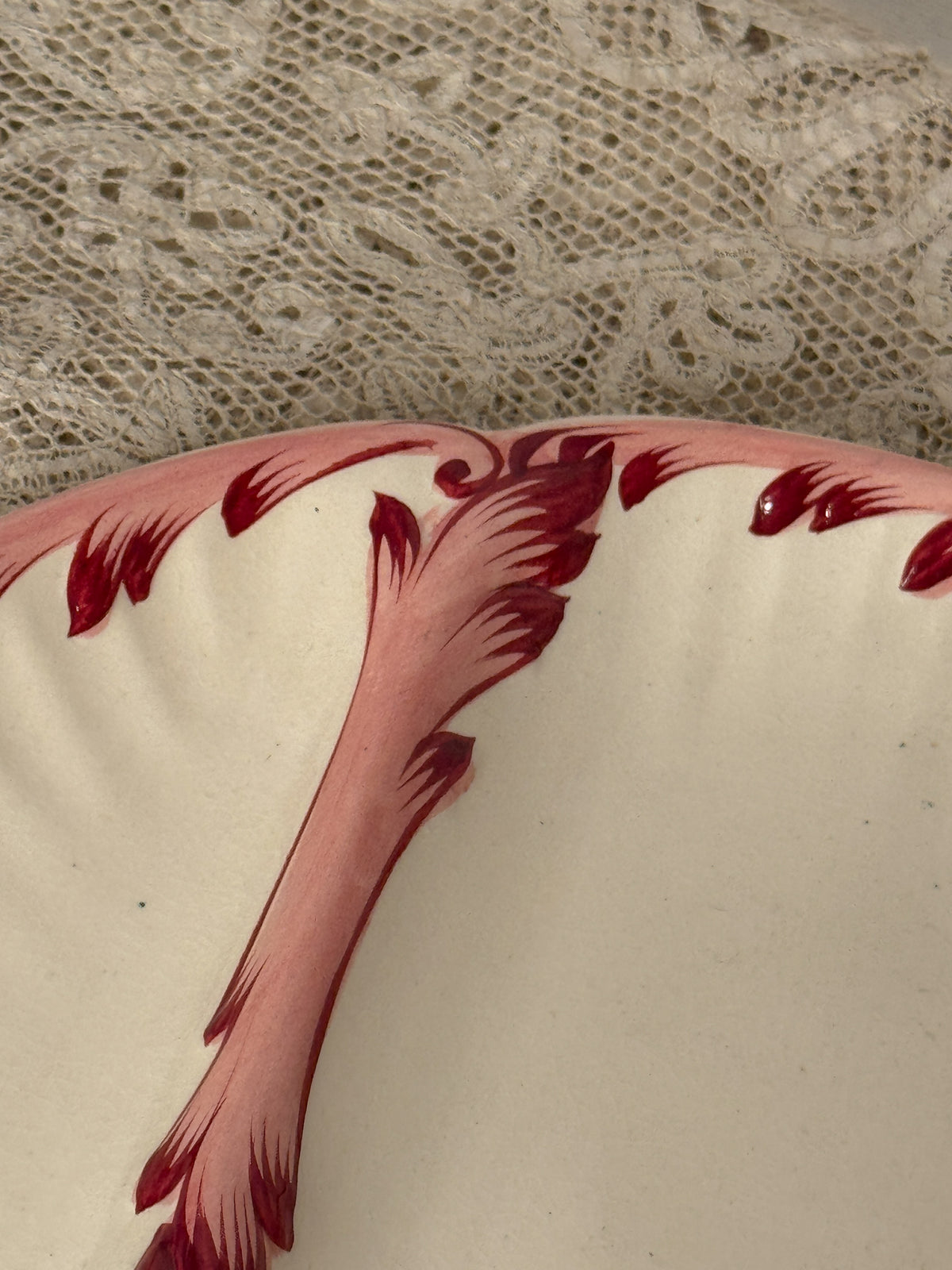
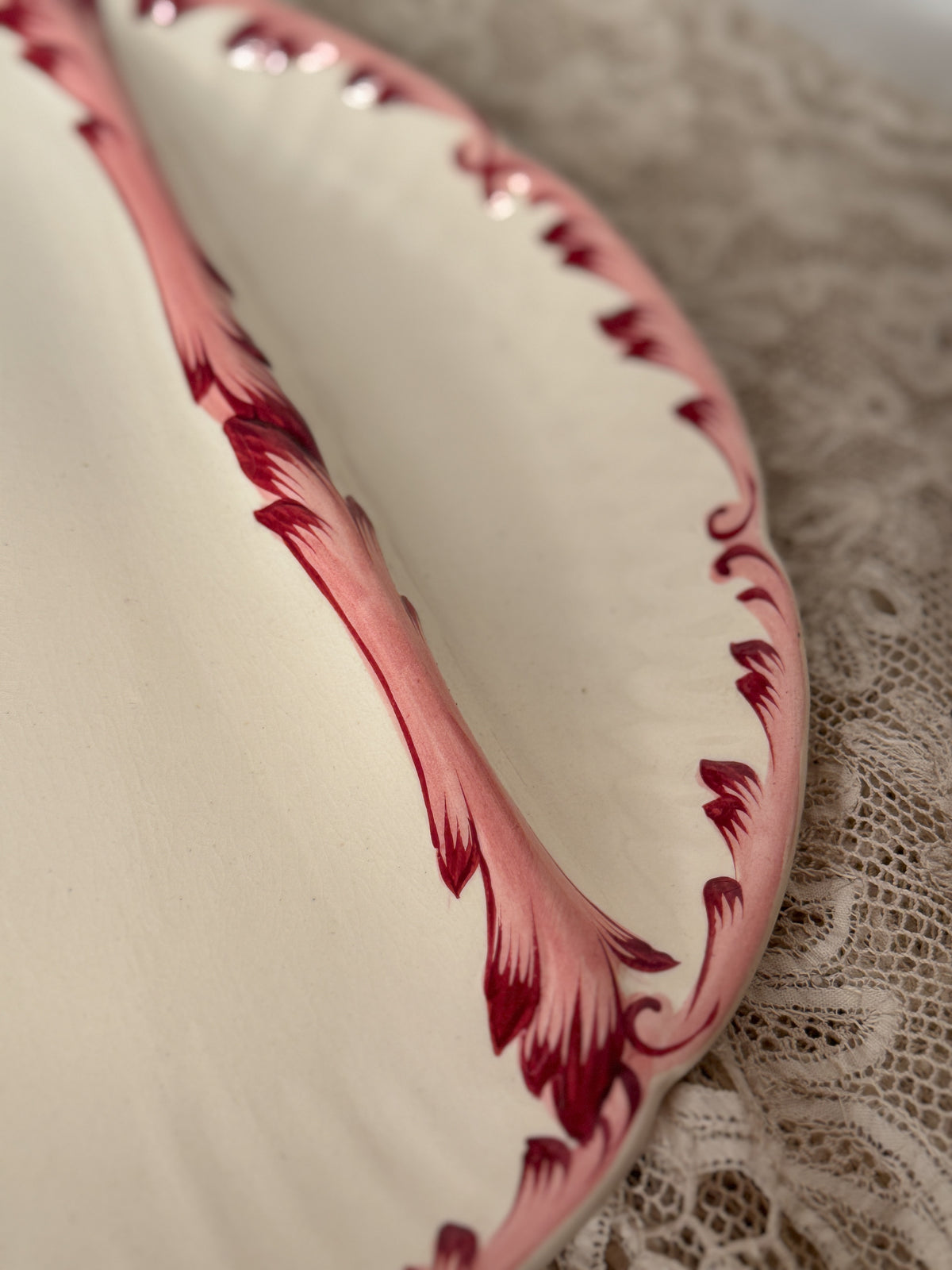
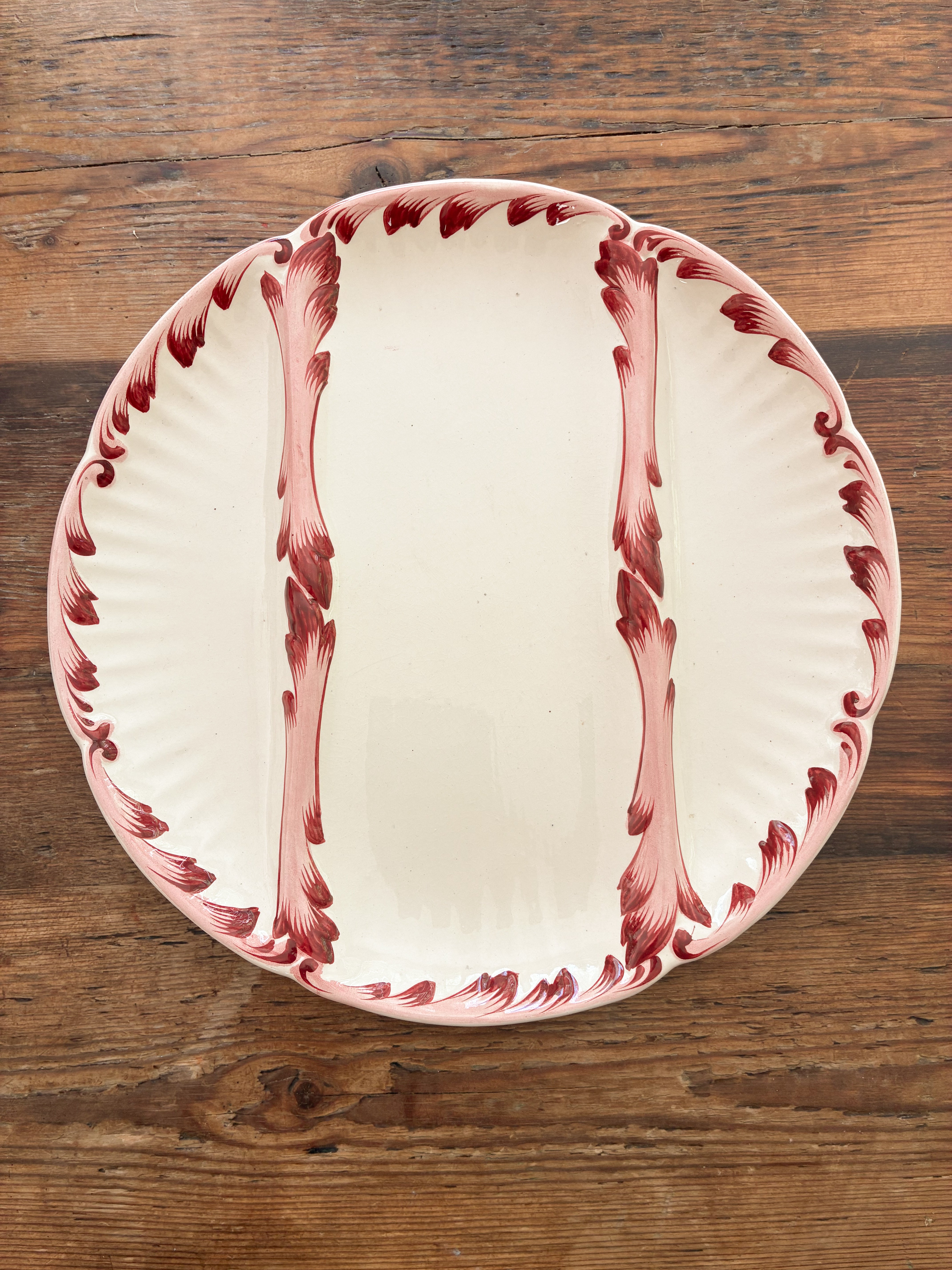
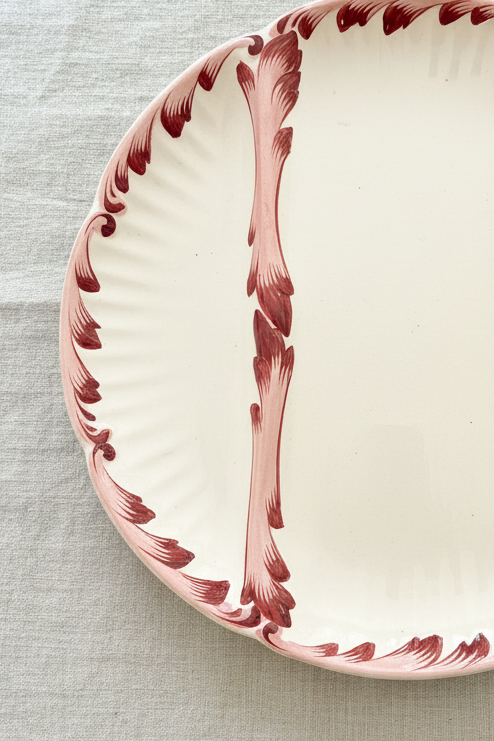
French barbotine, hand-painted in dusty rose to bordeaux over a cream ground.
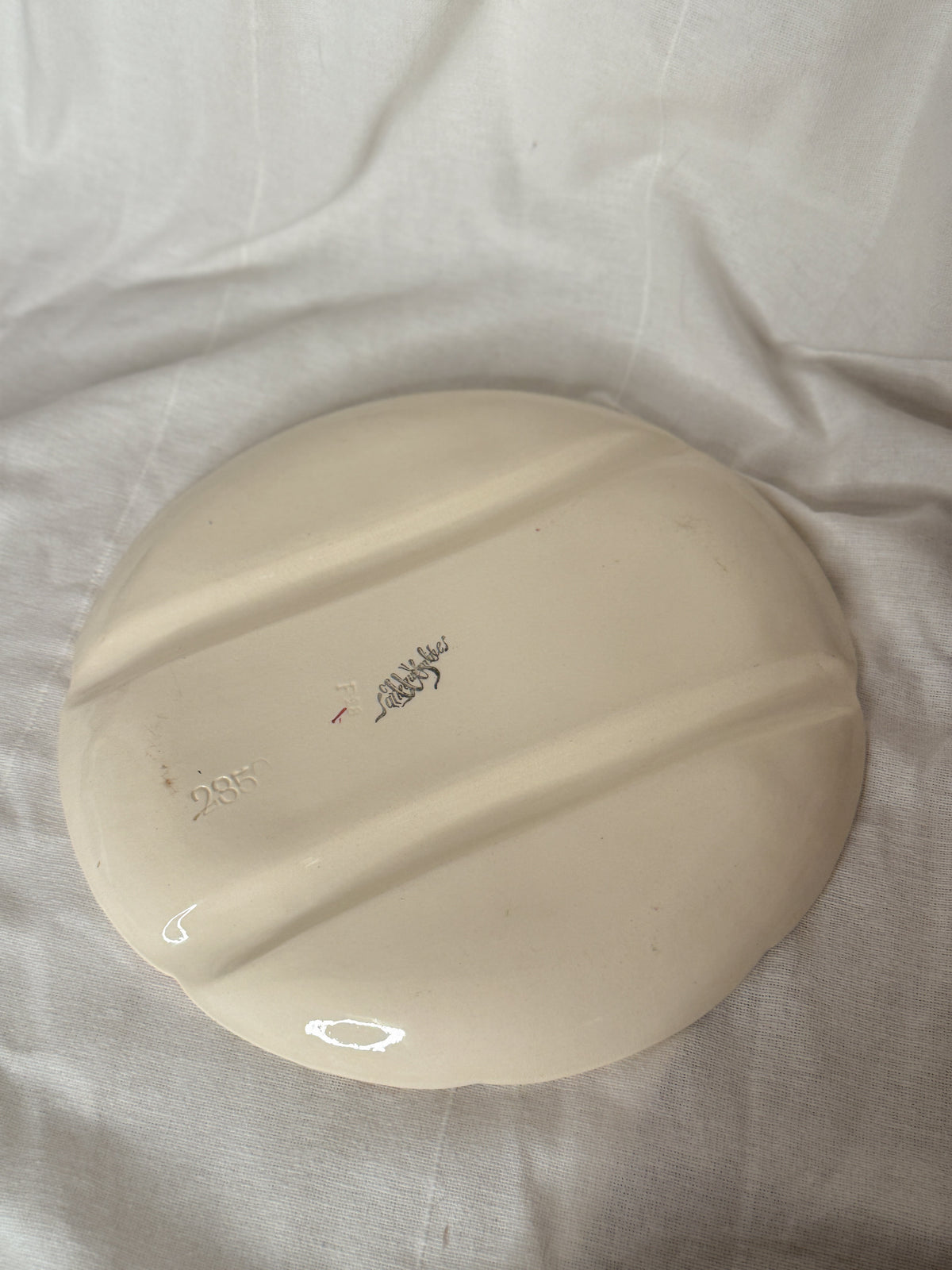
Three sections divided by raised acanthus-leaf ridges that double as drainage channels for the spears, the rim finished in the same scalloped, fluted edge as the dividers. Marked on the reverse with the cursive Sarreguemines signature.
Excellent condition, no chips, cracks or repairs. Sold as found.
Historical Context
Barbotine is French for slip, clay thinned with water. It named a technique, earthenware pressed in relief molds and finished in colored glazes, made across northern and eastern France from the 1860s. Sarreguemines, in Lorraine, was one of the major houses working in it. Asparagus arrives in France each spring as a genuine event, sold at market by the bundle and eaten as its own course rather than a side, which is what justified a plate built around nothing else. The raised ridges were made to let butter run off the spears rather than pool on the plate.
Styling Ideas
Use it for asparagus, or let it hold olives, nuts, or a few small bar snacks divided by kind.
Choose options