
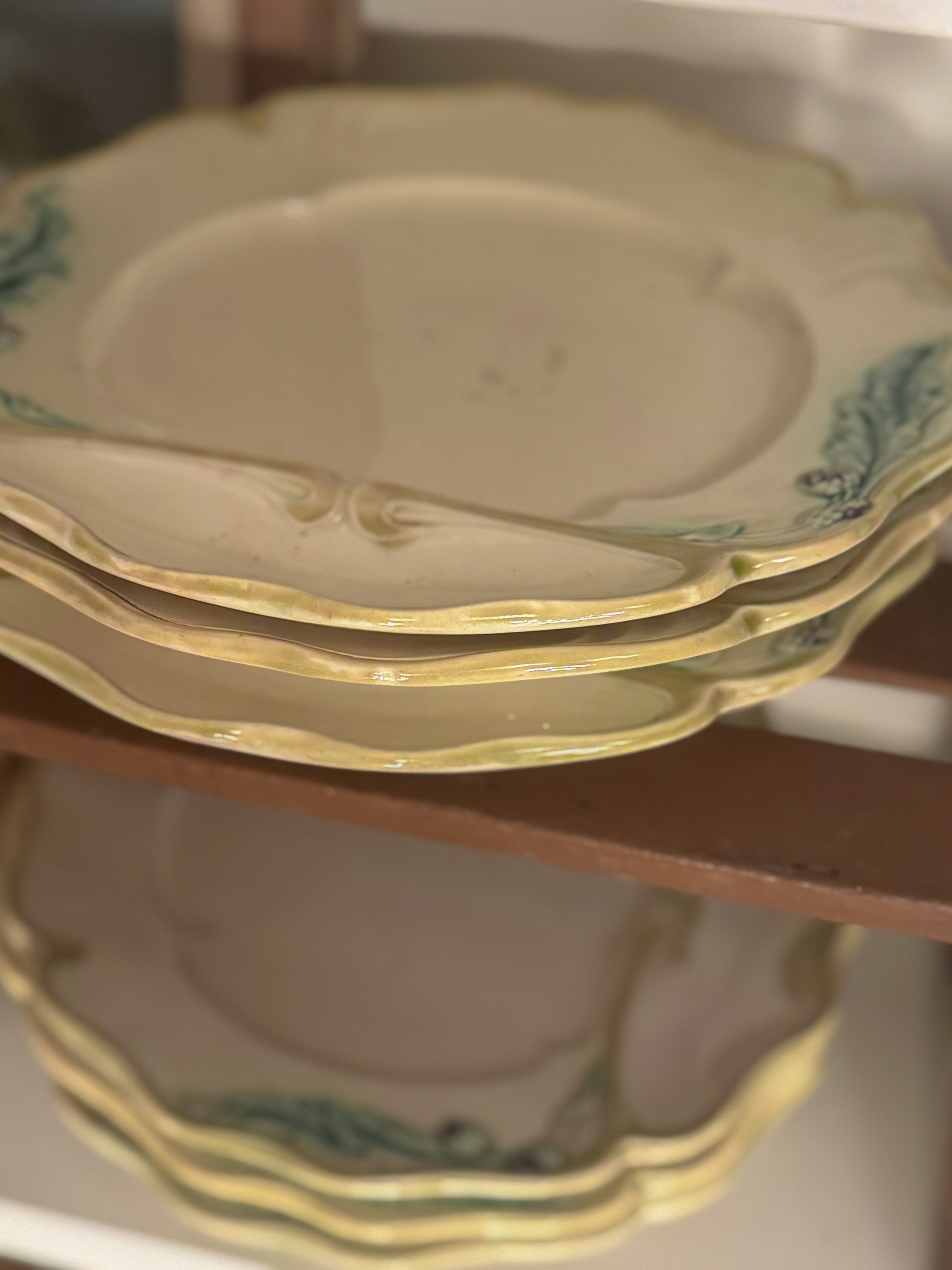
Barbotine Asparagus Plate, Art Nouveau
French Barbotine Asparagus Plate, Art Nouveau, Sold Individually
Period
Circa 1900, French
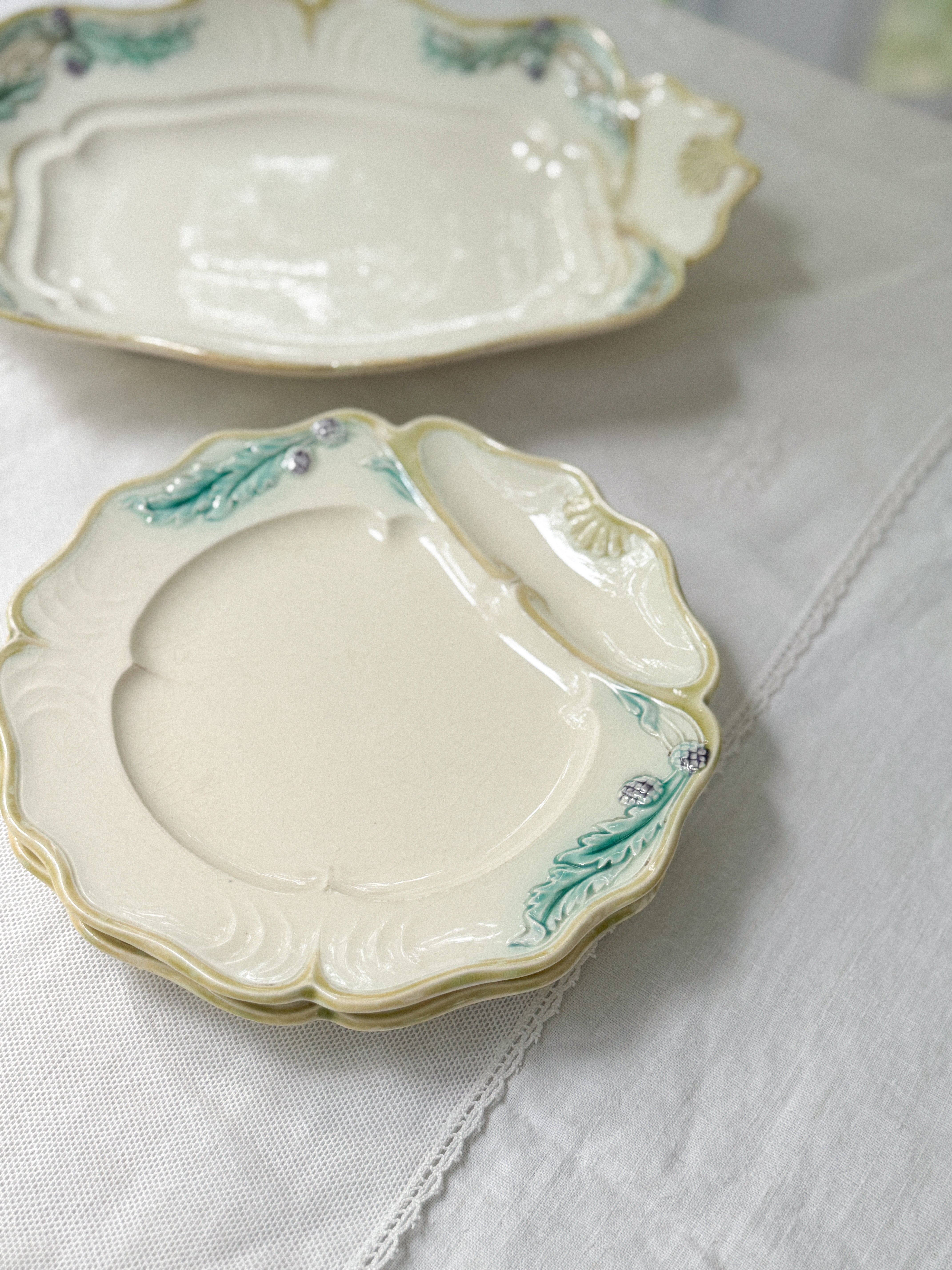
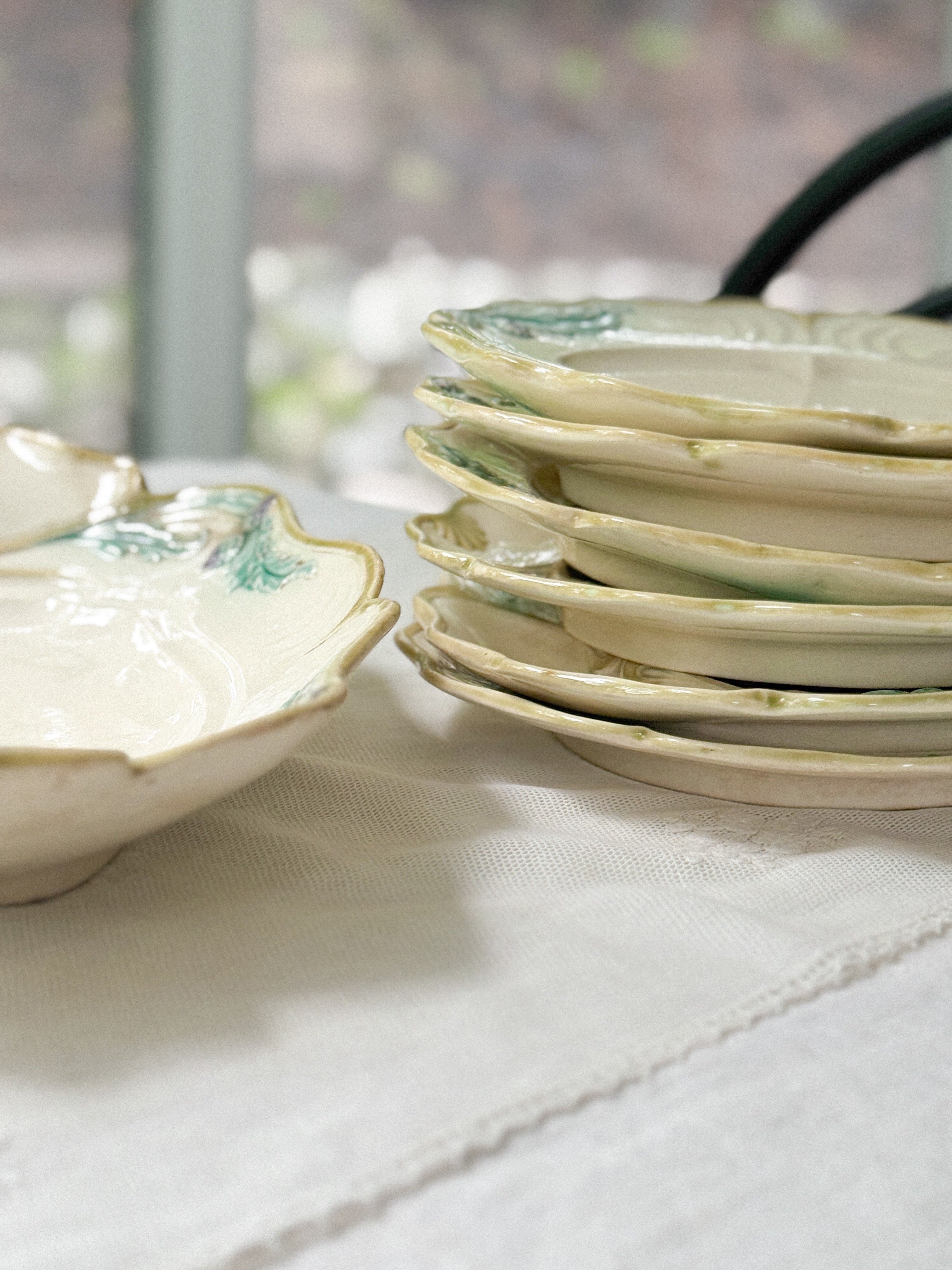
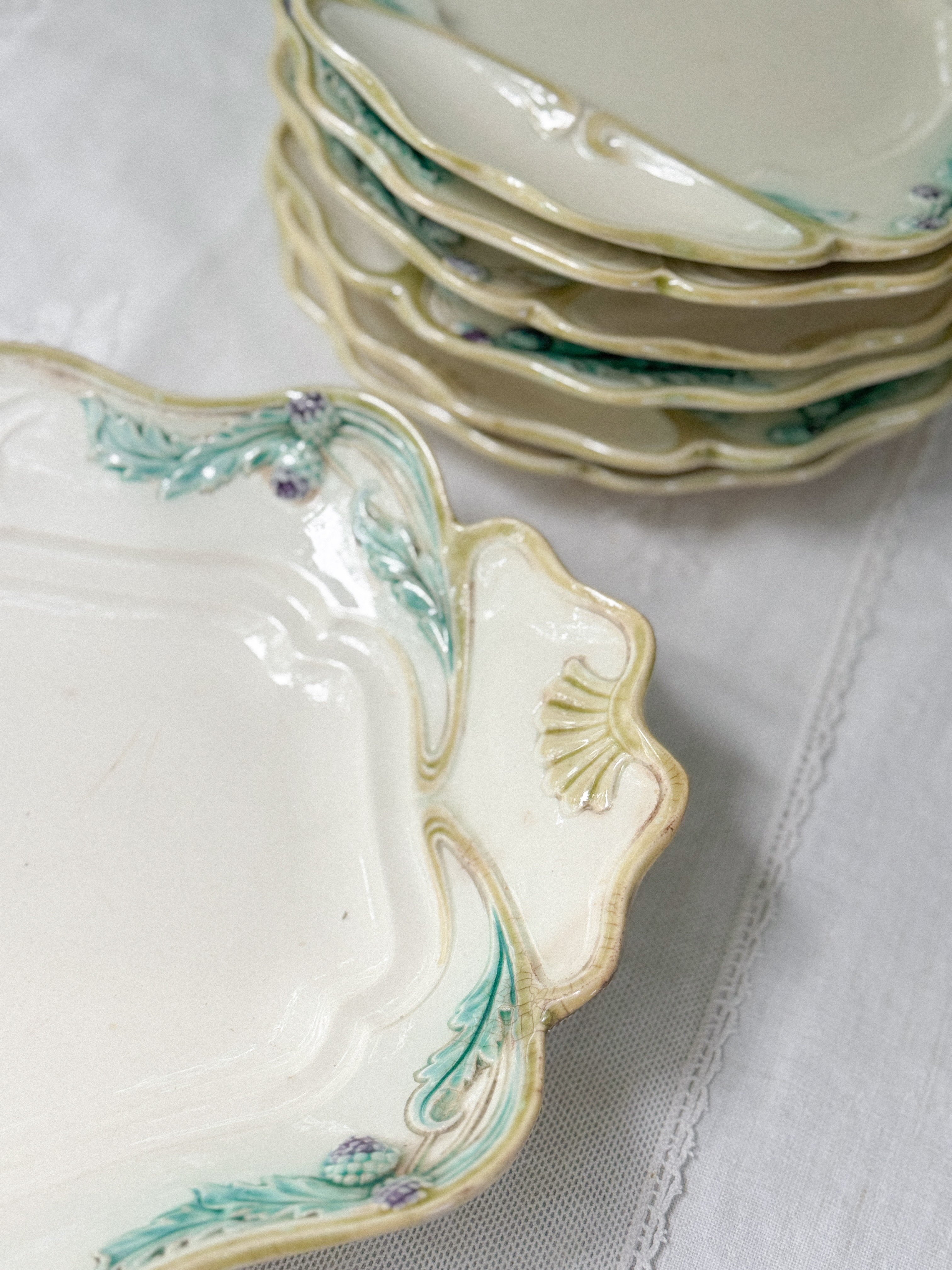
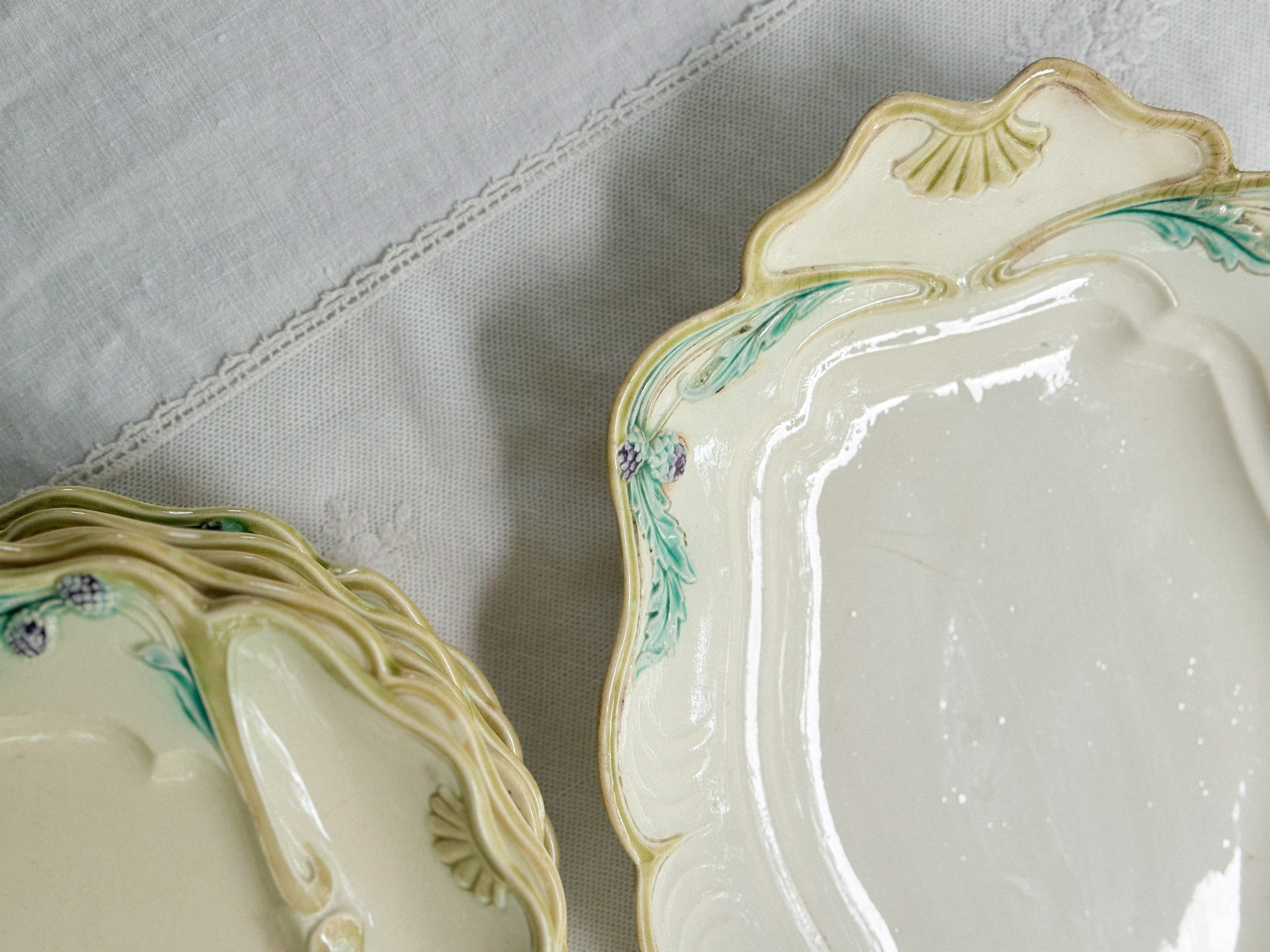
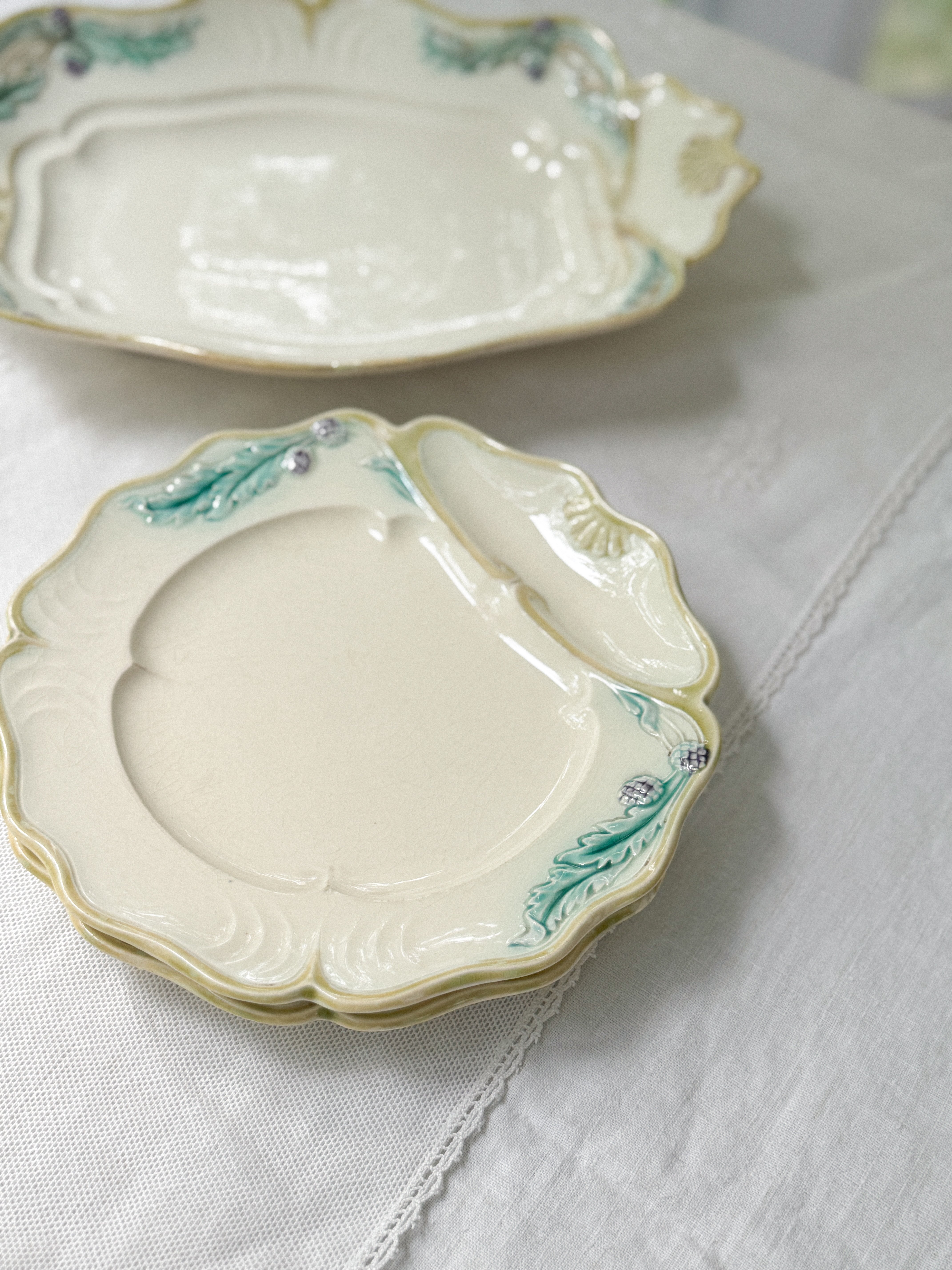
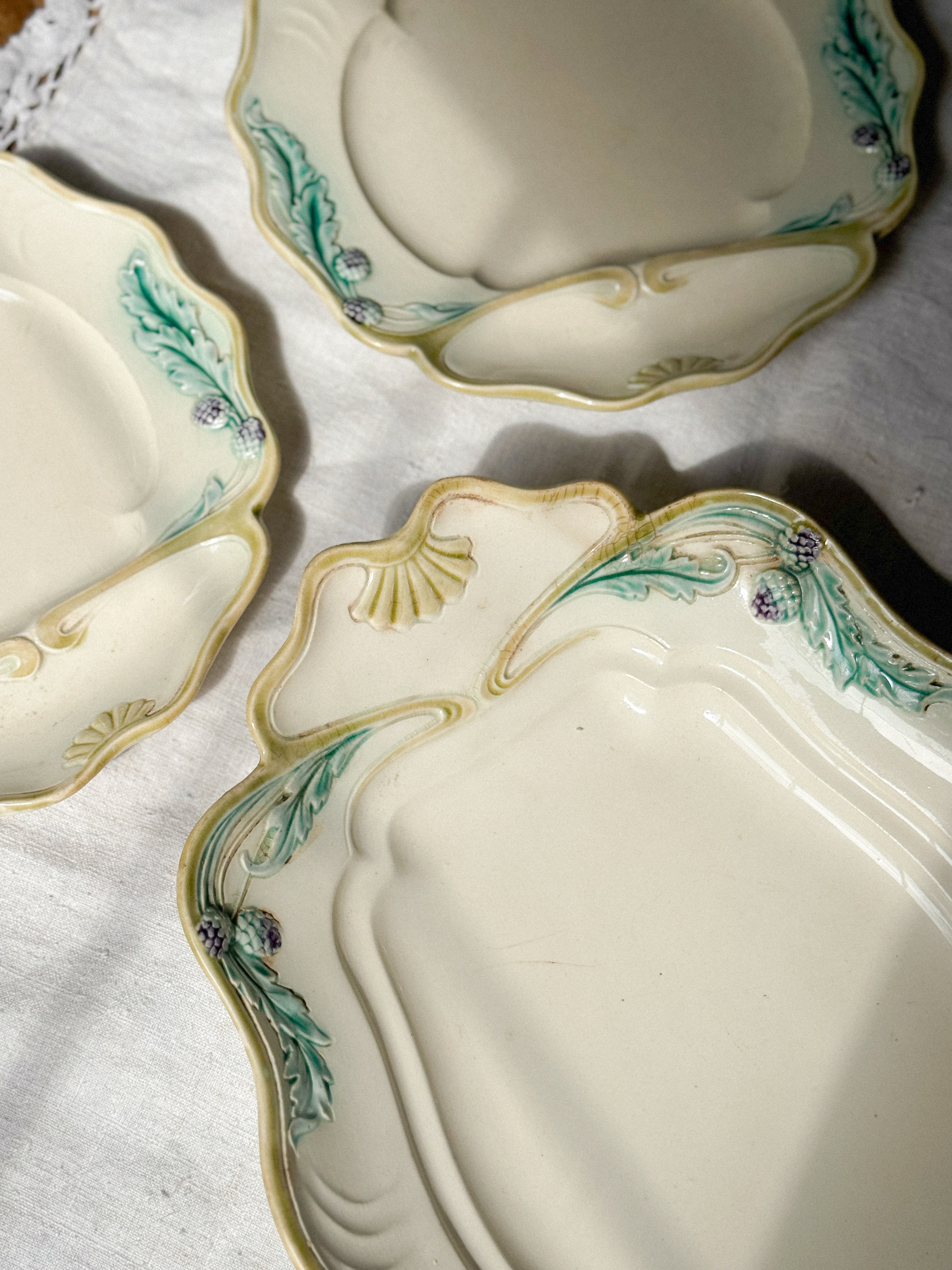
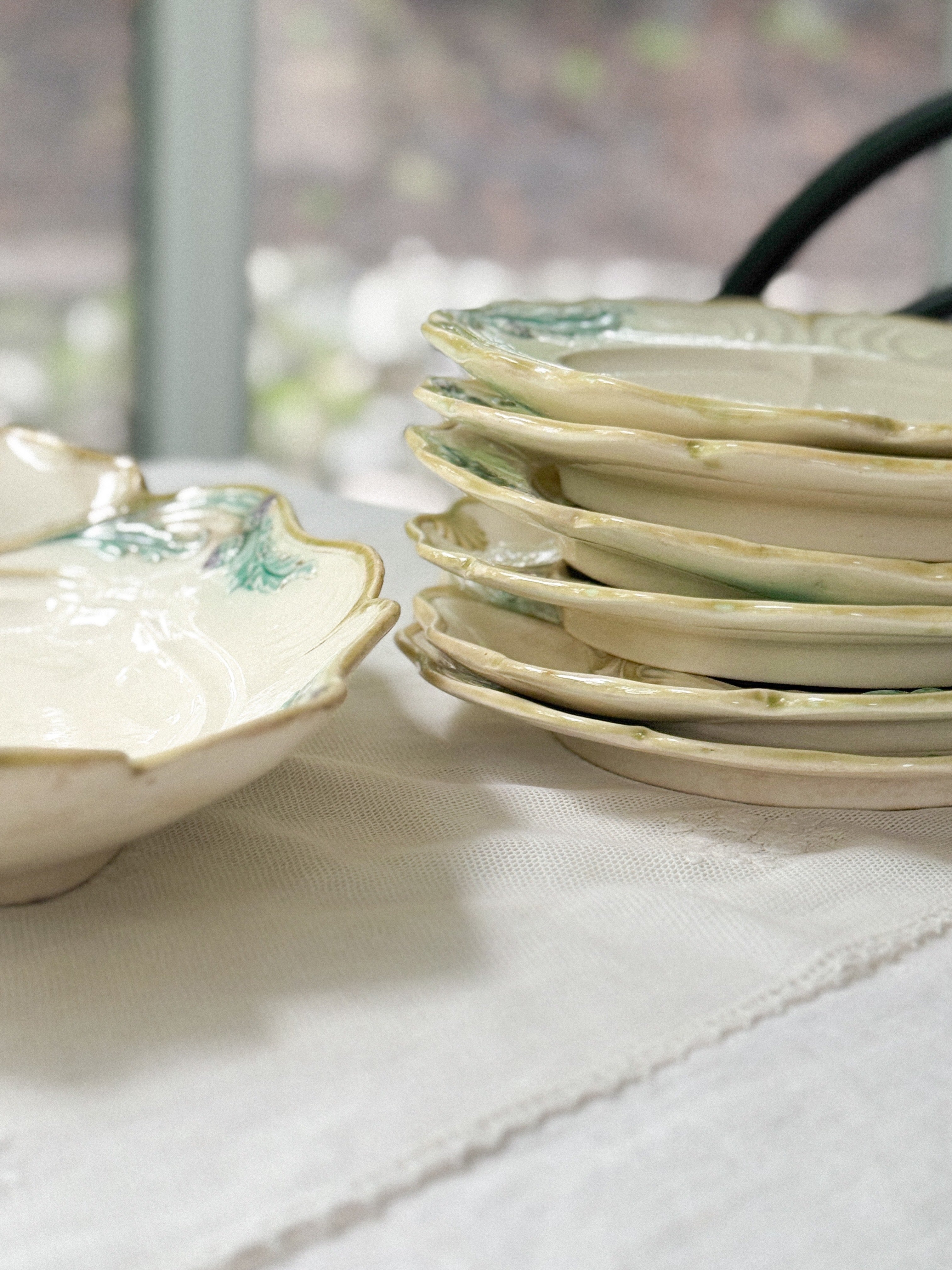
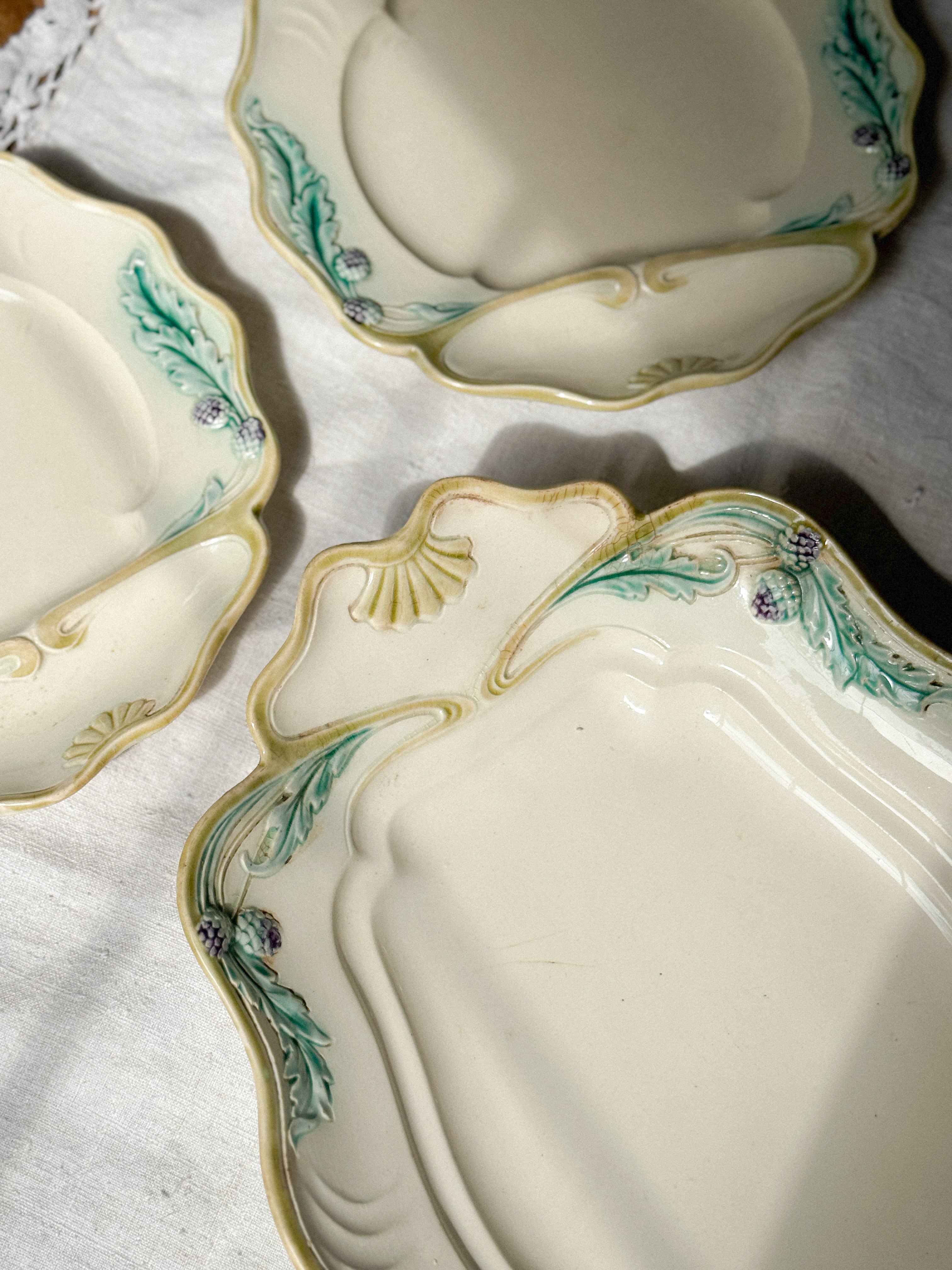
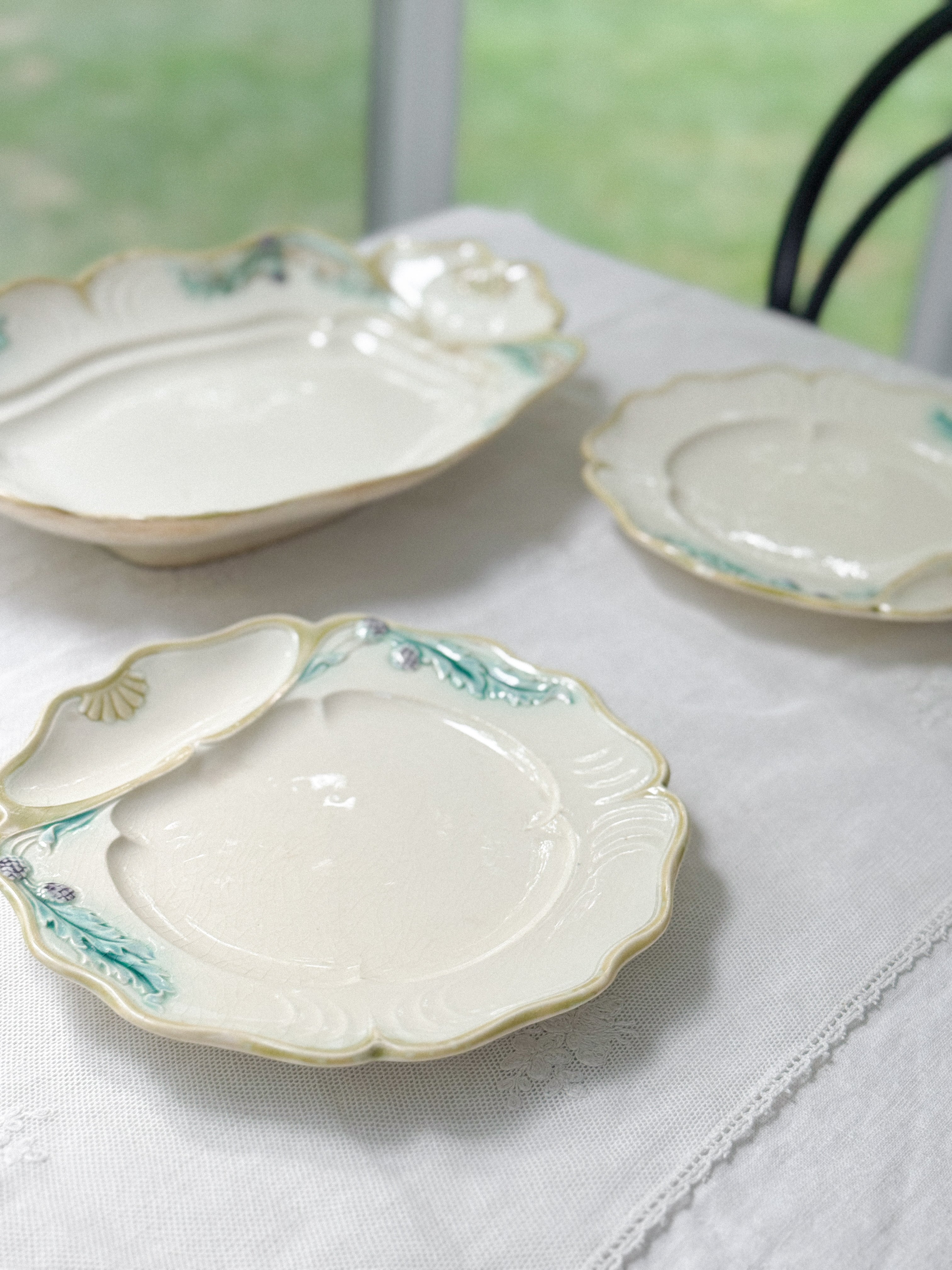
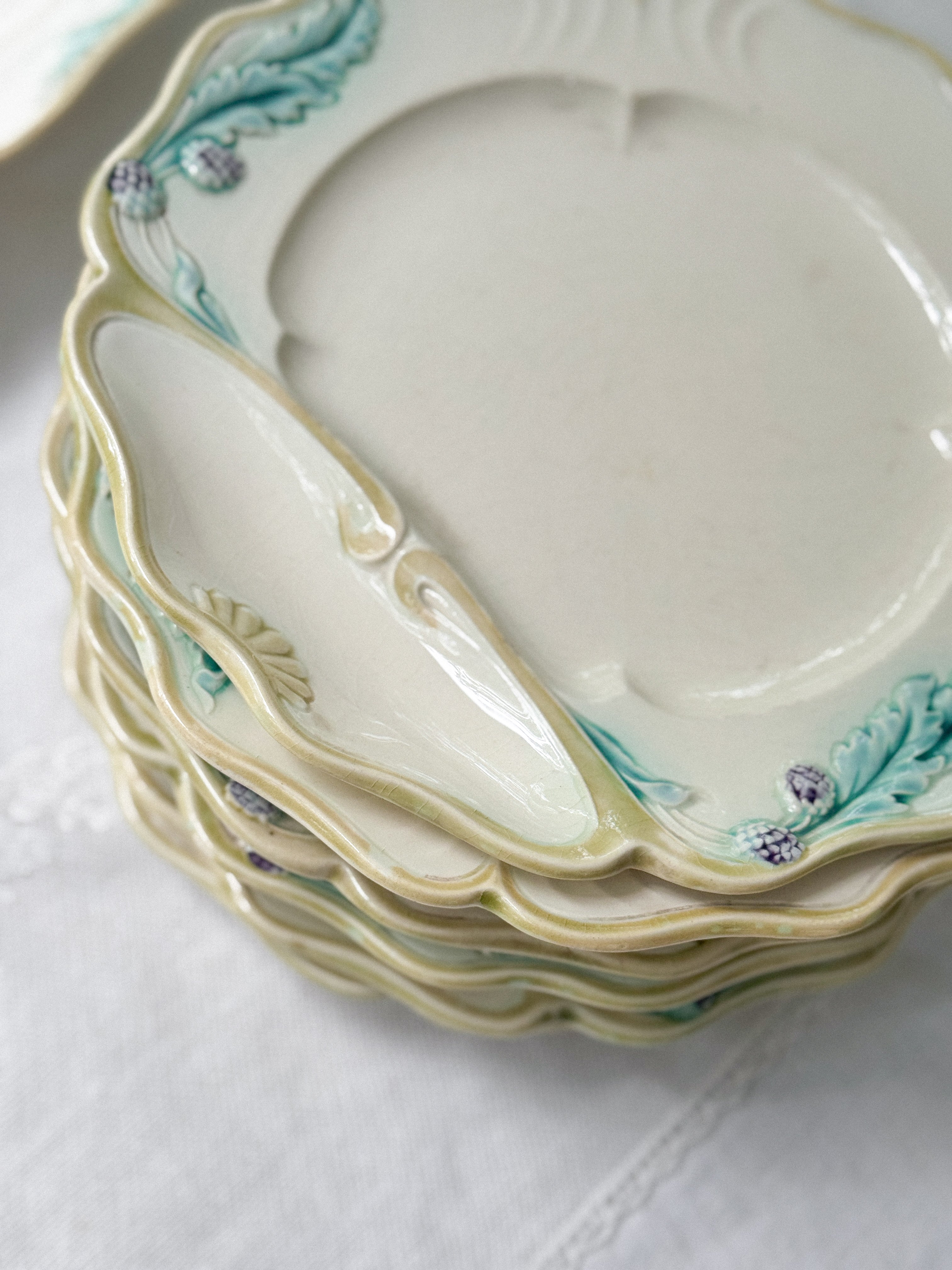
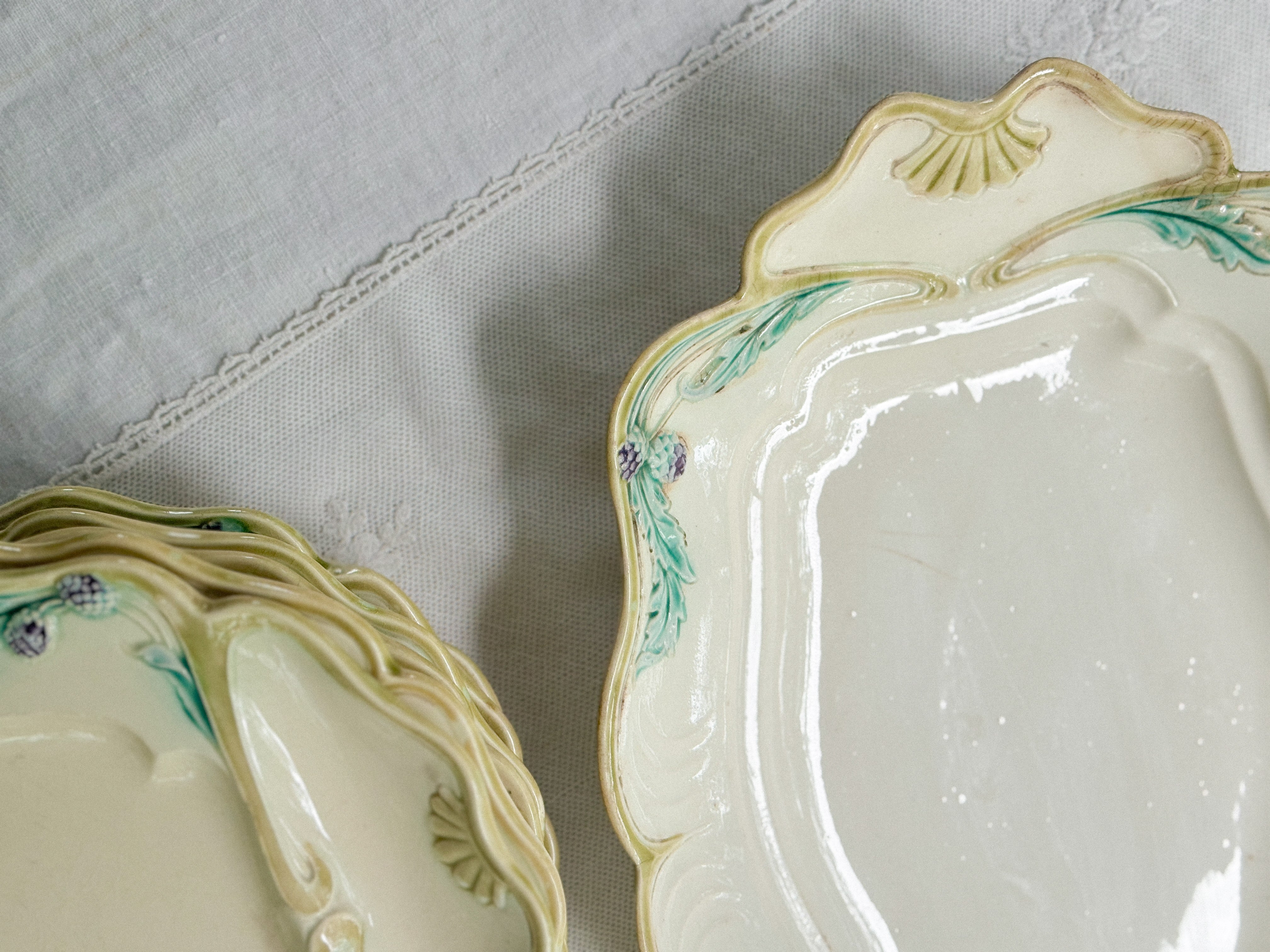
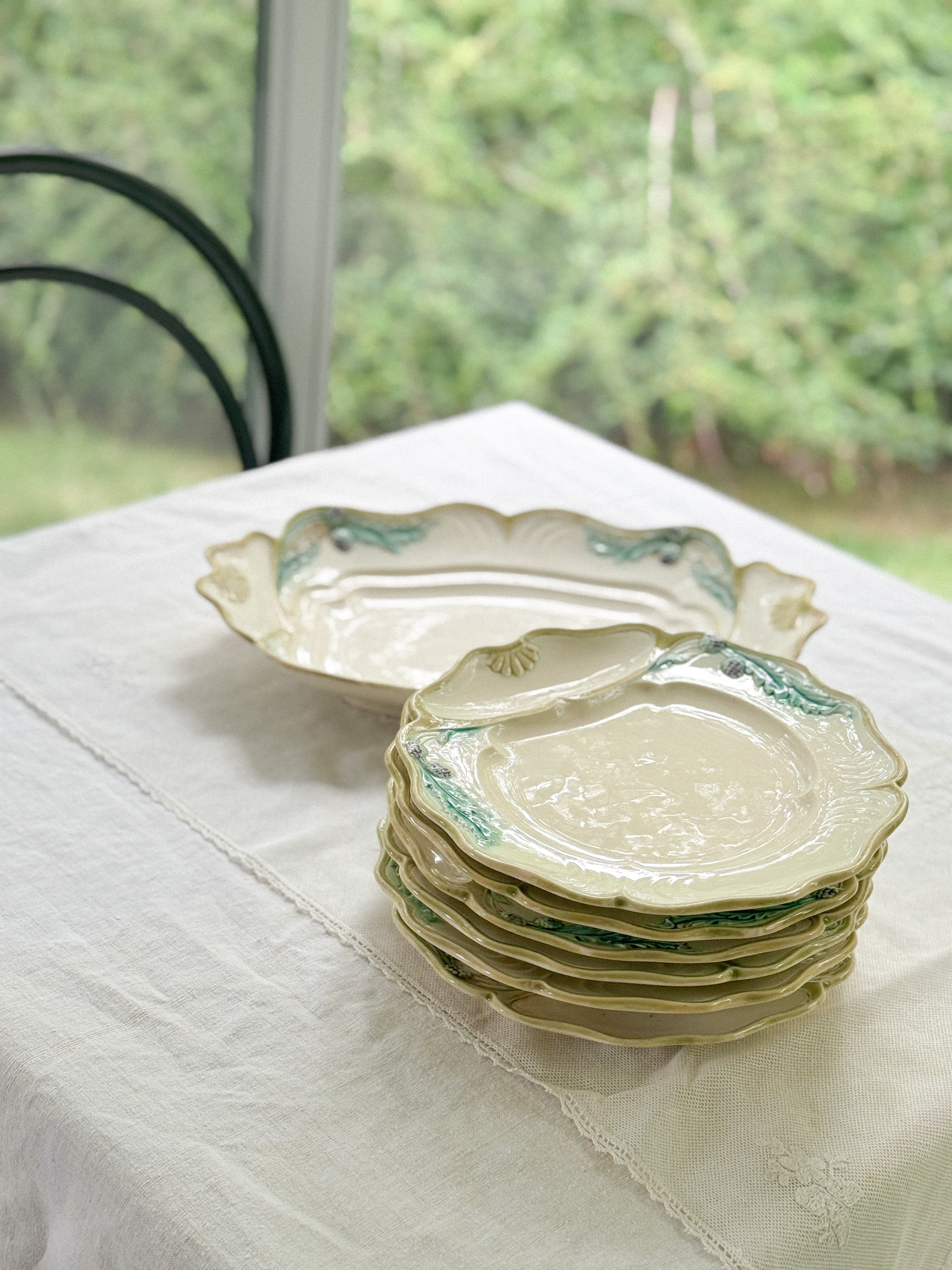
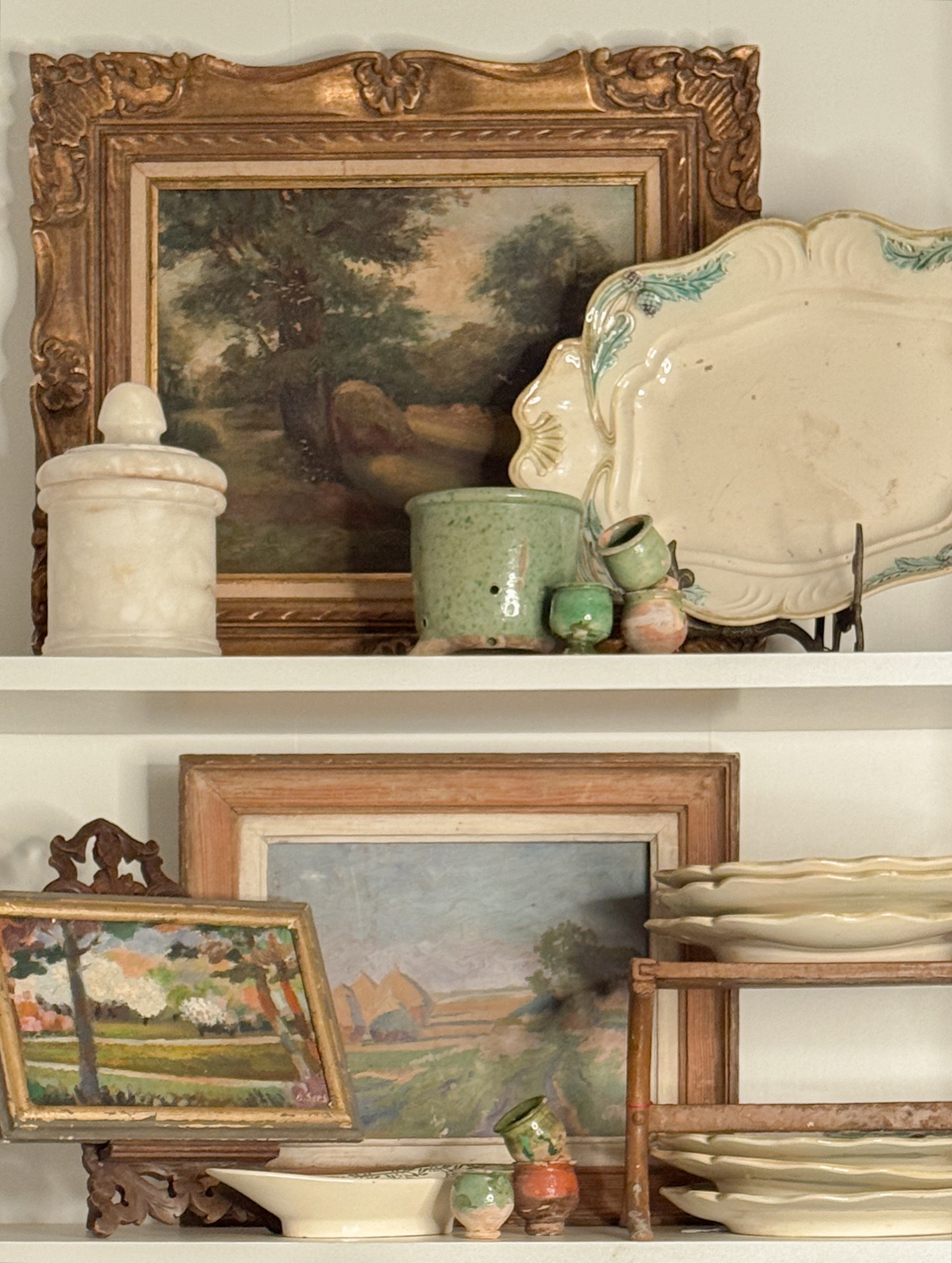
An asparagus plate in French faience, from the same service as the master platter, with molded decoration in the Art Nouveau taste. Barbotine is the colored-glaze relief technique English-speaking dealers know as majolica. Sold individually; six are available.
A crescent well at the front holds the sauce, within a scalloped and fluted rim edged in a thin ochre line and finishing in a shell-form terminal. Thistles run at the corners on curving stems, lilac heads and turquoise leaves against a cream ground. Crazing runs across the set and comes from age and use.
Historical Context
Asparagus was expensive and briefly in season, so in France it was served as its own course, on services made for nothing else. The thistle was one of the recurring motifs of French Art Nouveau, taken up for its spined, architectural form. Art Nouveau drew its sinuous line partly from the rococo, which is why the scrolled shell sits so easily with it. Barbotine services of this kind came from faience factories across northern and eastern France from the 1860s through the turn of the century.
Styling Ideas
Hang three or six as a group, where the repeated relief reads as a set. Use them for cheese, dessert, or a first course. Mixed into plain white or transferware, the green and lilac carry the color.
Choose options