
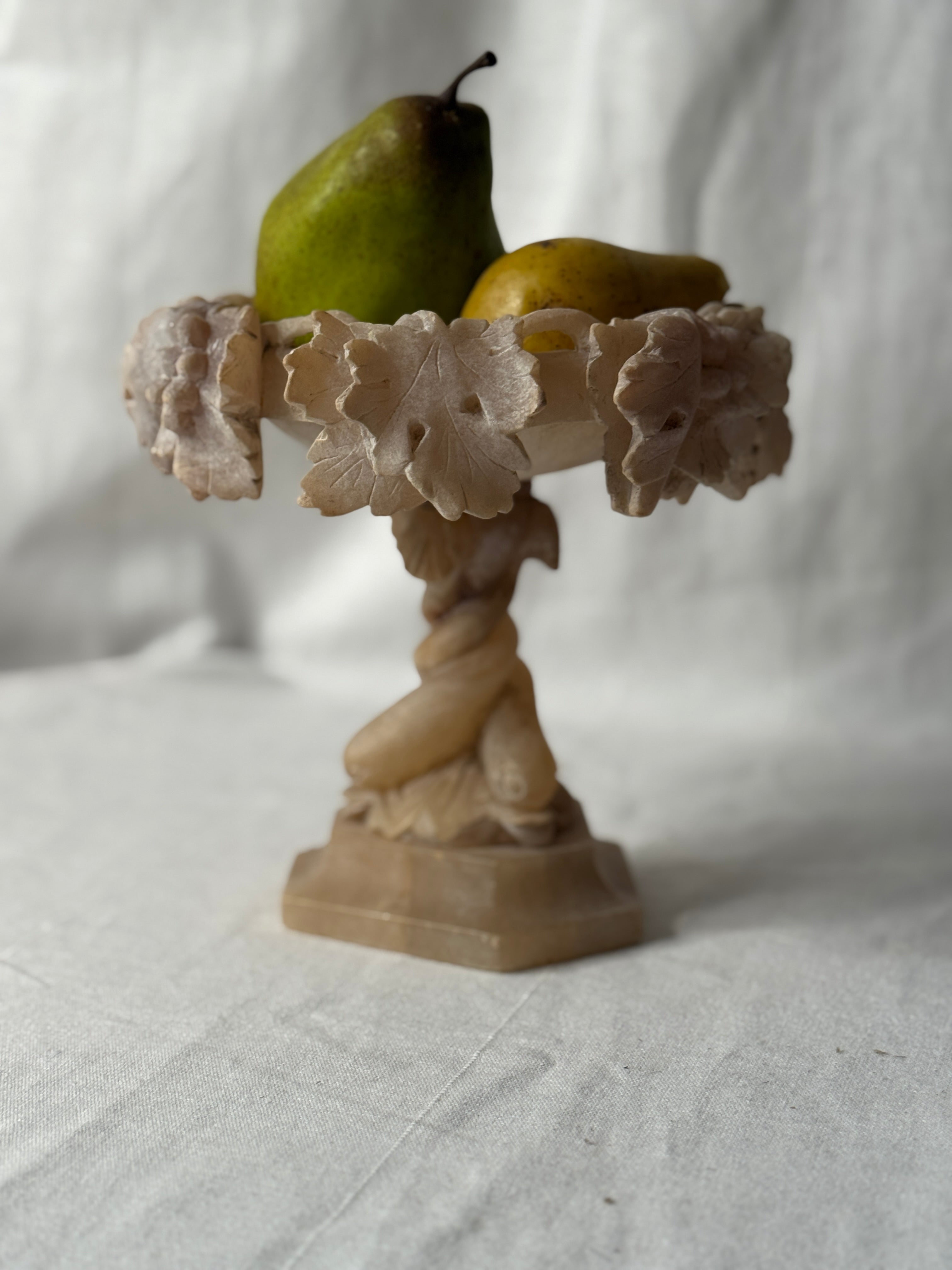
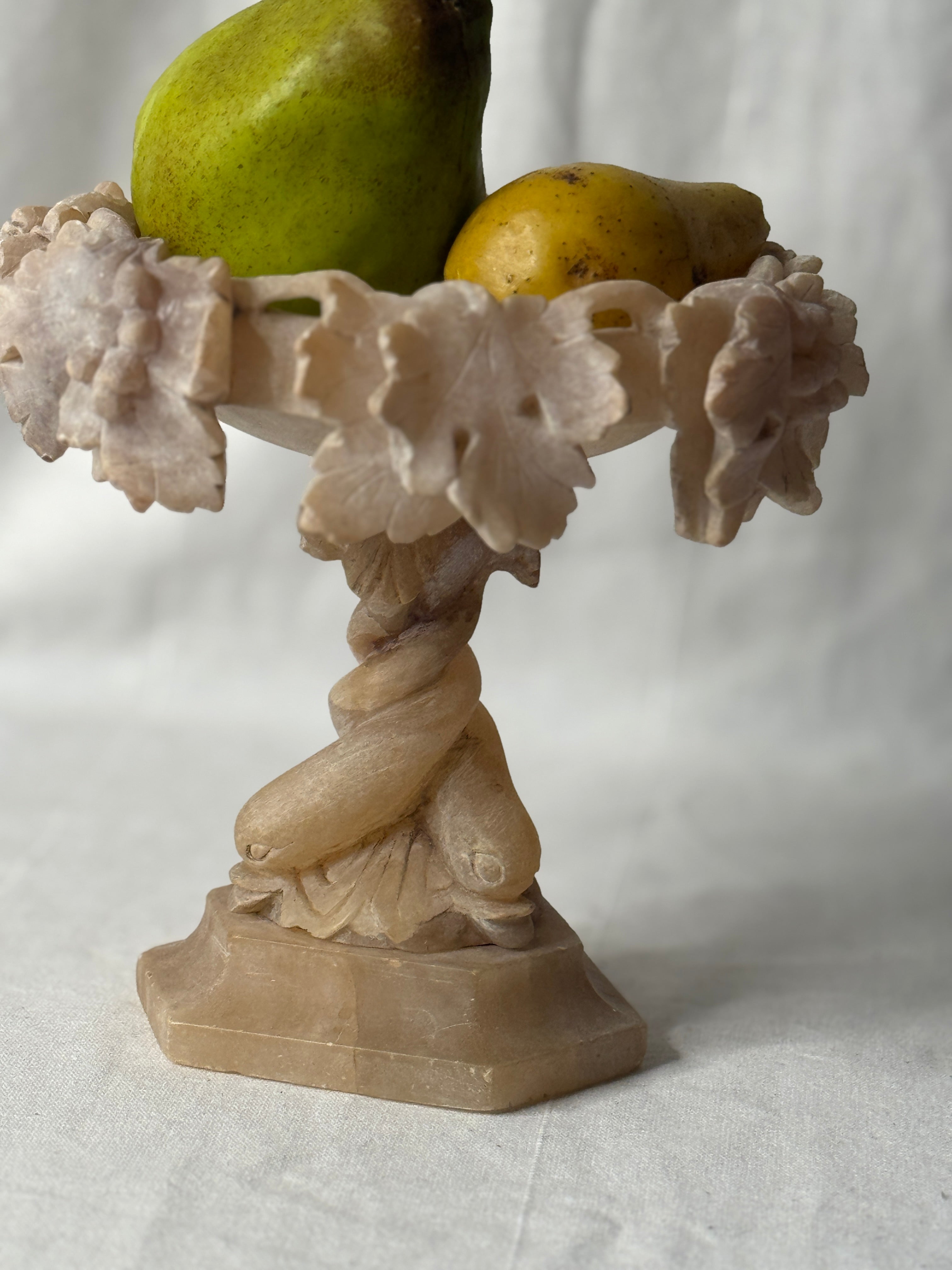
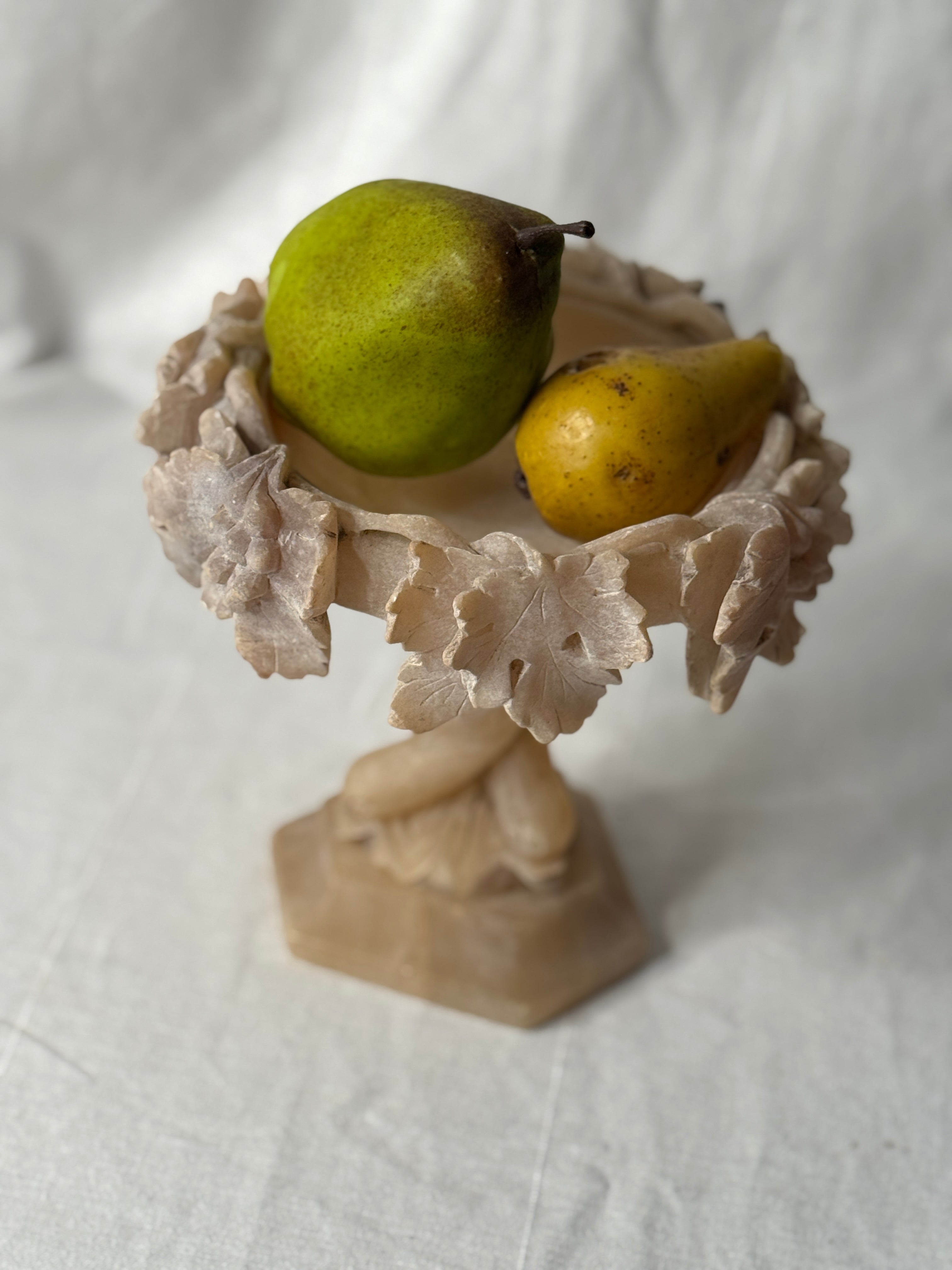


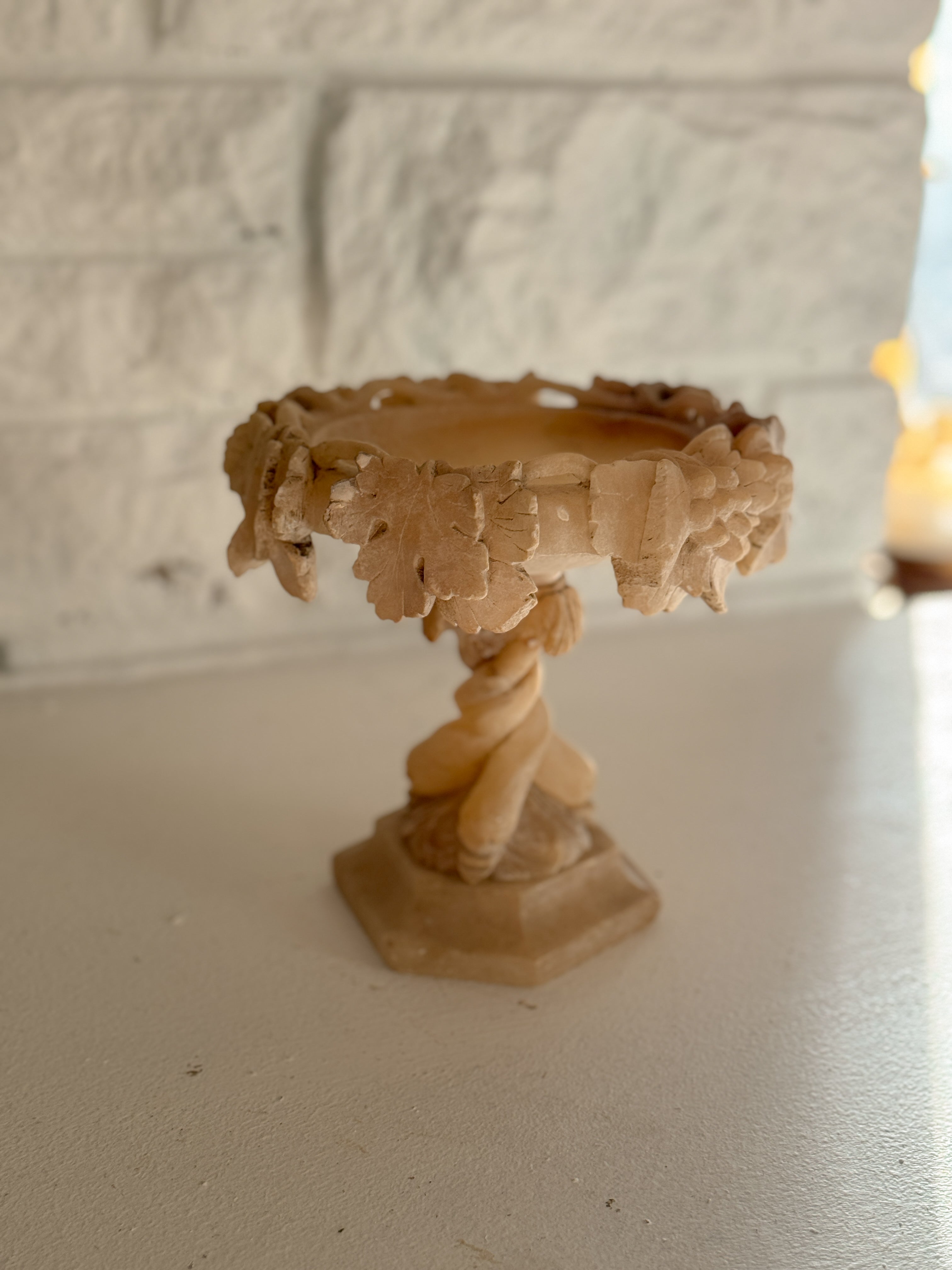
Antique Italian Volterra Alabaster Tazza, Bacchic Decoration, late 19th c.
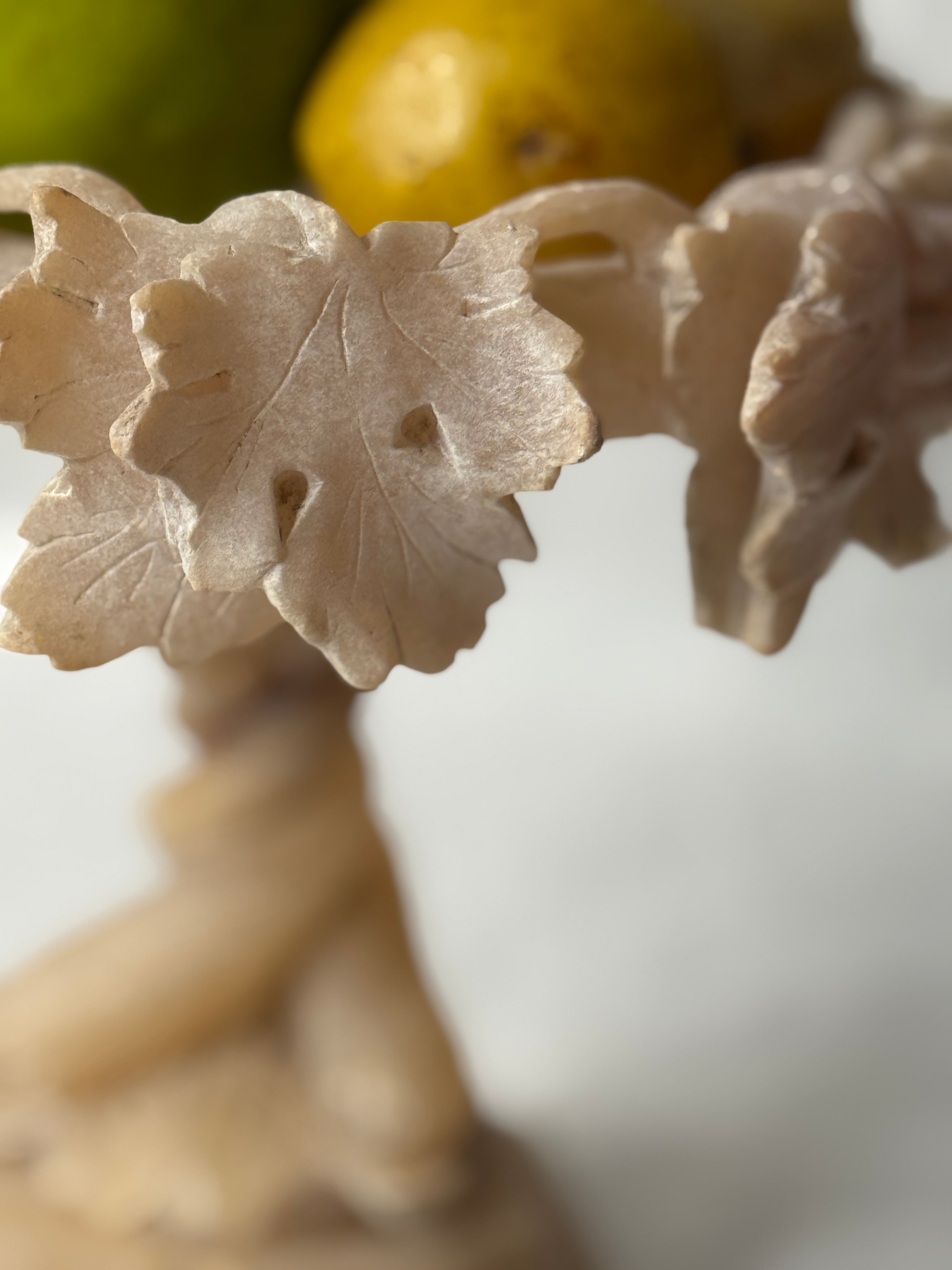
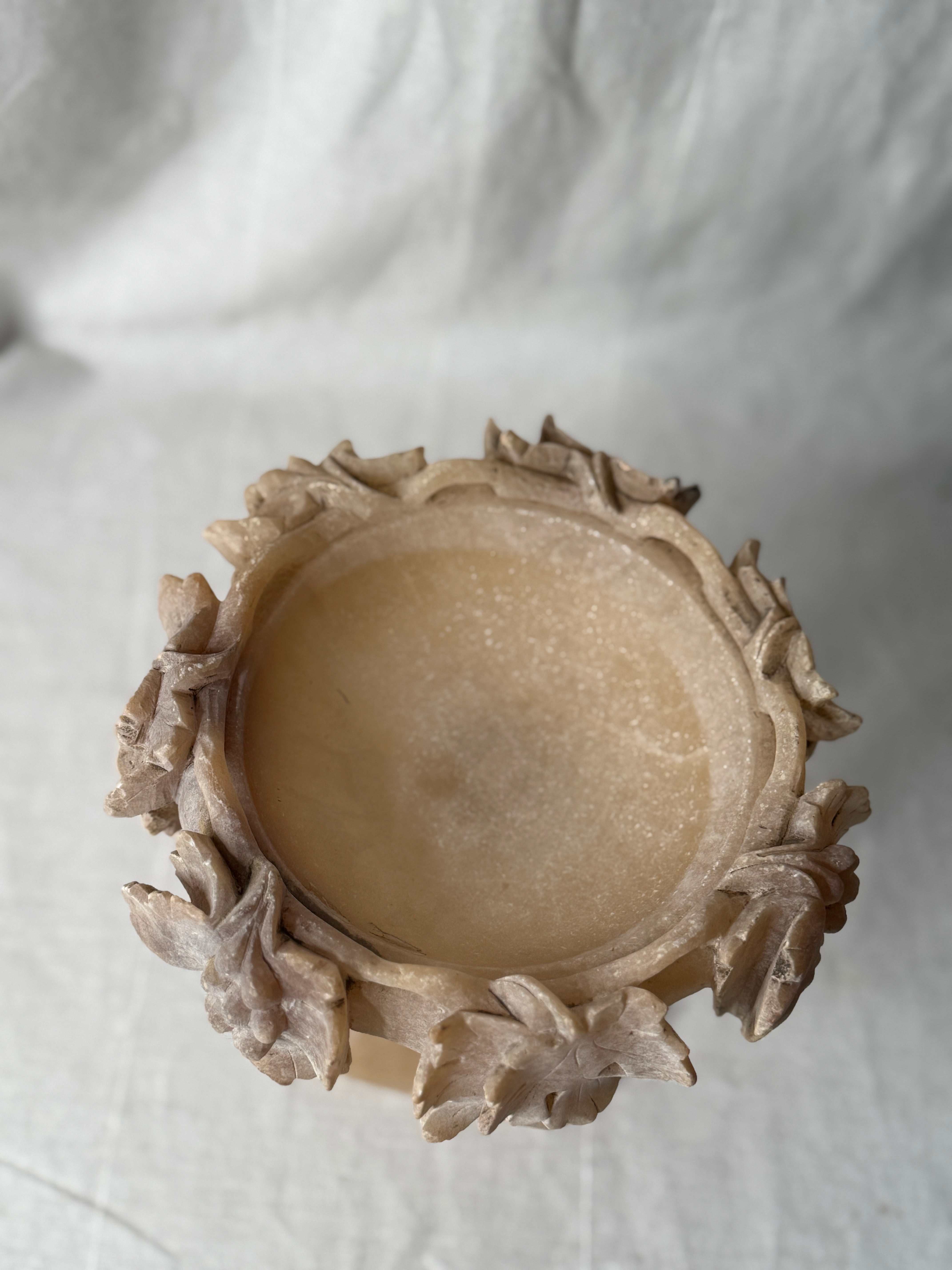
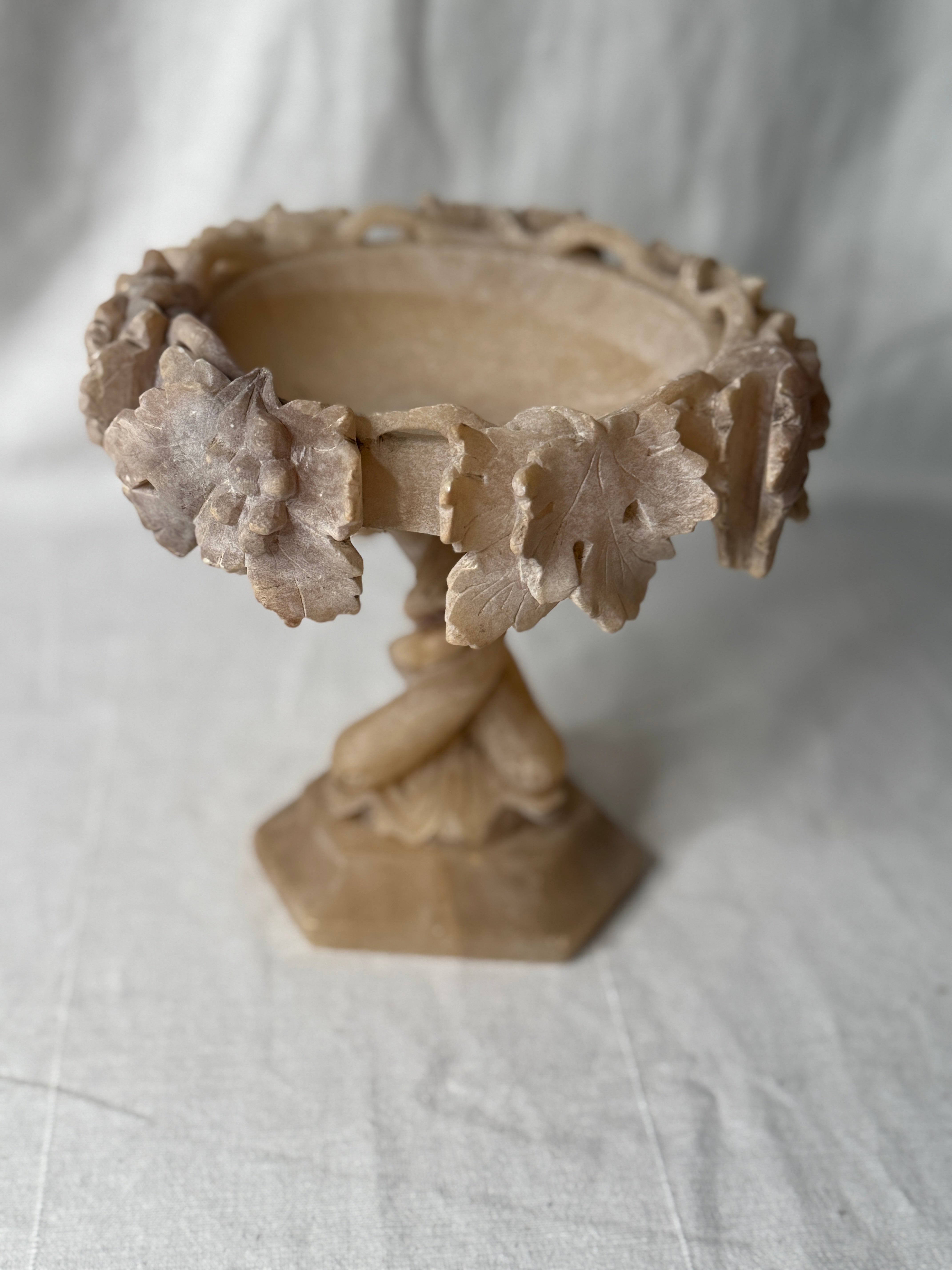
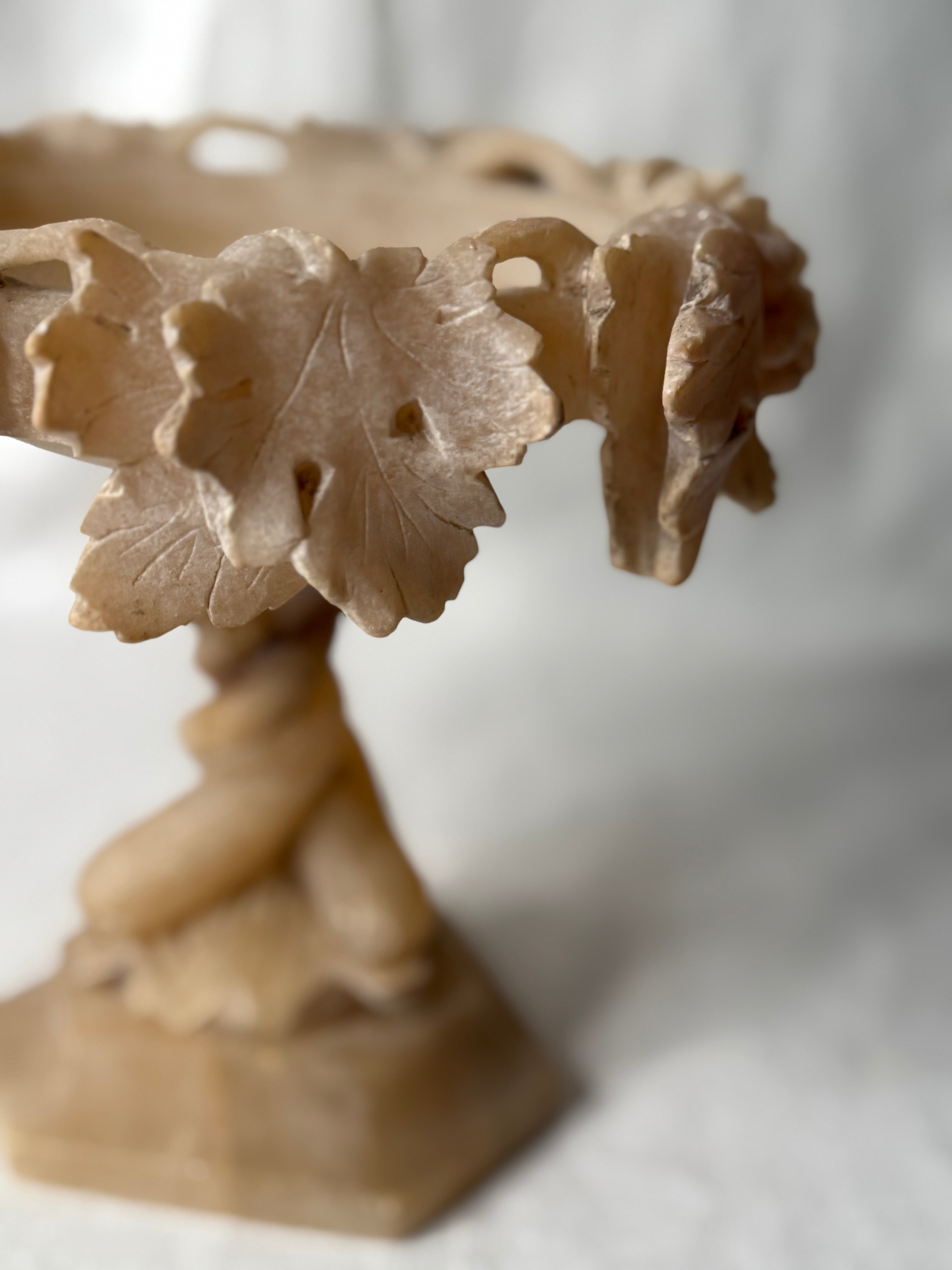
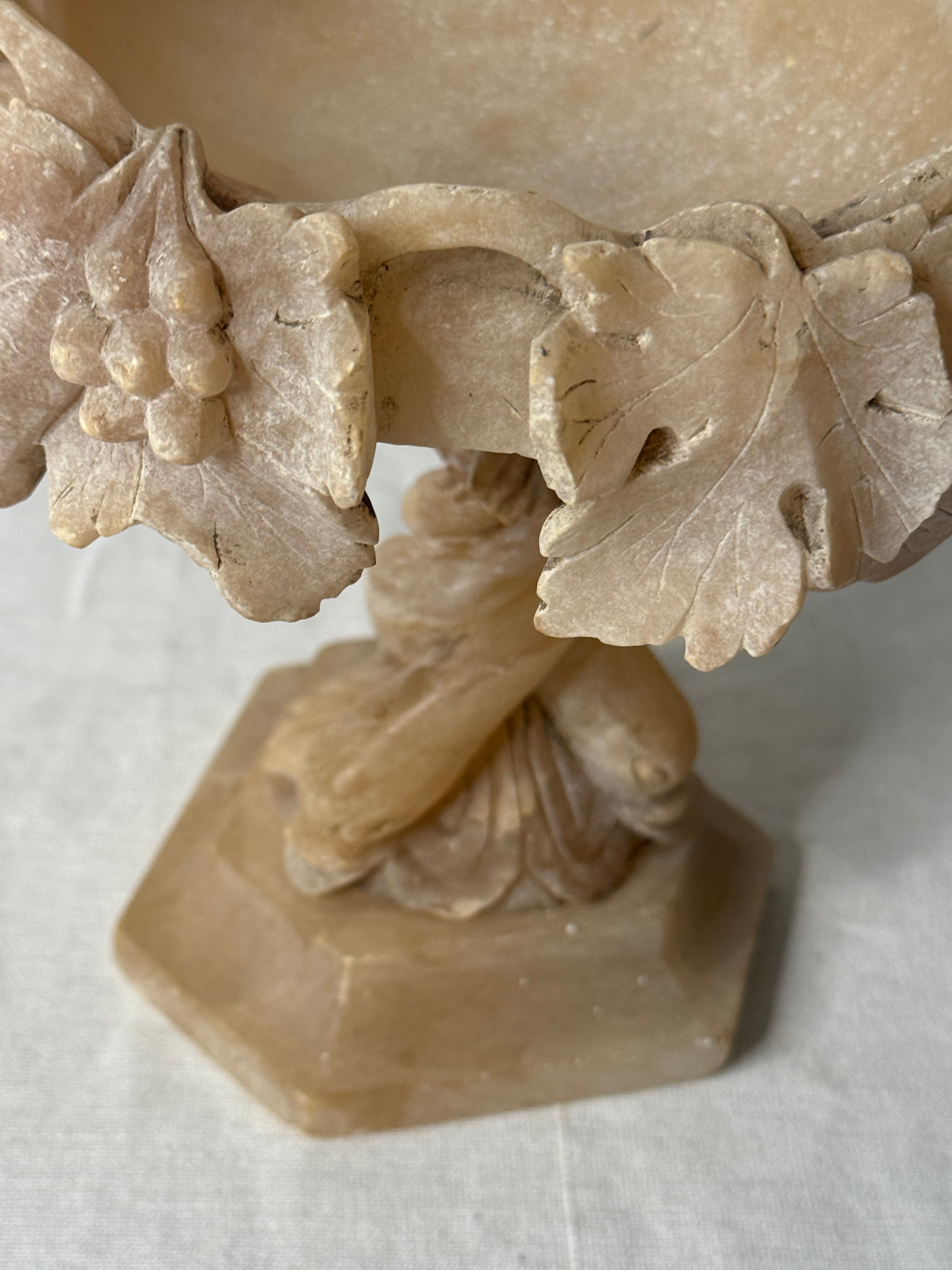
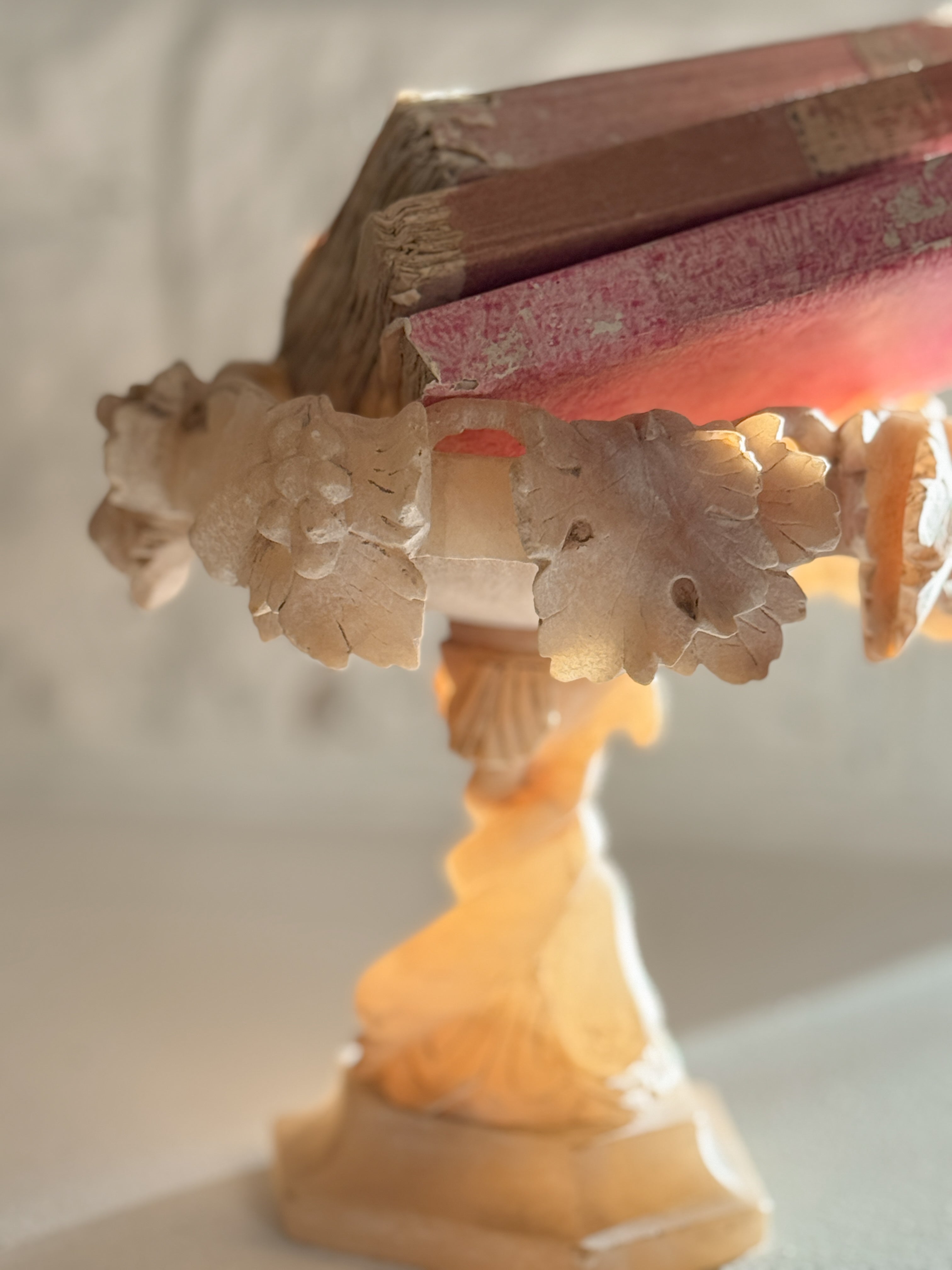
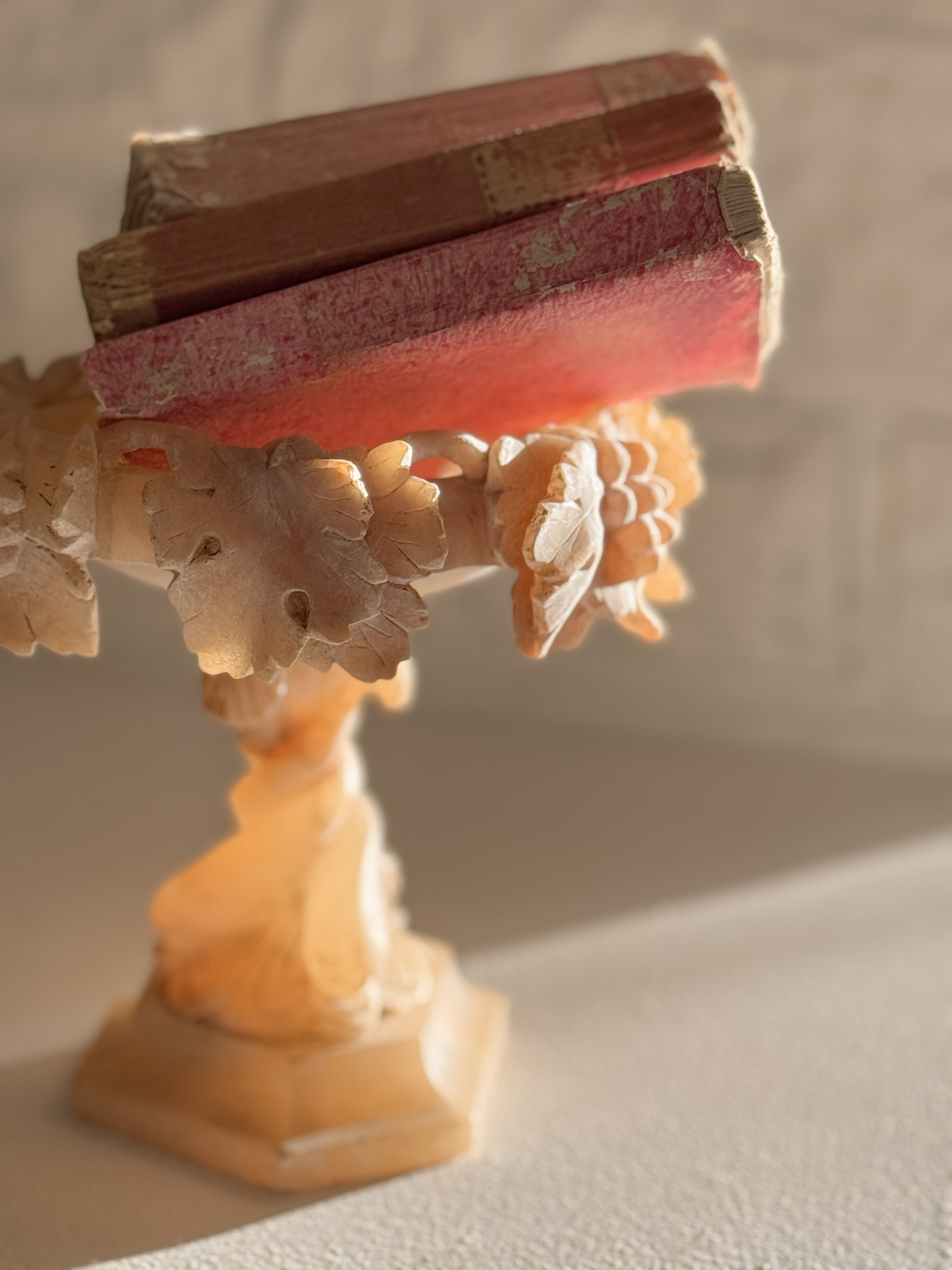
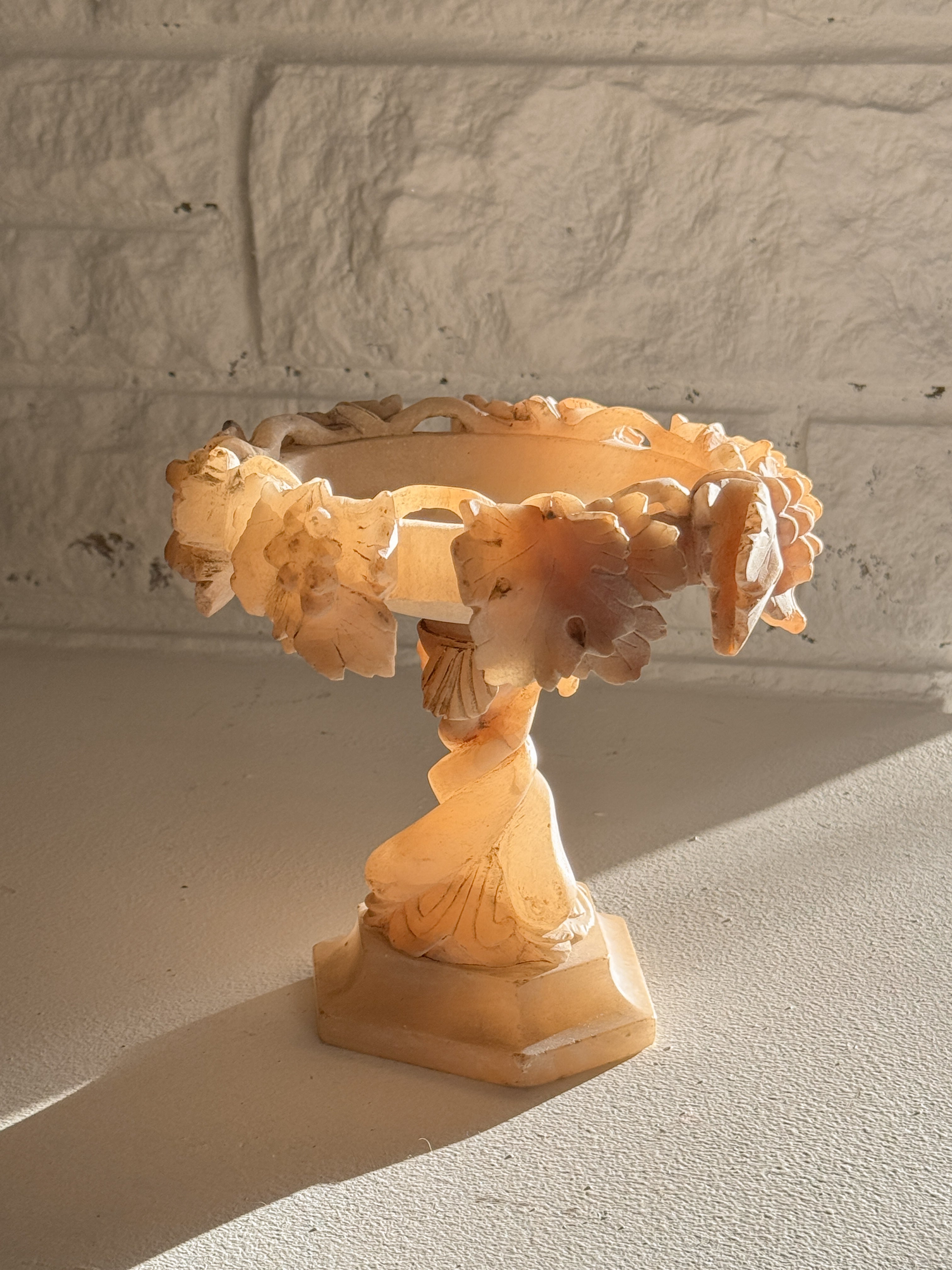
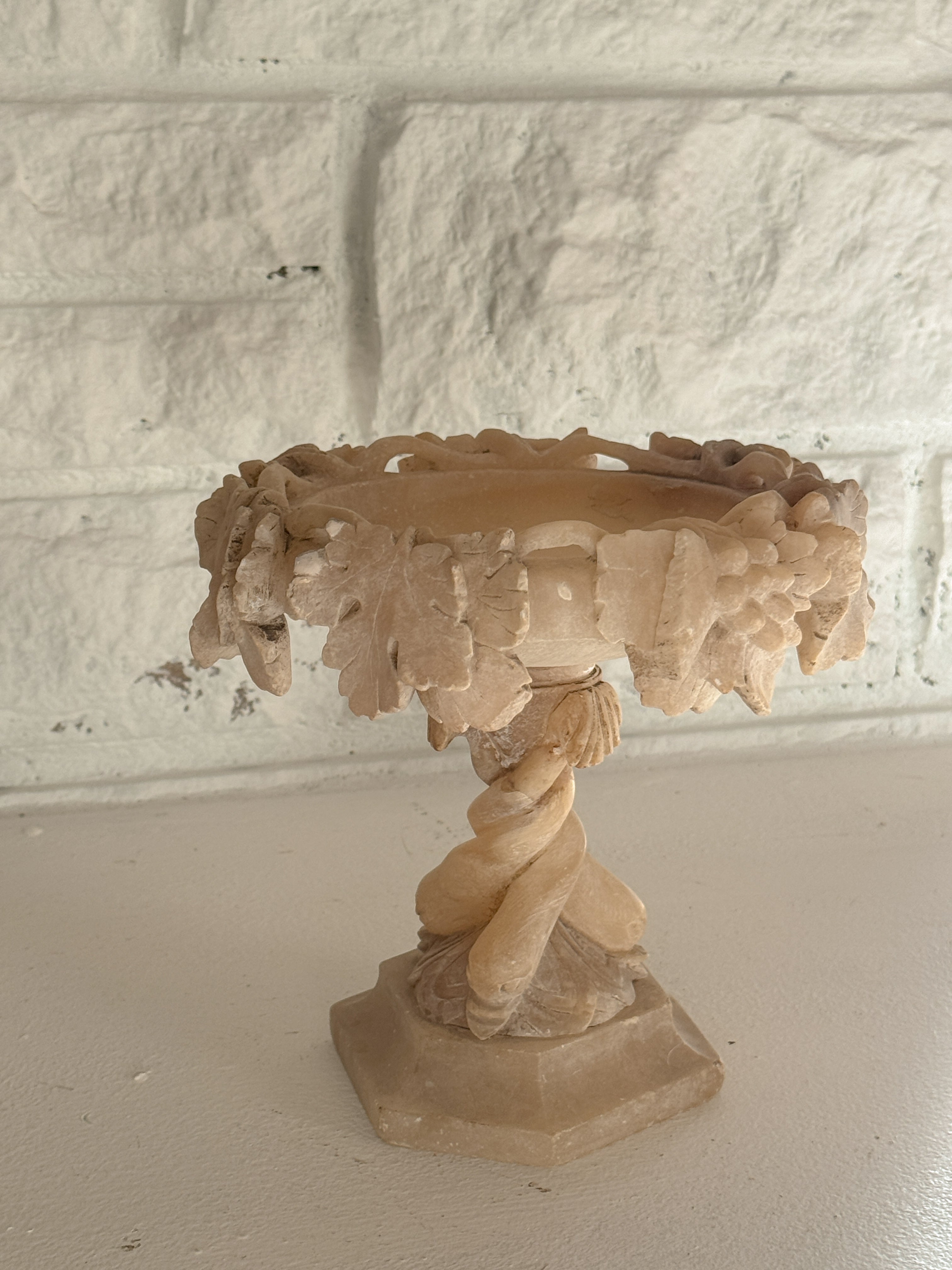
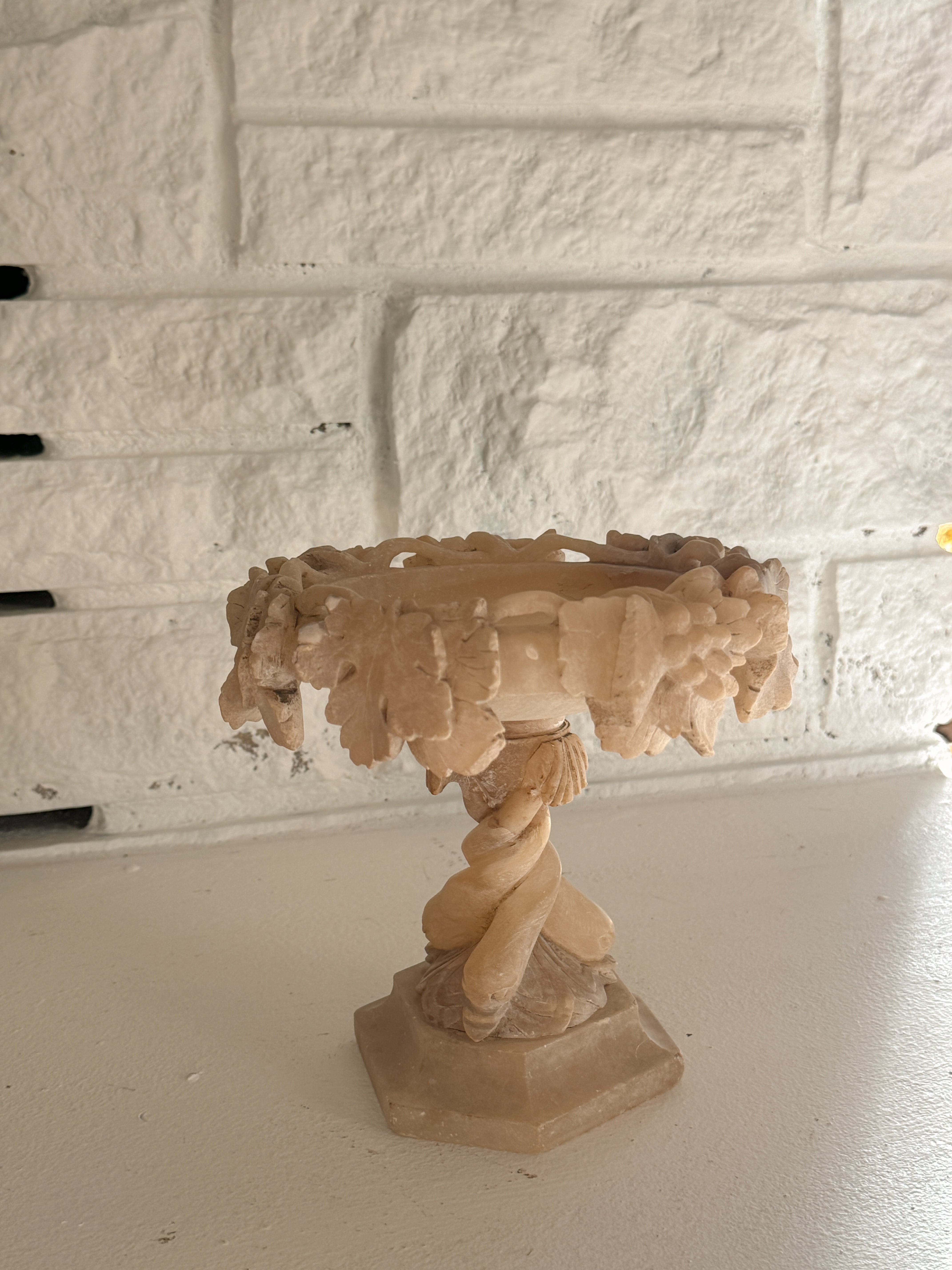
A footed compote tazza carved from translucent alabastro di Volterra, the warm honey-toned alabaster from the Tuscan workshops that have produced sculptural alabaster since antiquity. The rim is densely decorated in the style Bacchique: vine leaves and grape clusters carved in deep relief and pierced à jour, creating the dimensional openwork that distinguishes serious Volterra work from later mass-production.
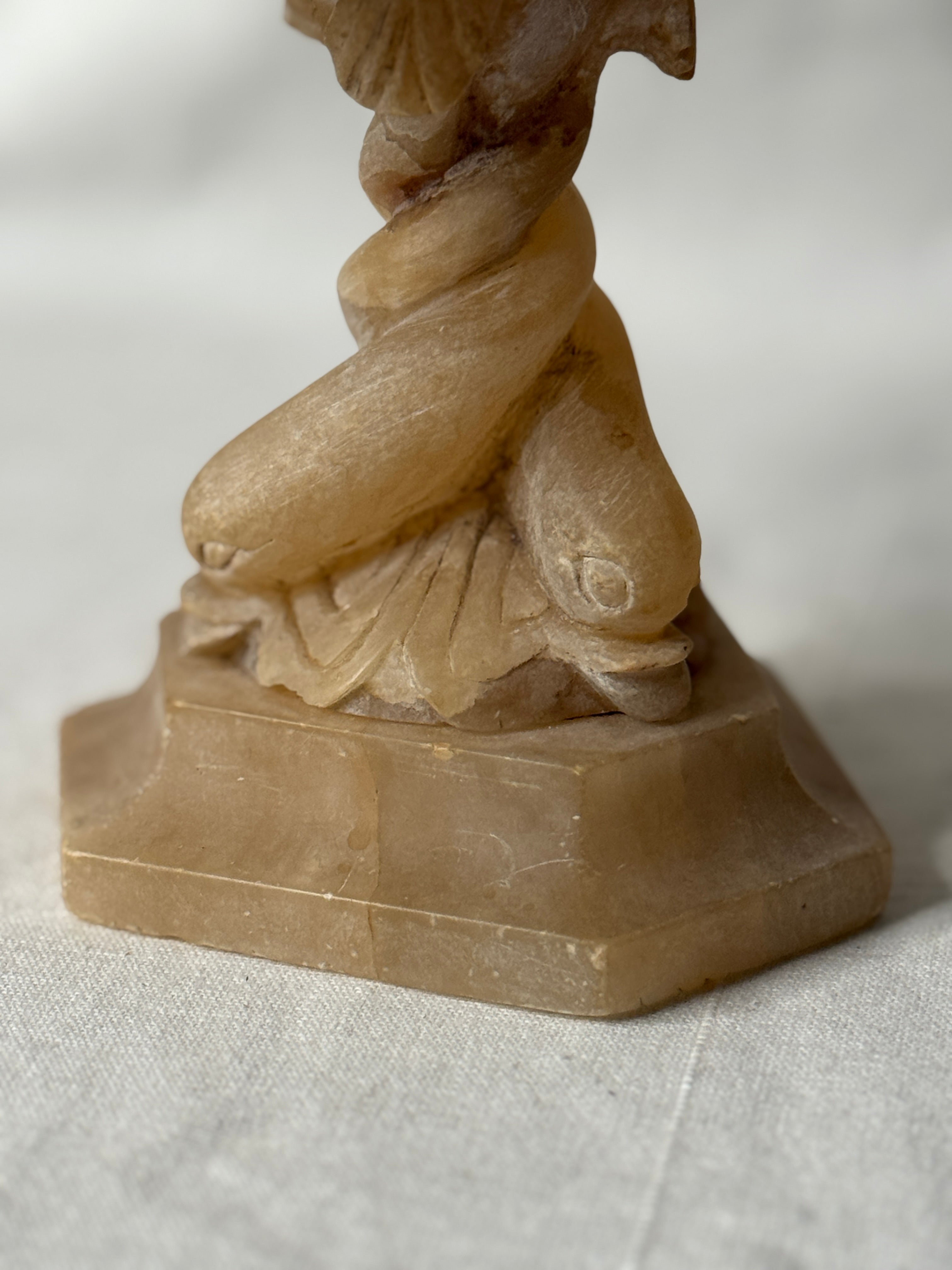
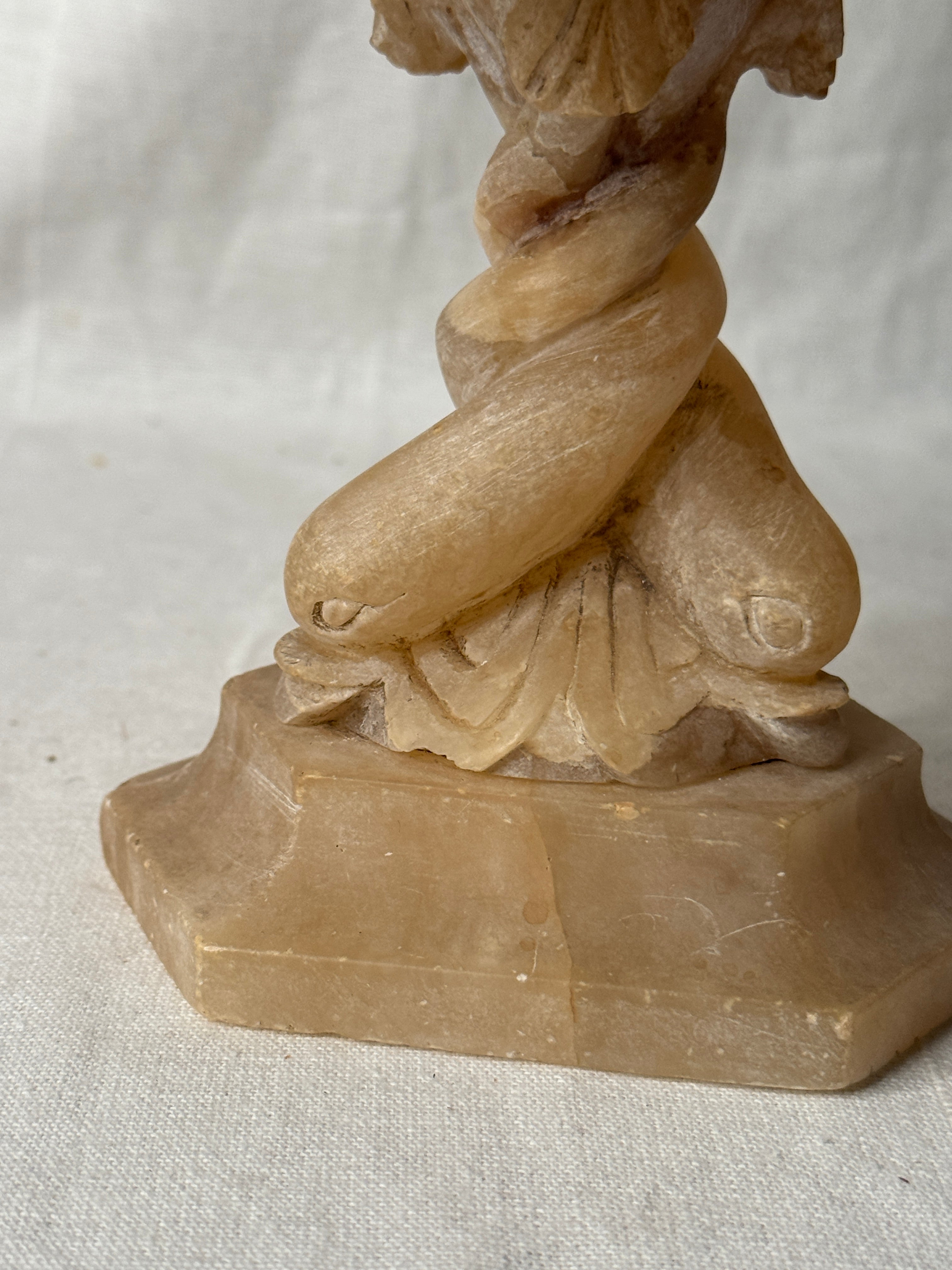
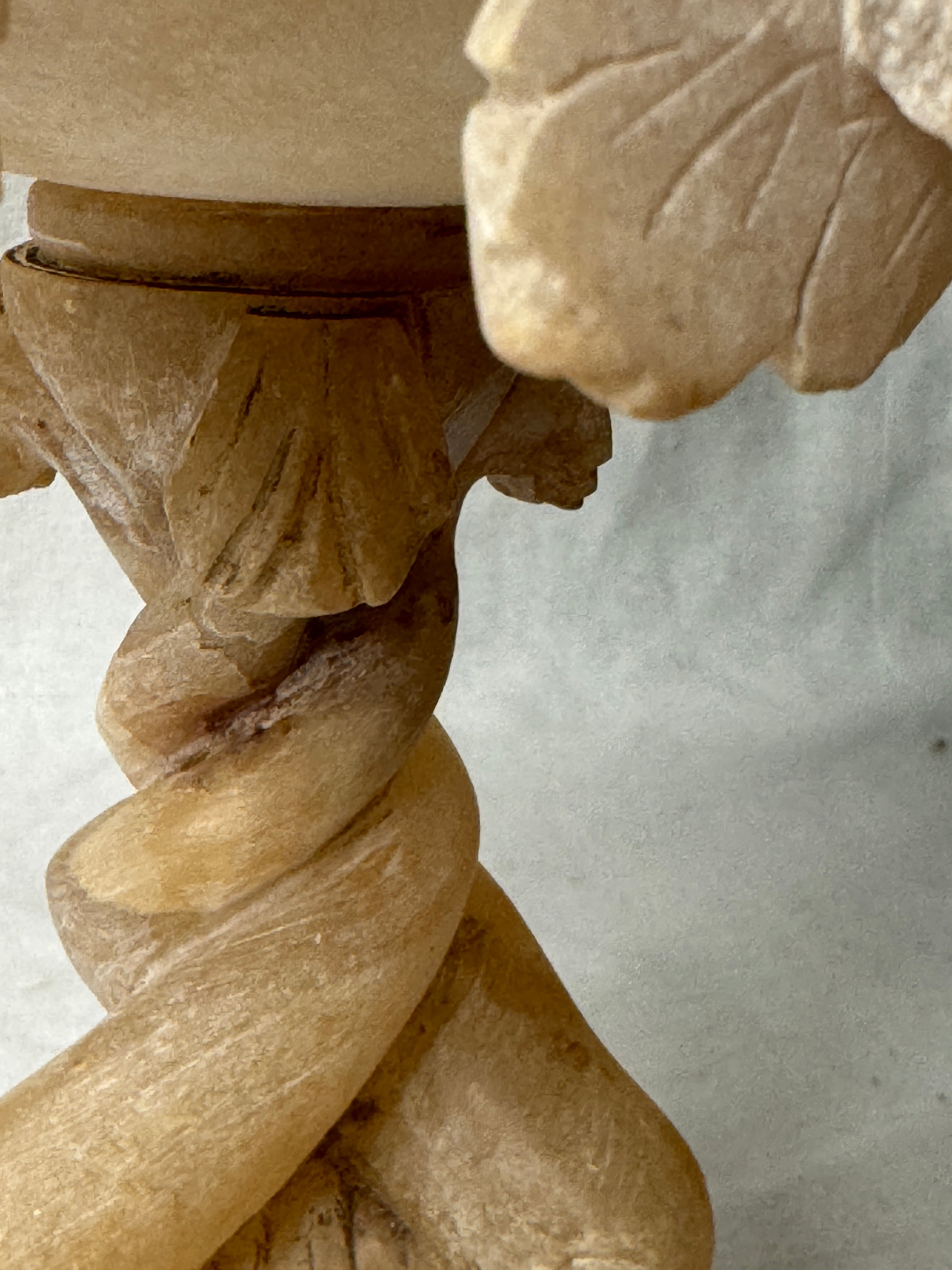
The stem rises from a sculptural base of three intertwined dolphins (dauphins enlacés) supported on shell motifs, a classical Italian sculptural device pulled from Roman antiquity and the Renaissance, where paired dolphins symbolize water, fertility, and abundance. Above, the Bacchic vine pulls the iconography skyward into wine and harvest. The whole composition reads as a complete classical program, base to brim, rising from a stepped hexagonal plinth.
Volterra, Tuscany, late 19th century. The Volterra alabaster industry reached its commercial peak between 1860 and 1900, but this piece sits a tier above standard Grand Tour commercial work, with proper veining in the leaves, individually articulated grape clusters, sculptural dolphin support, and intact openwork throughout.
Dimensions: 7 × 7 in. (bowl), base 4 × 4½ in.
Choose options