
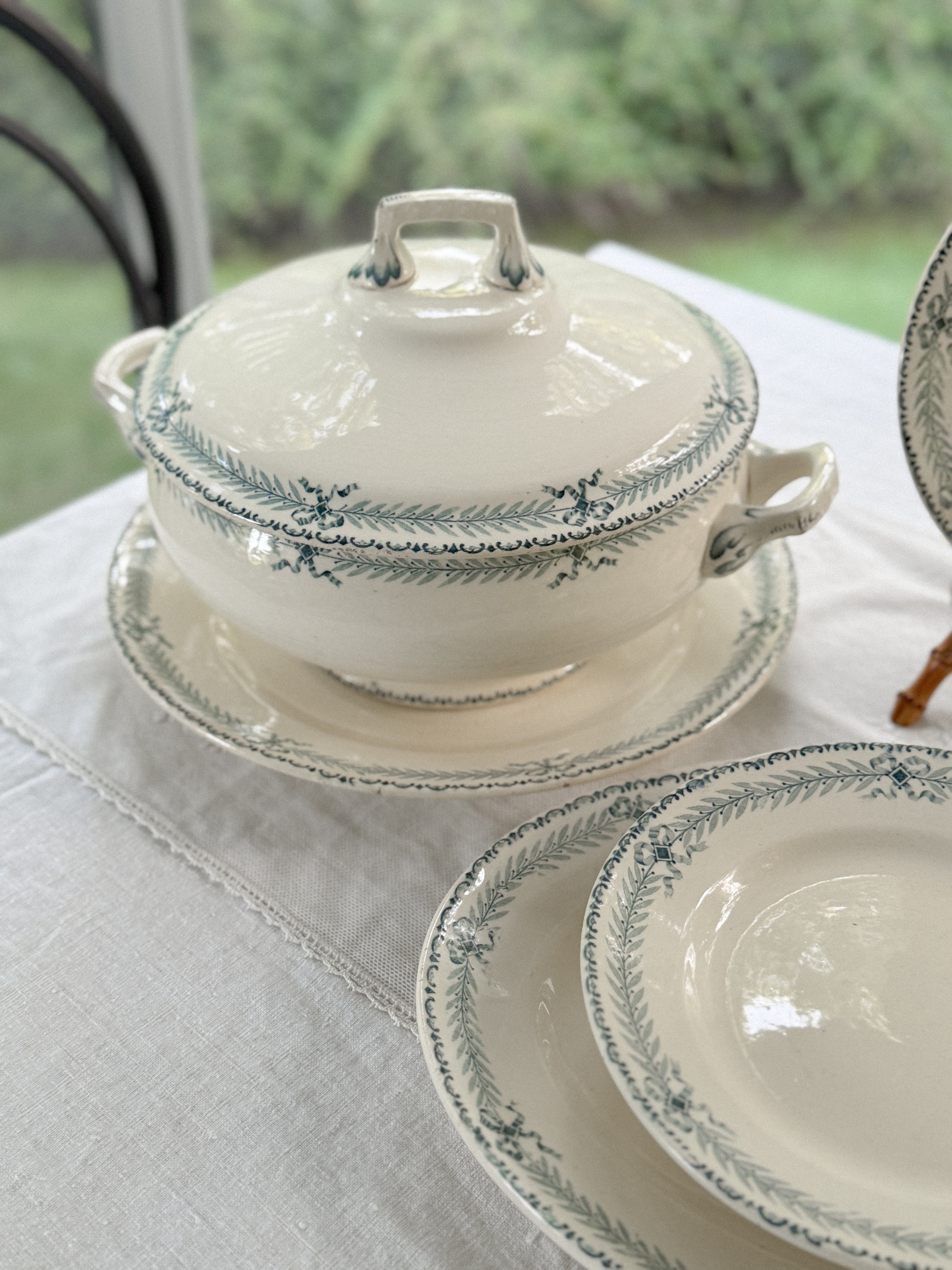
Teal Chinon Soupière
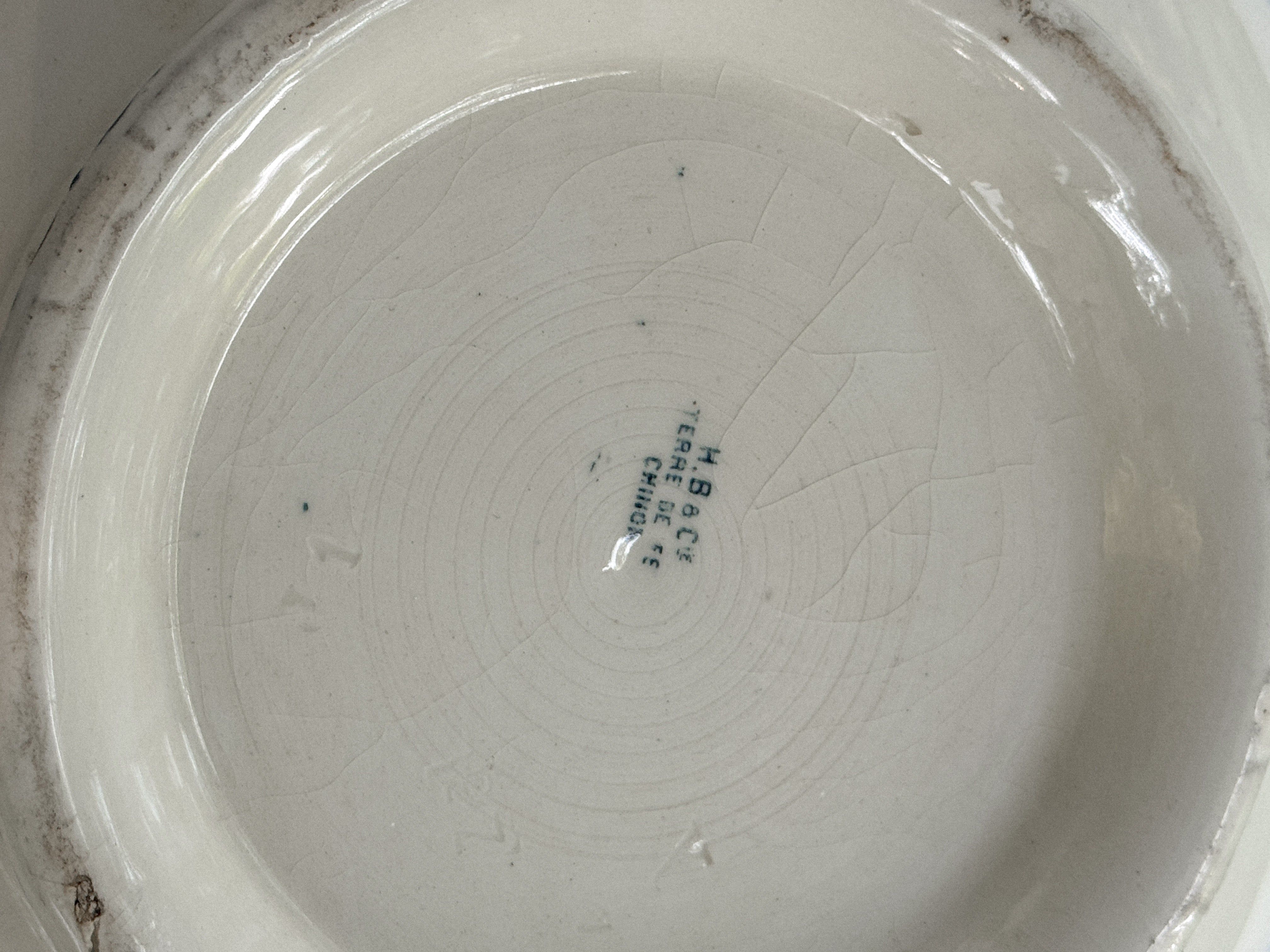
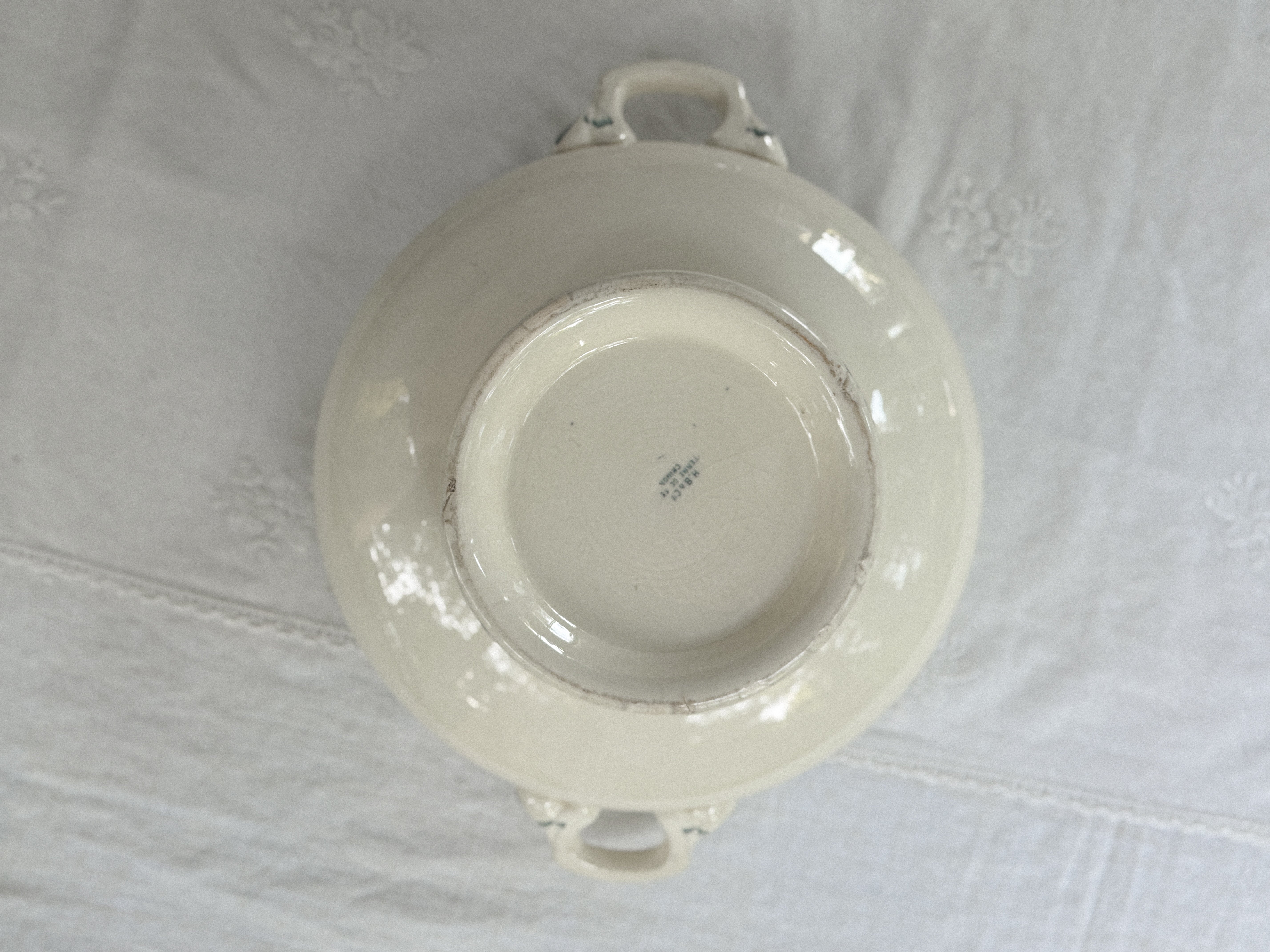
Antique French Transferware Soupière, Chinon Pattern, Choisy-le-Roi
Period
Late 19th to early 20th century, French
Dimensions
13 x 18.5 inches, handle to handle
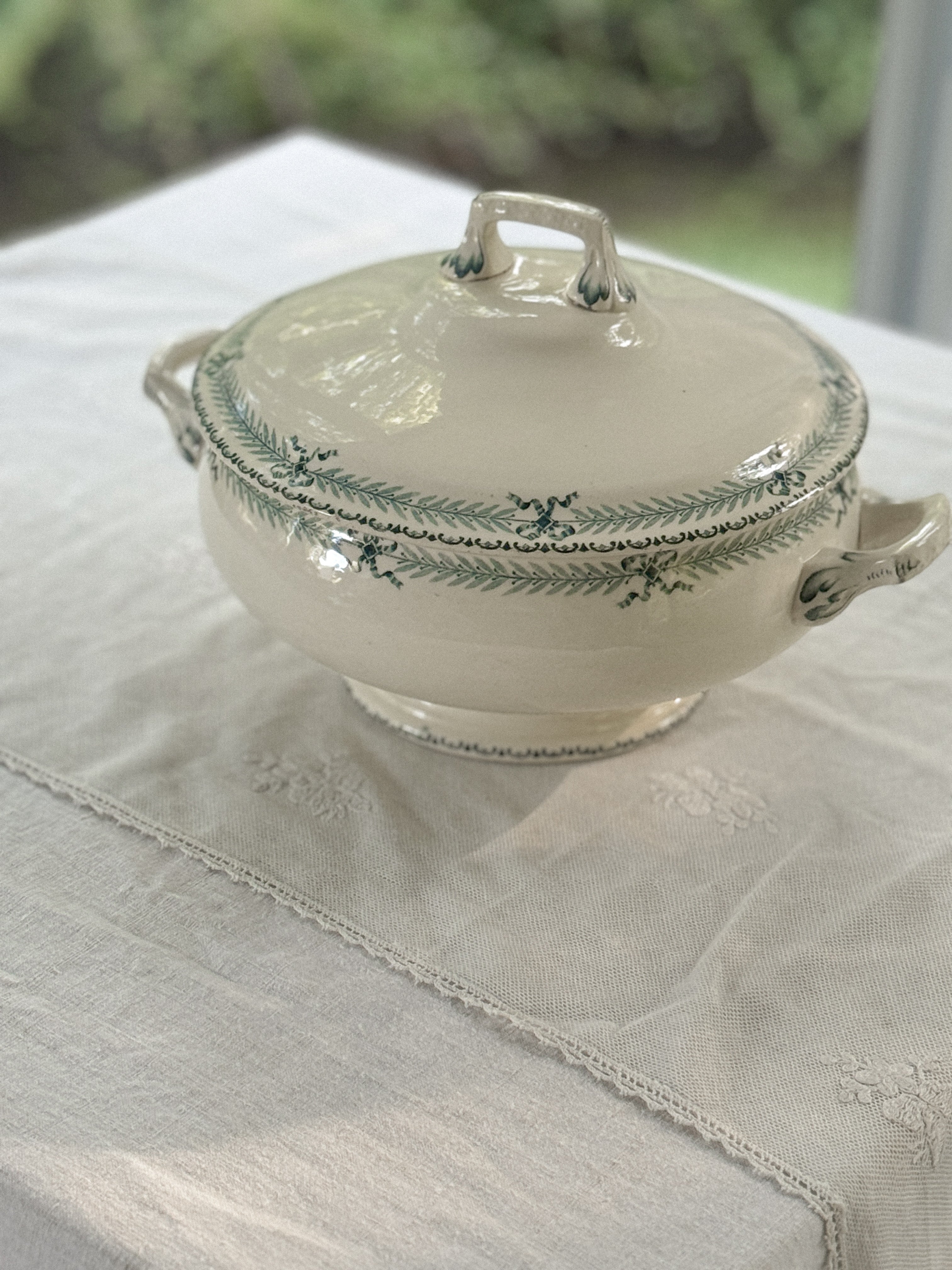
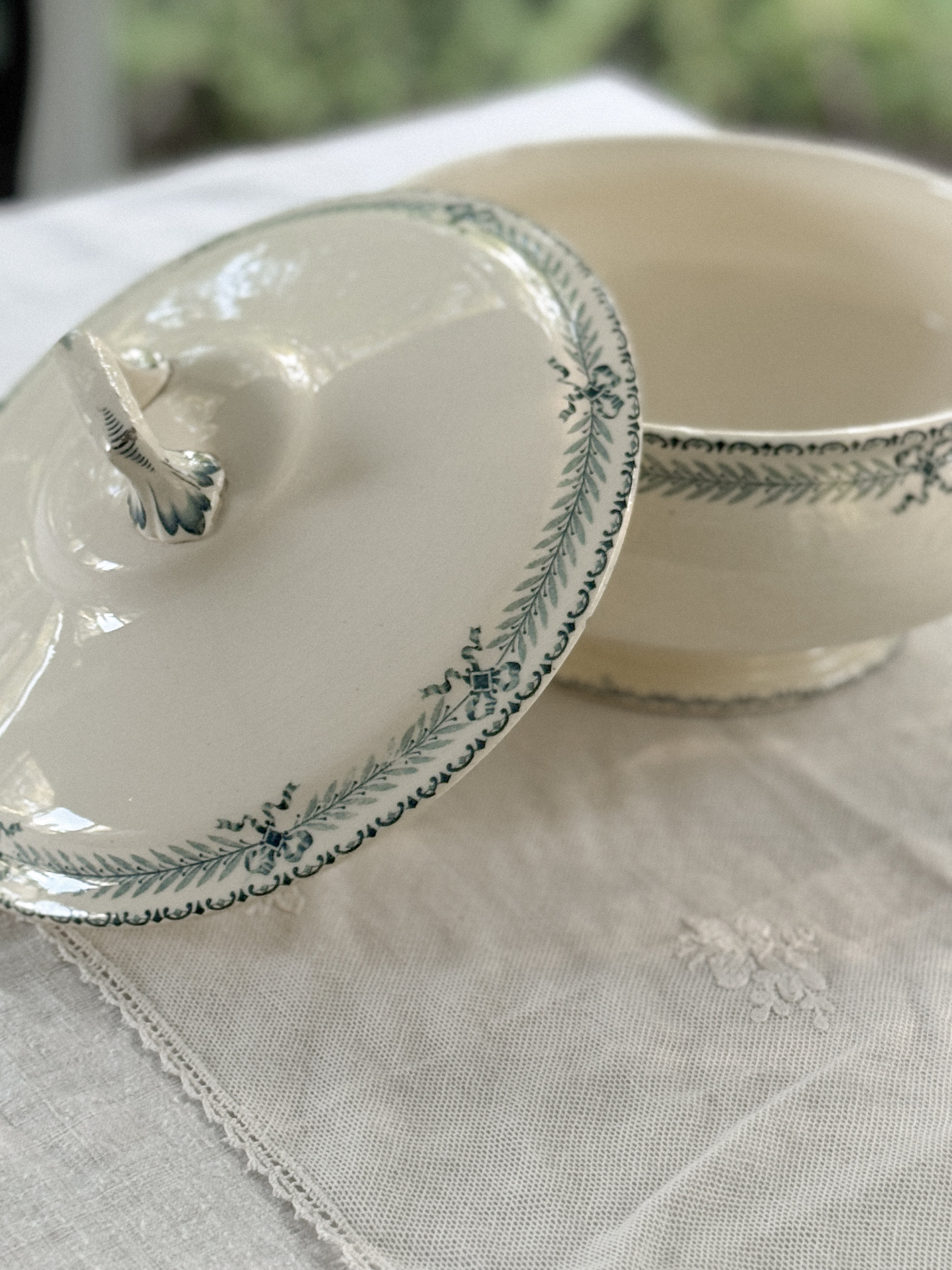
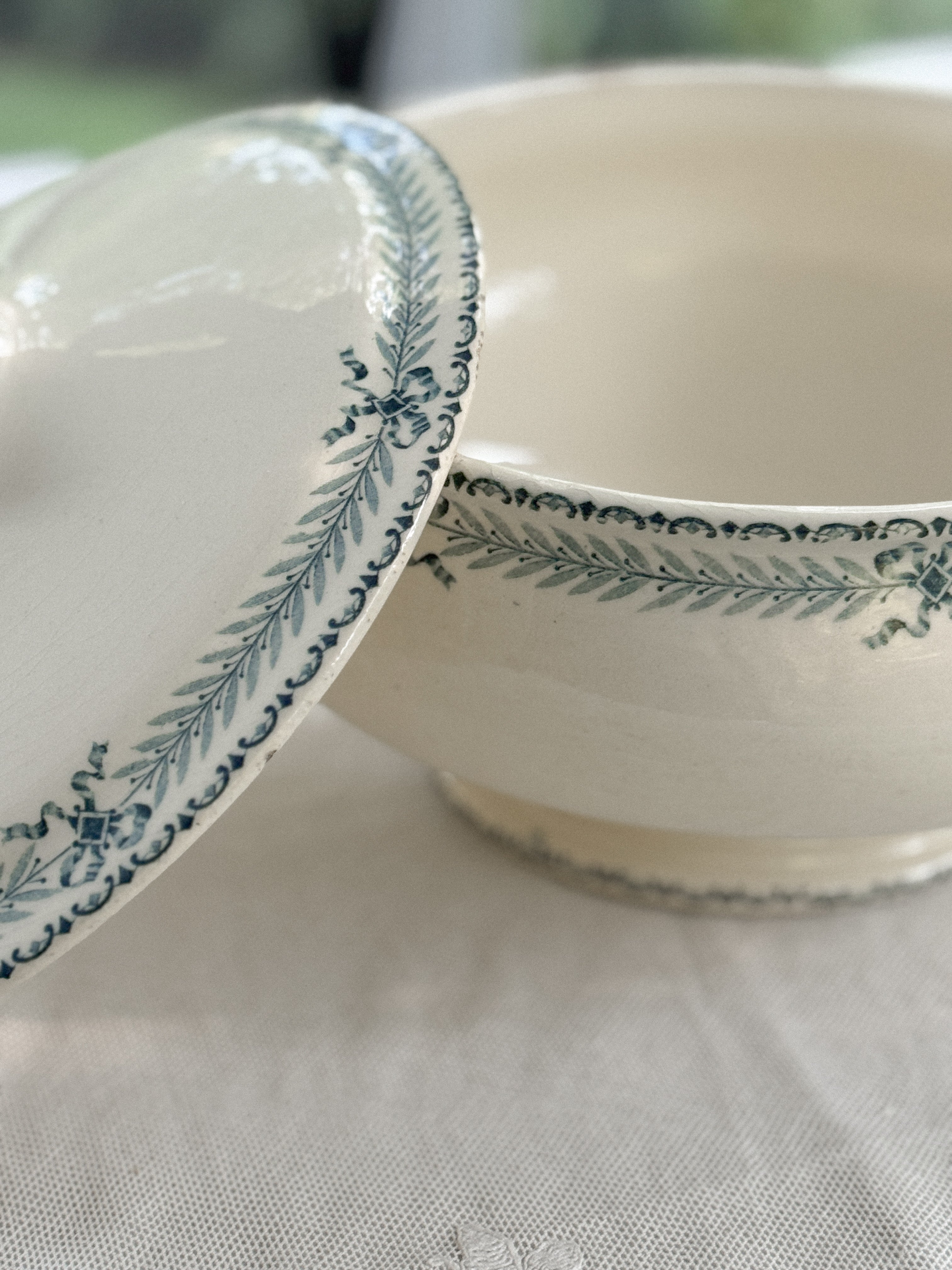
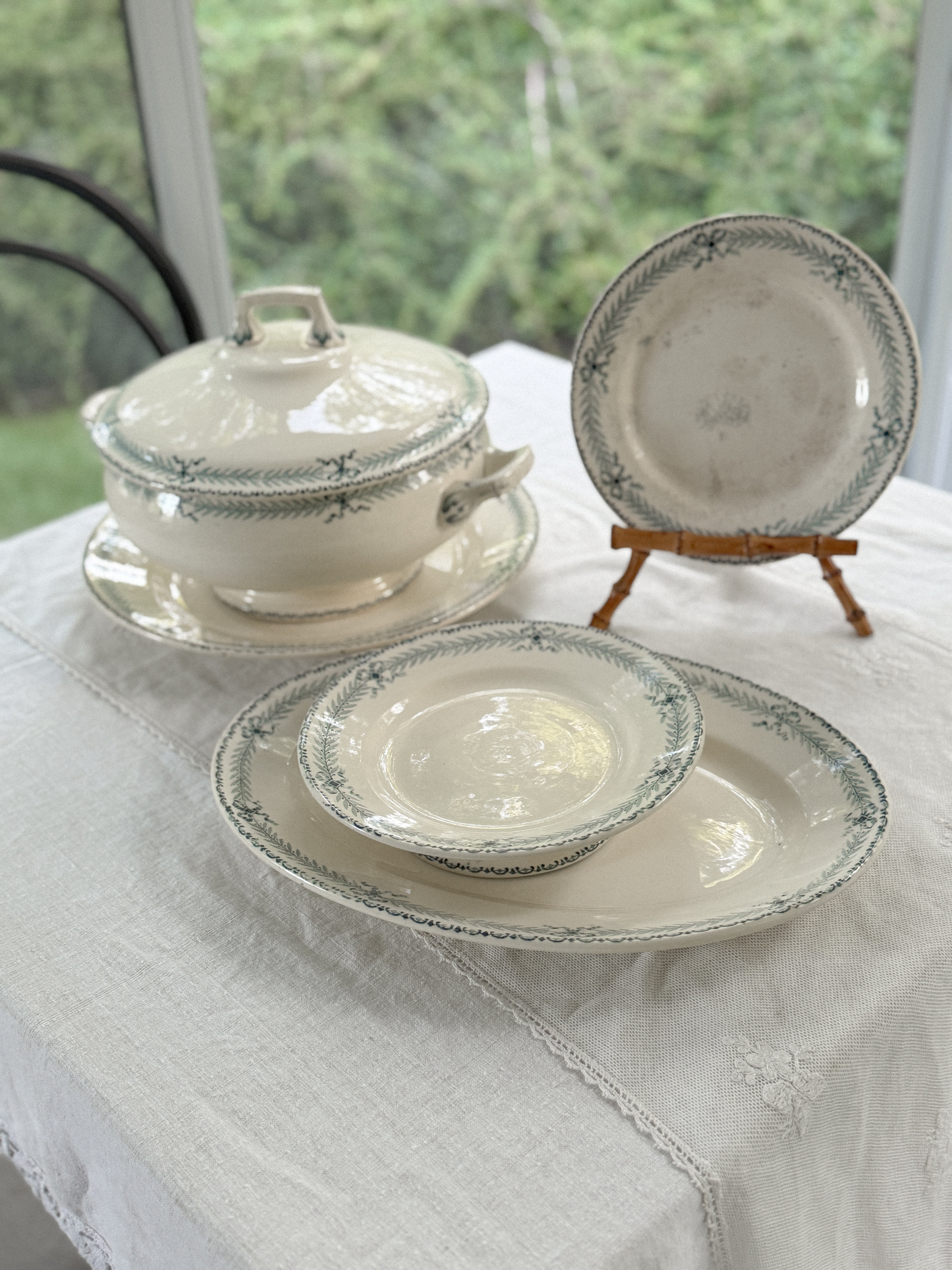
A French transferware soupière in the Chinon pattern, made by H. Boulenger & Cie at Choisy-le-Roi, from a five-piece table service offered individually.
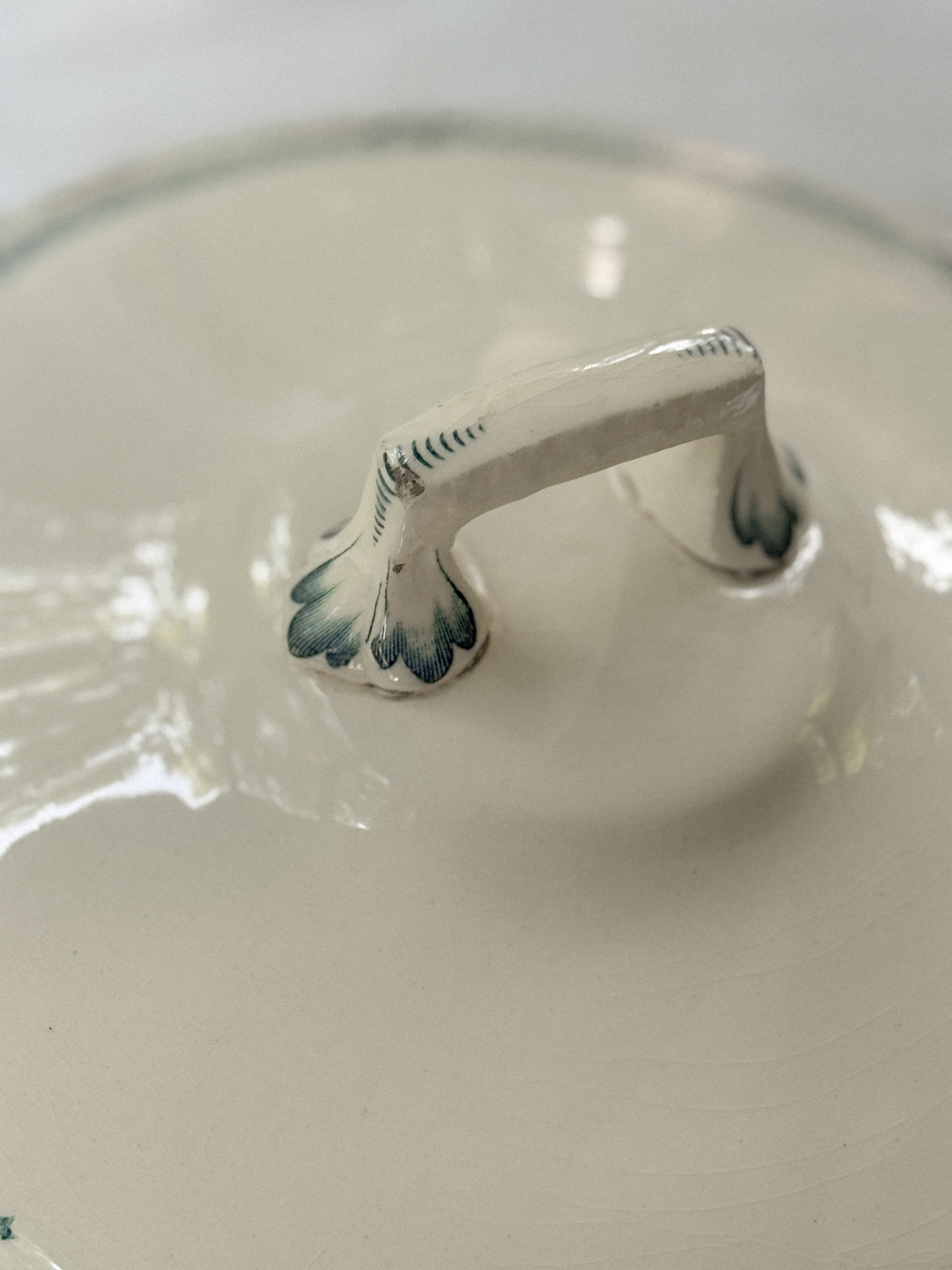
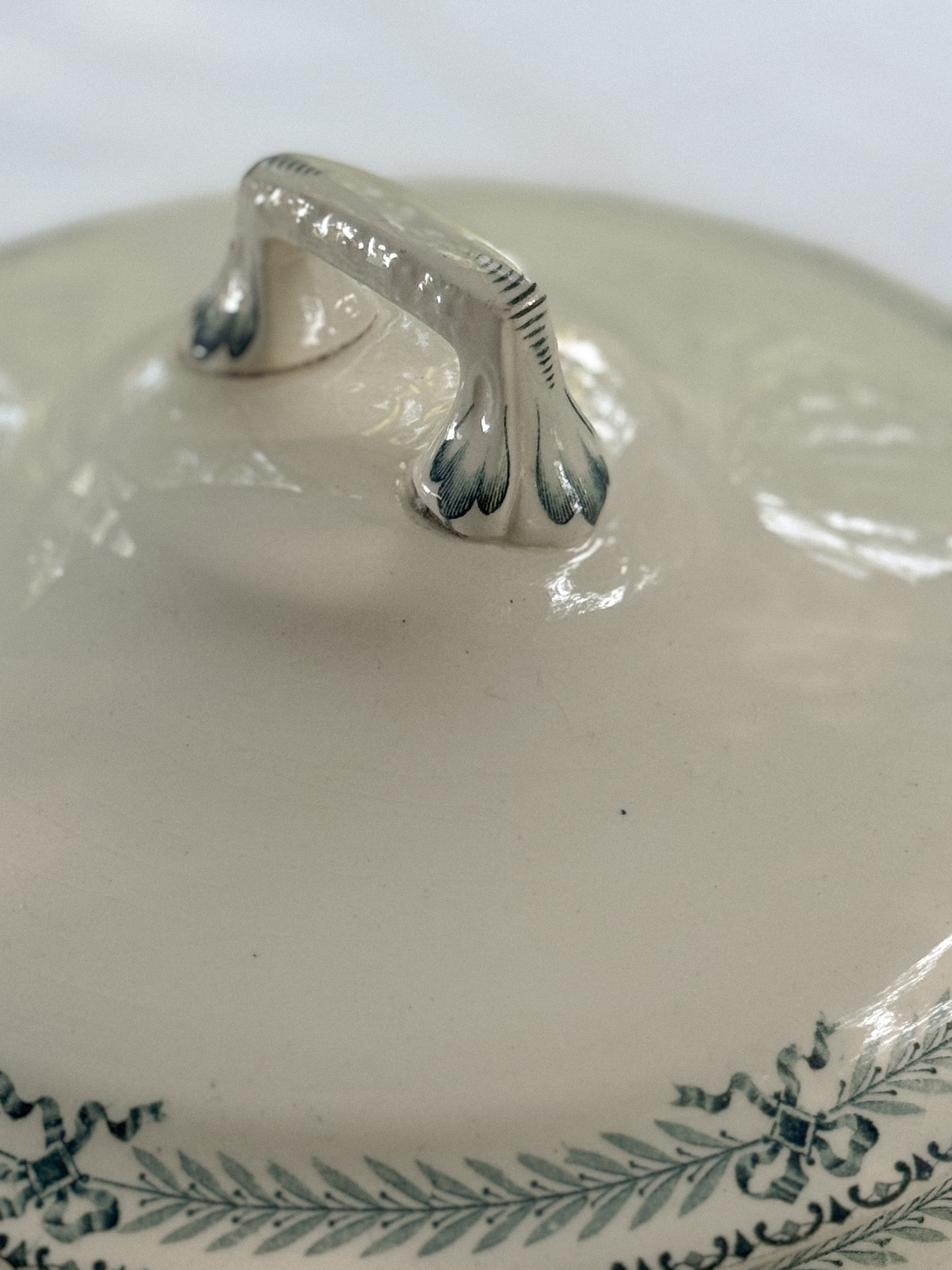
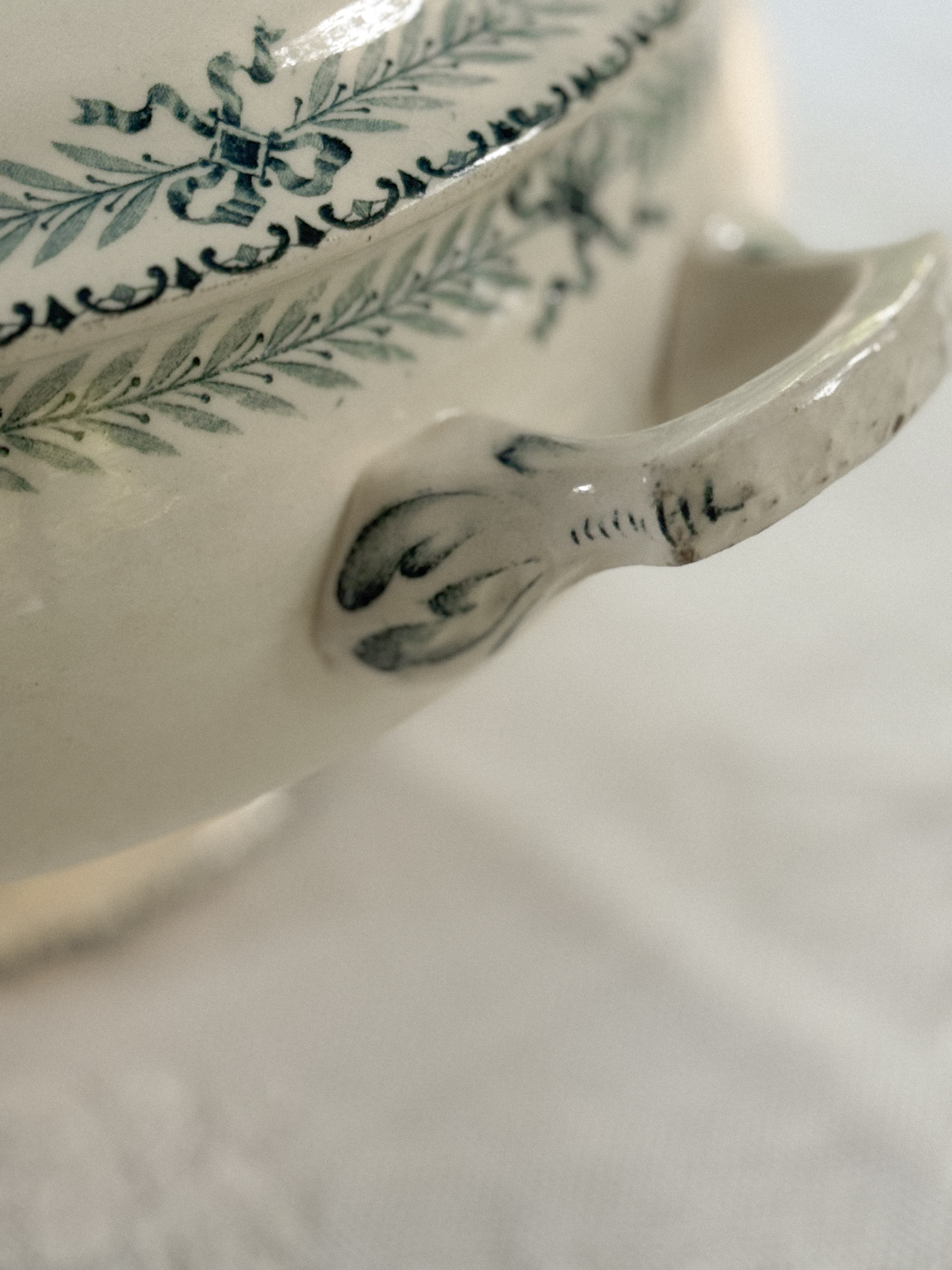
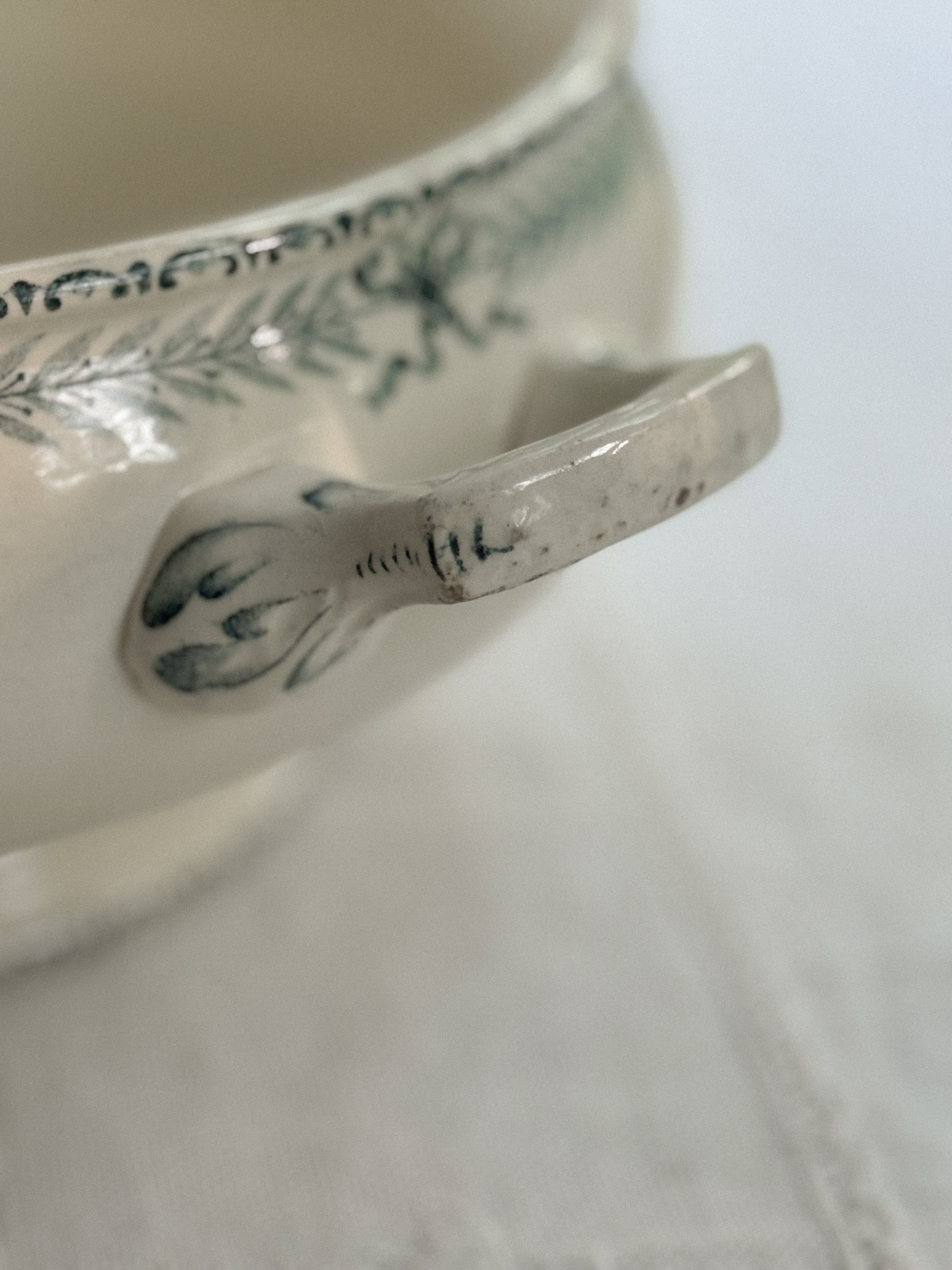
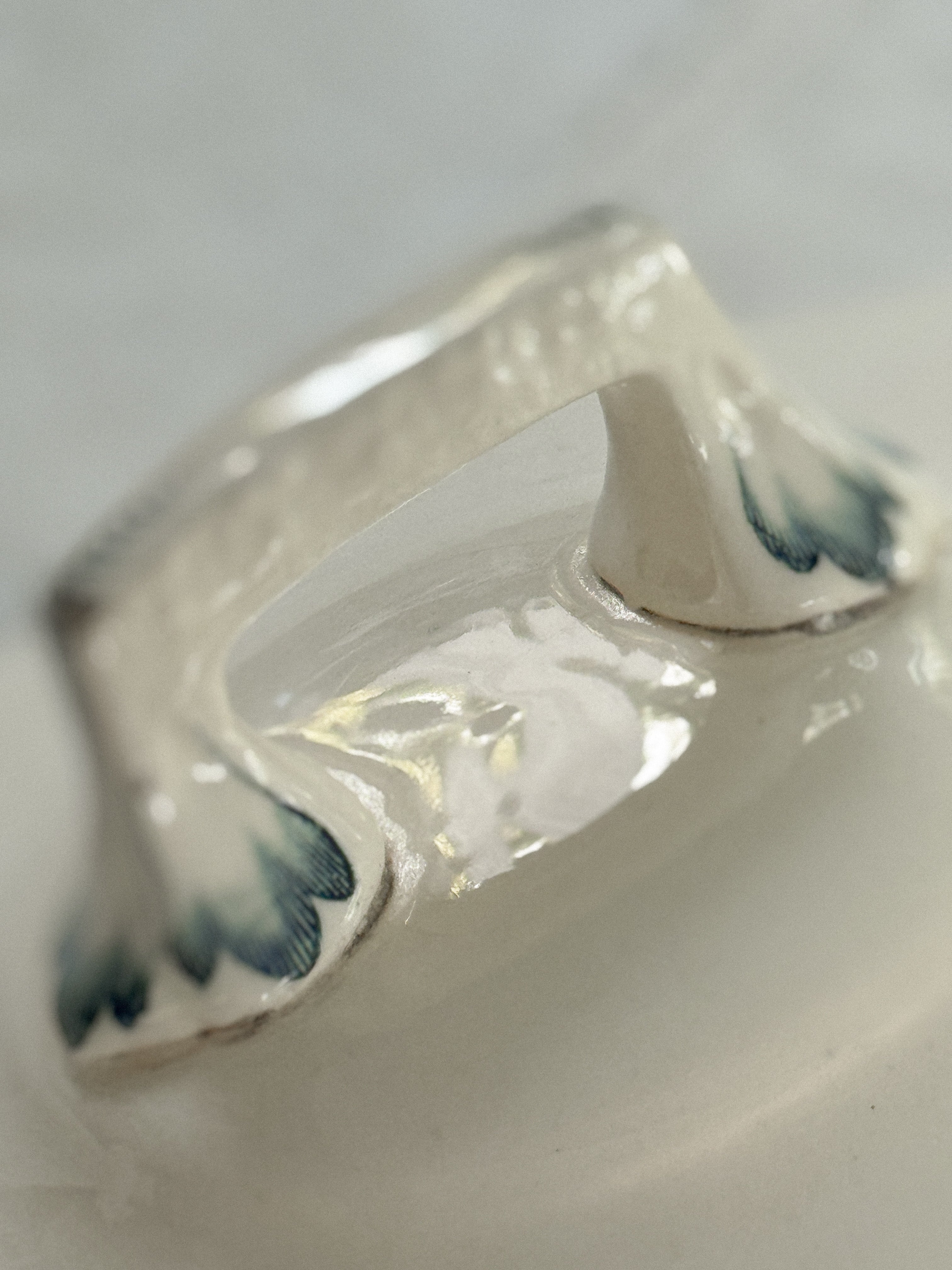
The border is a laurel frieze printed in teal blue, paired sprigs tied off at intervals with a ribbon knotted through a small diamond medallion, lined along its inner edge with a narrow scalloped band. It runs continuously around the rim of both the bowl and the lid. The glaze is a warm ivory. The handles are molded in relief with a narrow band of floral ornament along the top, rising from terminals in the same teal blue, and the lid carries its own strap handle at the top.
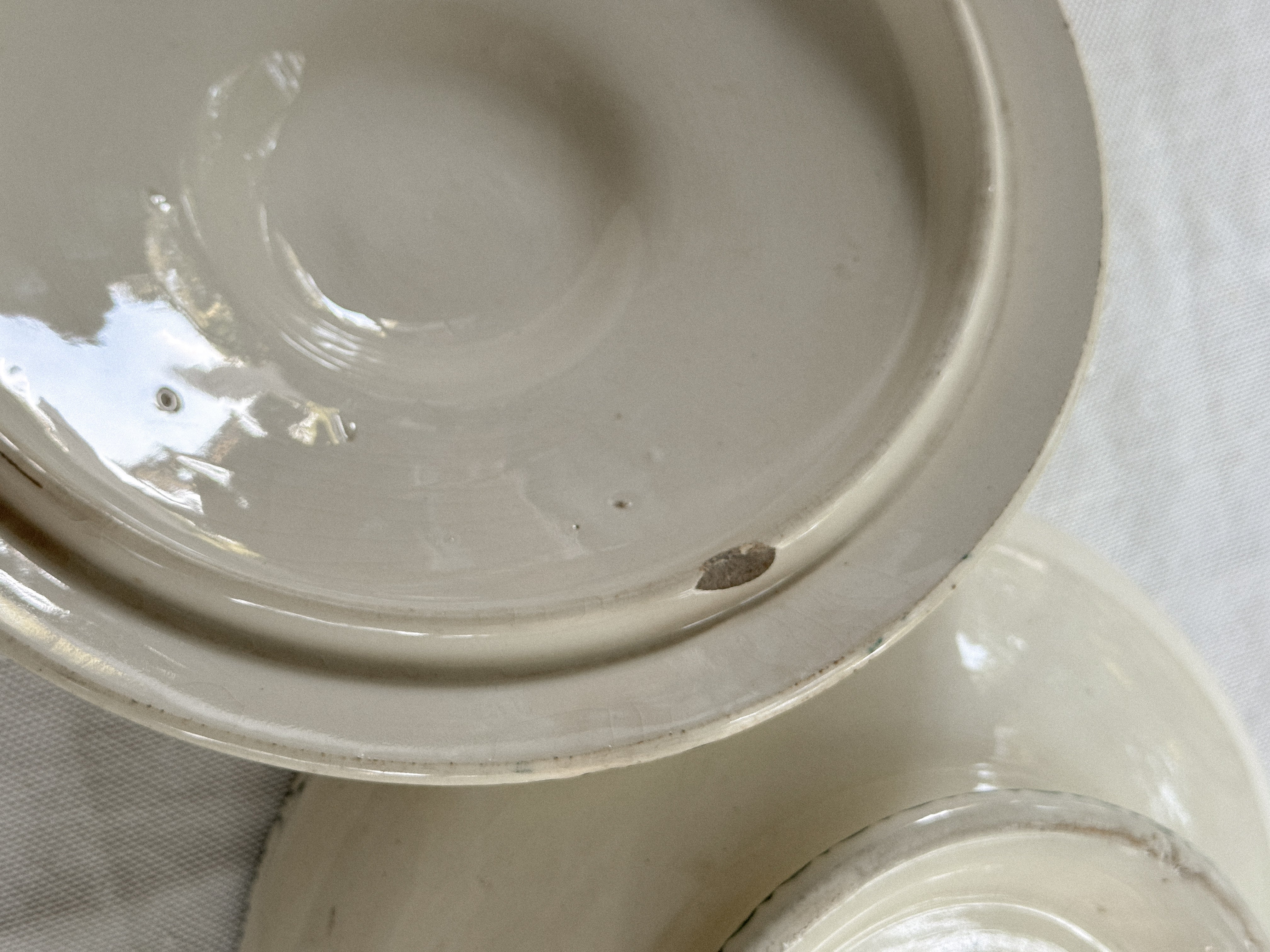
The soupière shows wear consistent with its age and use. The lid has a chip on its underside, hidden when it's fitted onto the bowl. Sold as found.
Historical Context
Choisy-le-Roi's faience works began in 1804, on the Seine just south of Paris. The Boulenger family entered the business in 1836, and Hippolyte Boulenger renamed the firm H. Boulenger & Cie in 1863, growing it into one of the region's larger producers of everyday French tableware. Laurel bound with ribbon is a classical motif, carried into nineteenth century French ceramic pattern books as part of the wider neoclassical revival. Chinon takes its name from the town on the Loire, where Joan of Arc met the future Charles VII in 1429, the same naming convention Sarreguemines used for its own Obernai pattern.
Styling Ideas
Use it for soup or stew at the table, or set it out as a catchall for produce or cut flowers on a kitchen island. It pairs naturally with the matching round platter as a stand underneath.
Choose options