
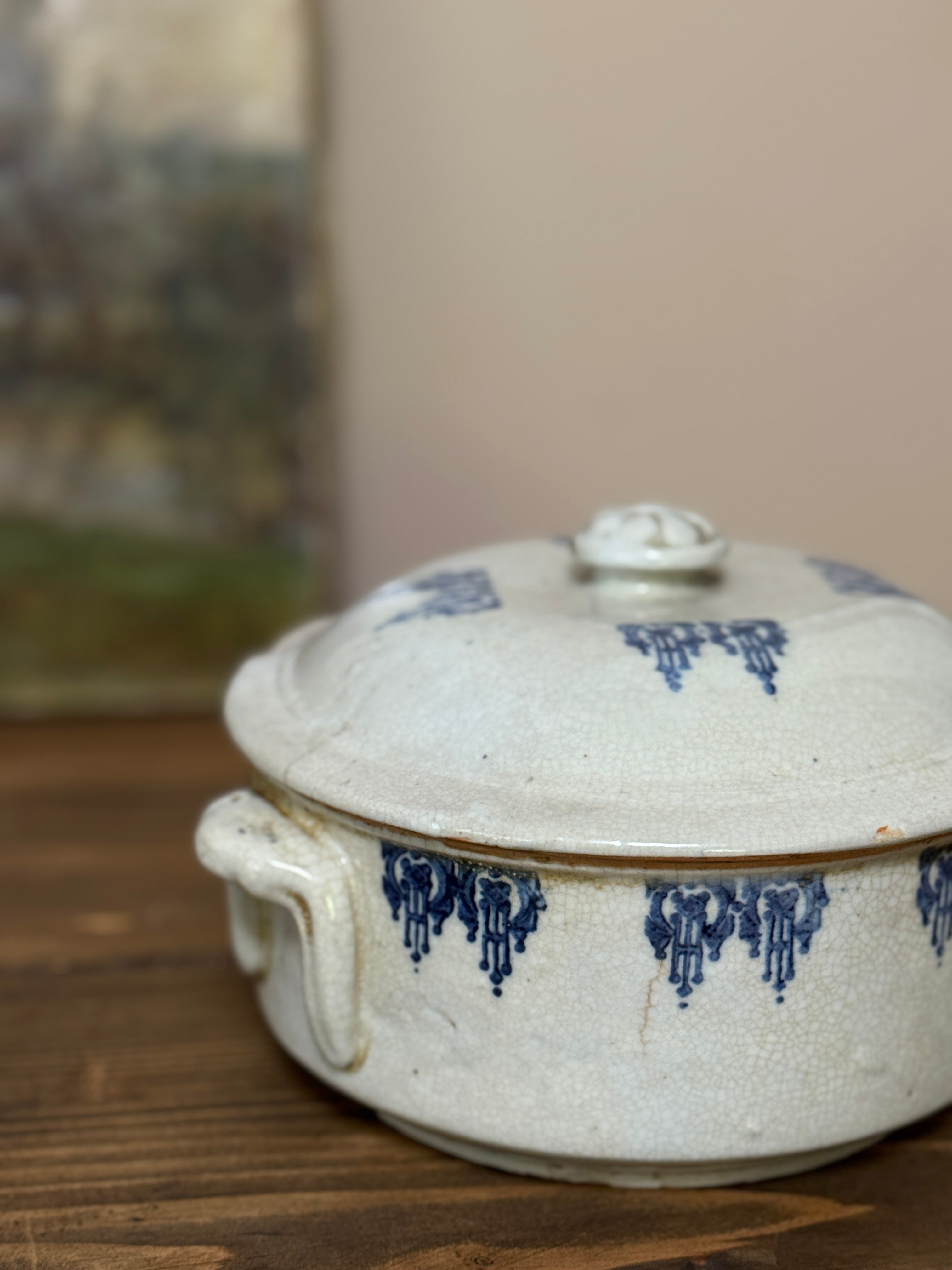
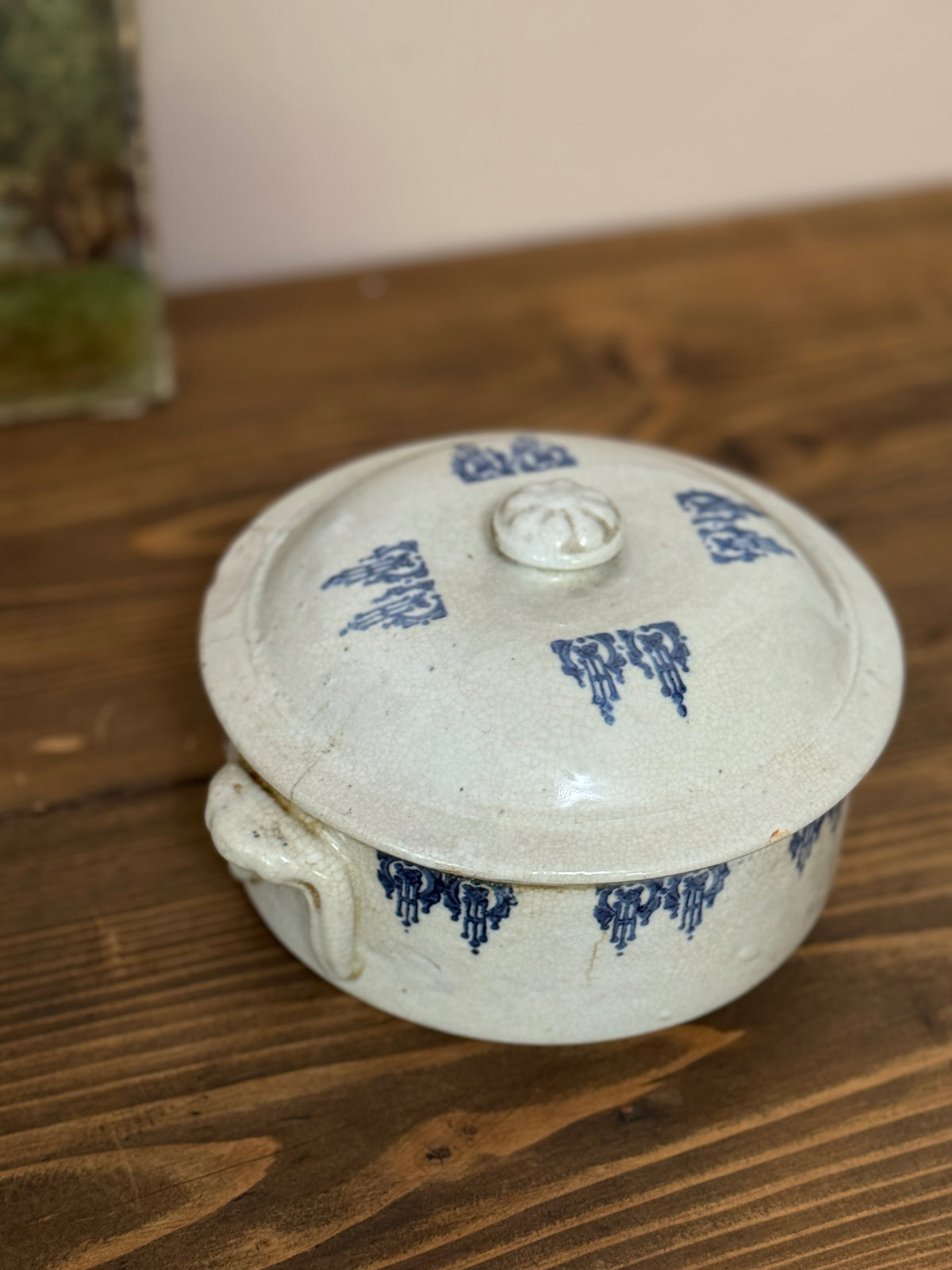
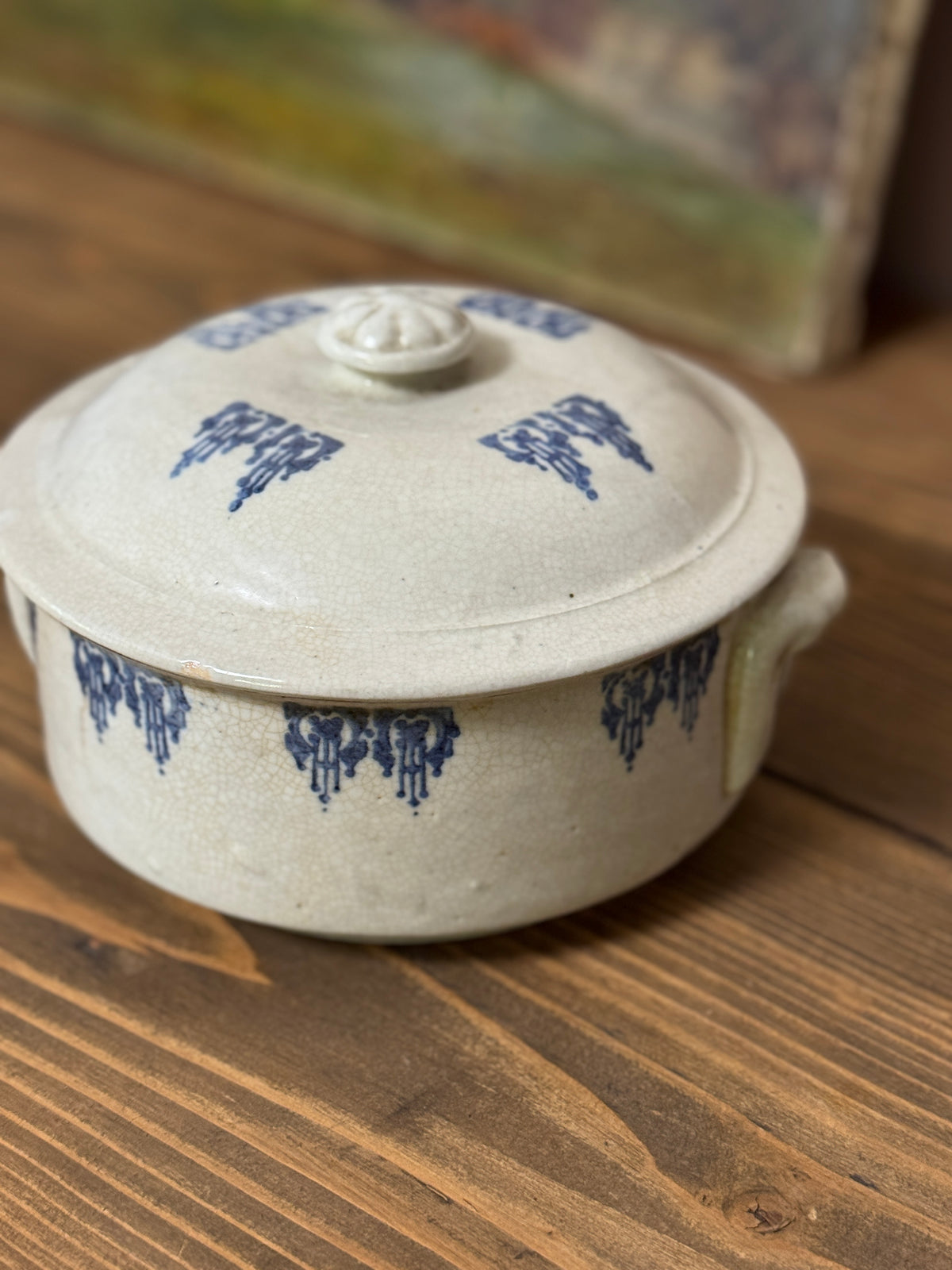
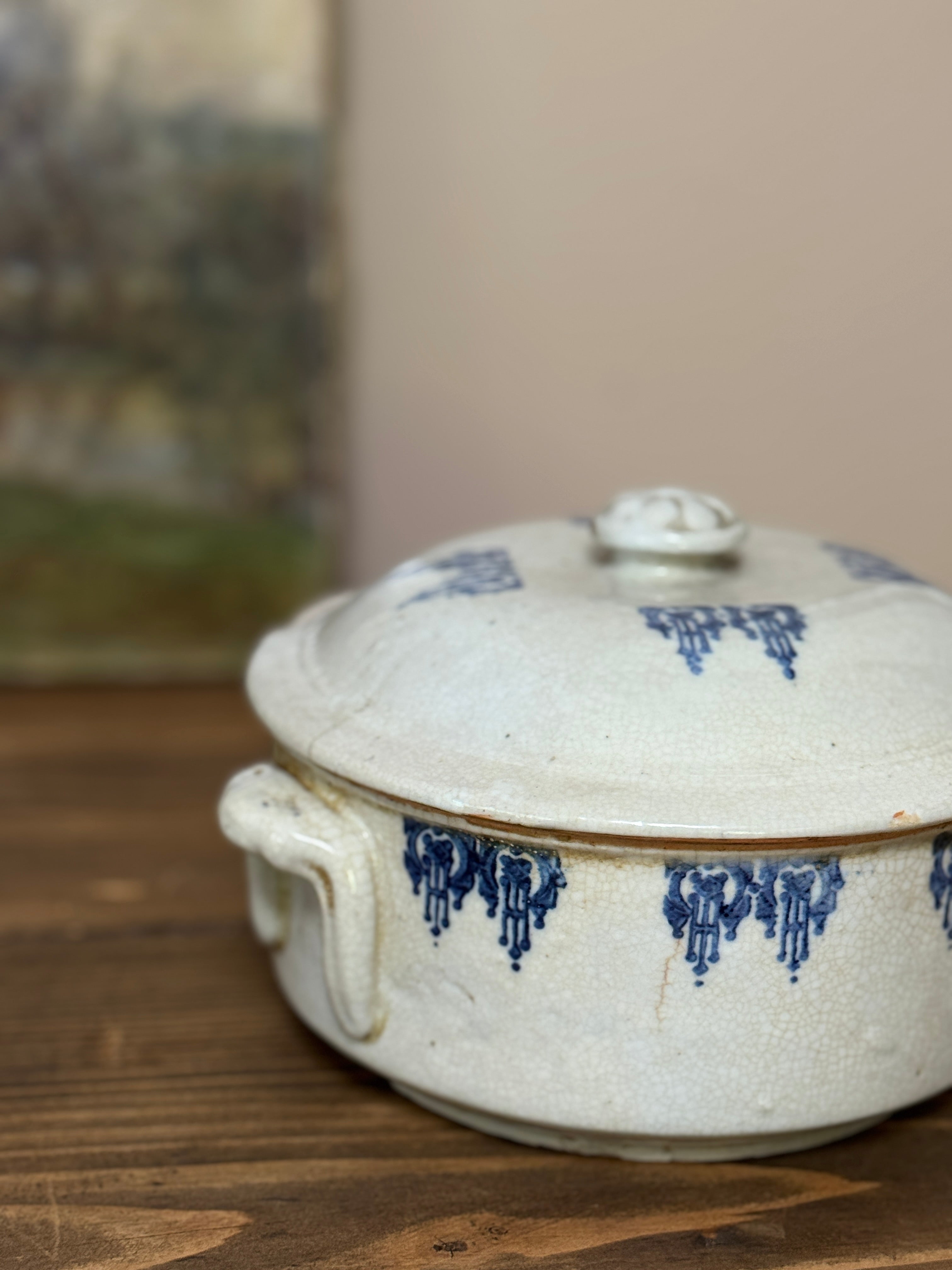
Antique French Saint-Uze Covered Dish, Blue Lambrequin
Period: 19th century, French
Size: 7 inches across, 8¼ inches with handles, 5¼ inches tall with the lid, 3¼ inches without, 5½ inch foot
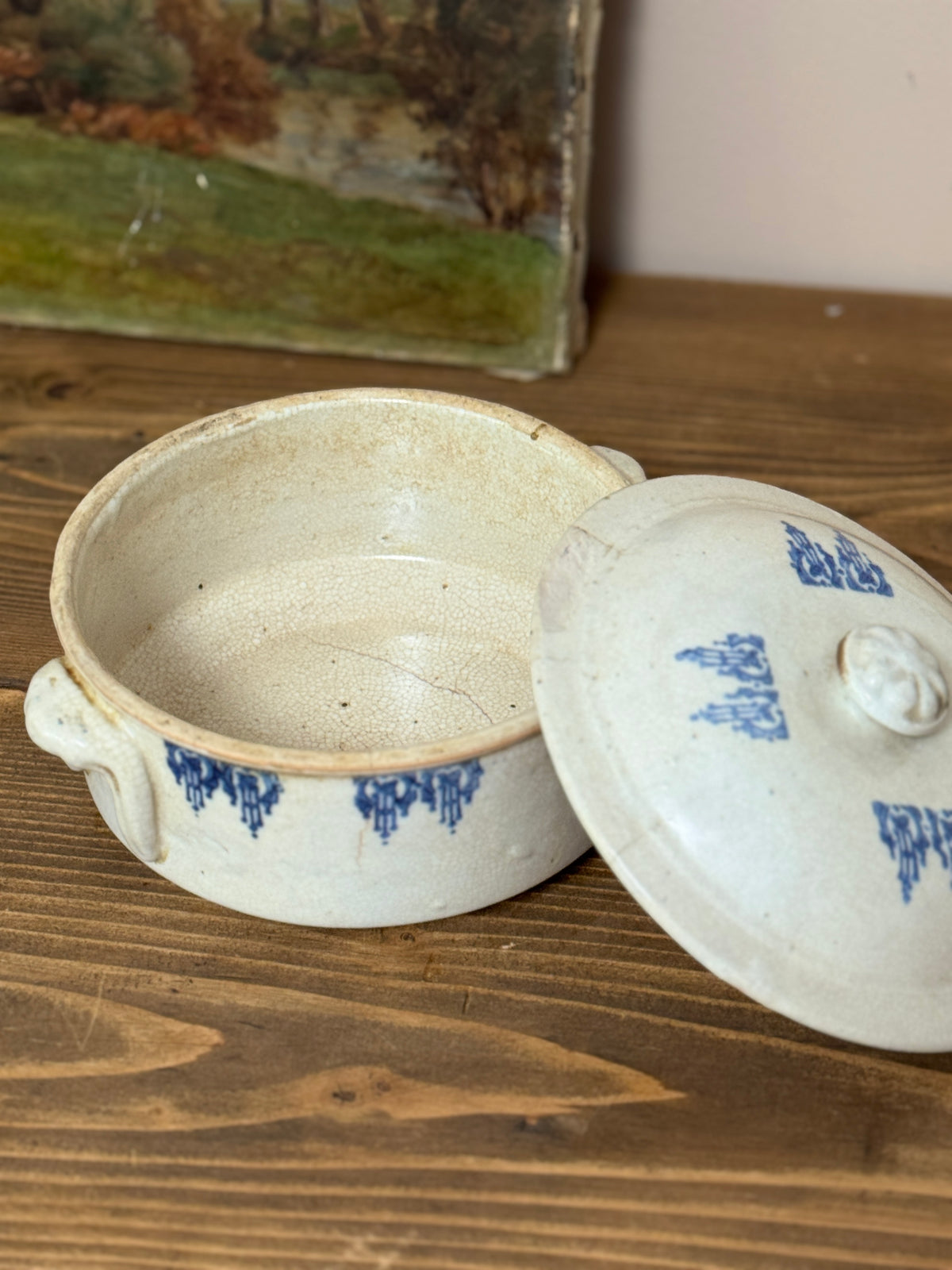
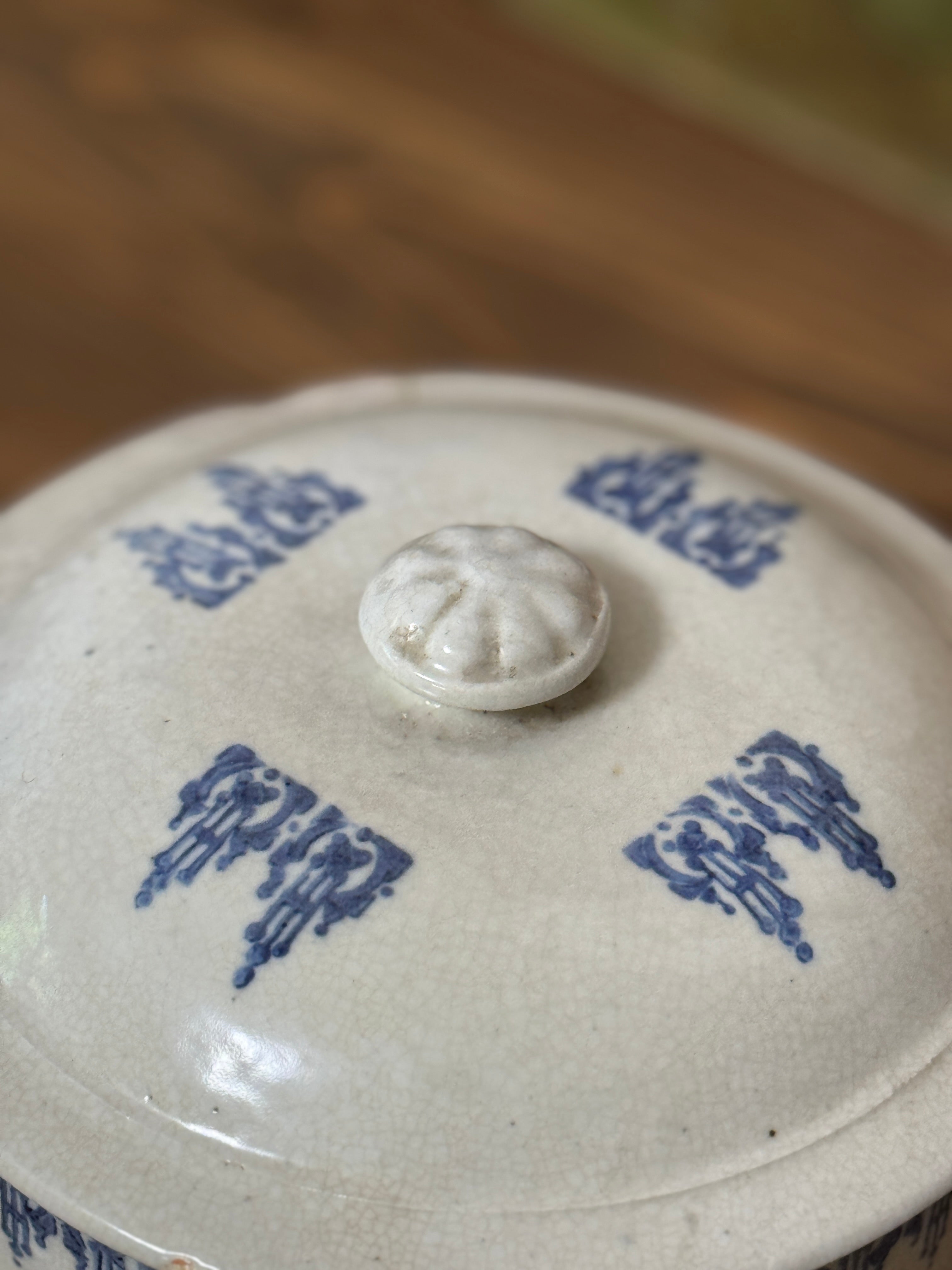
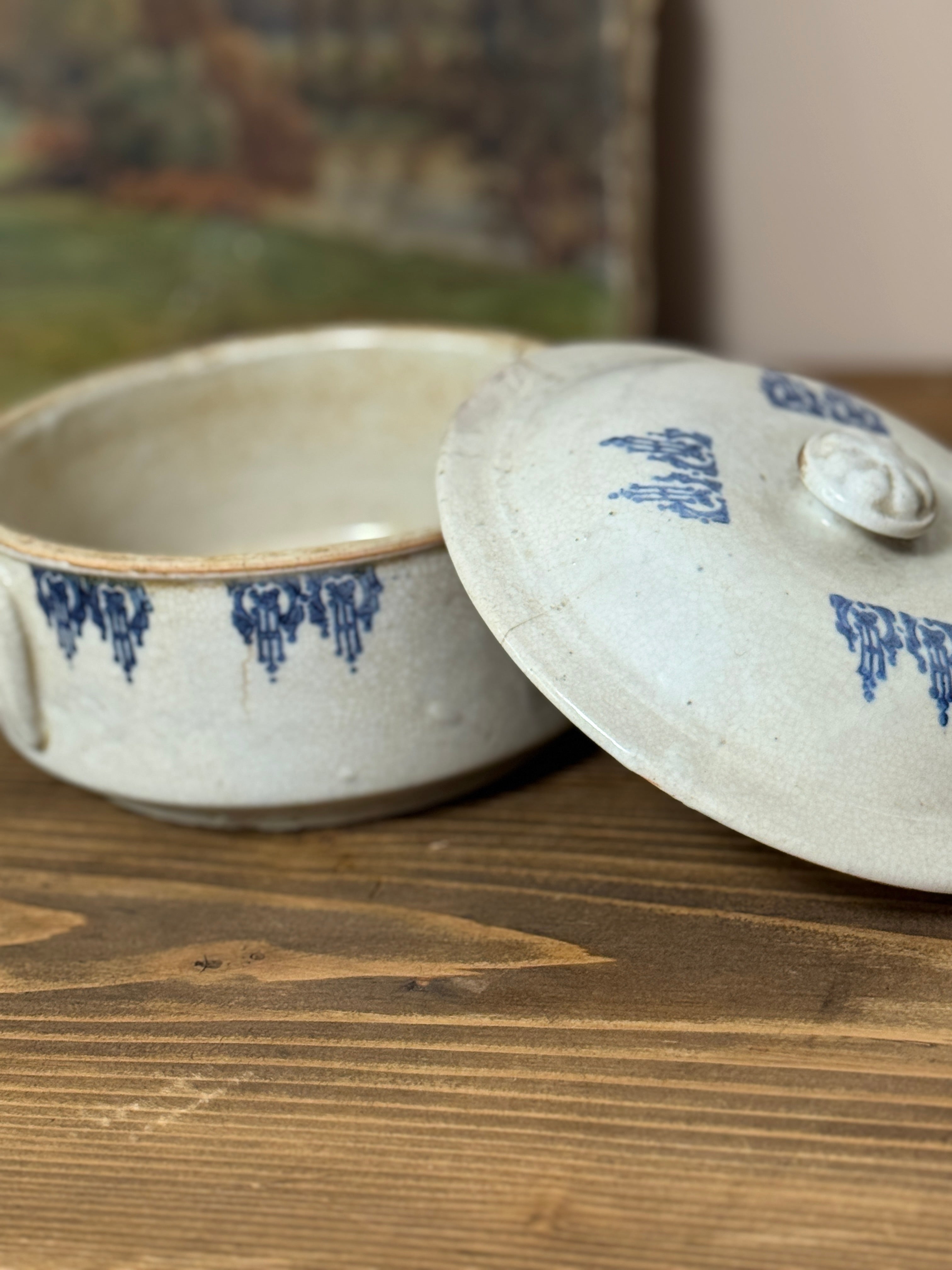
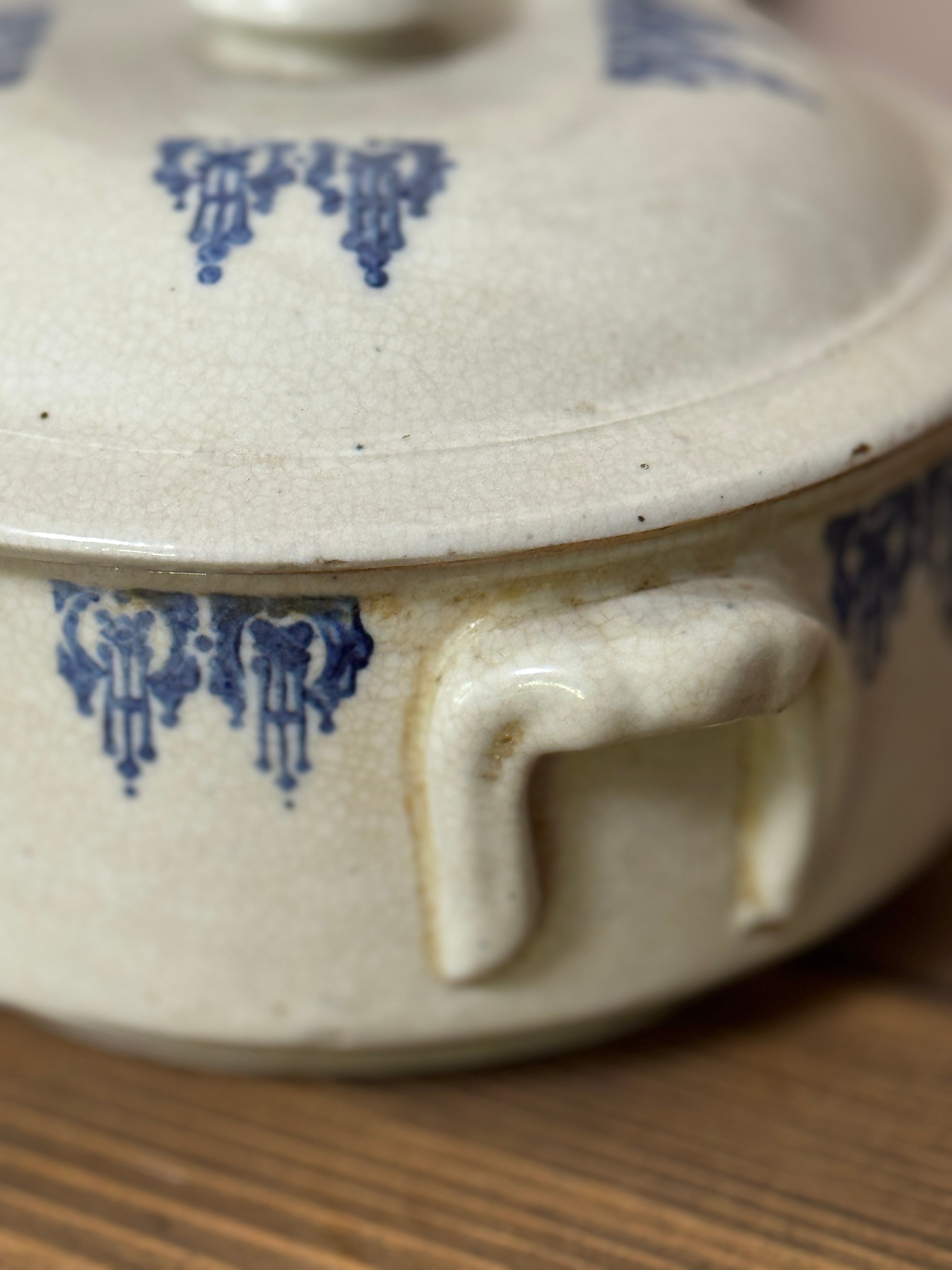
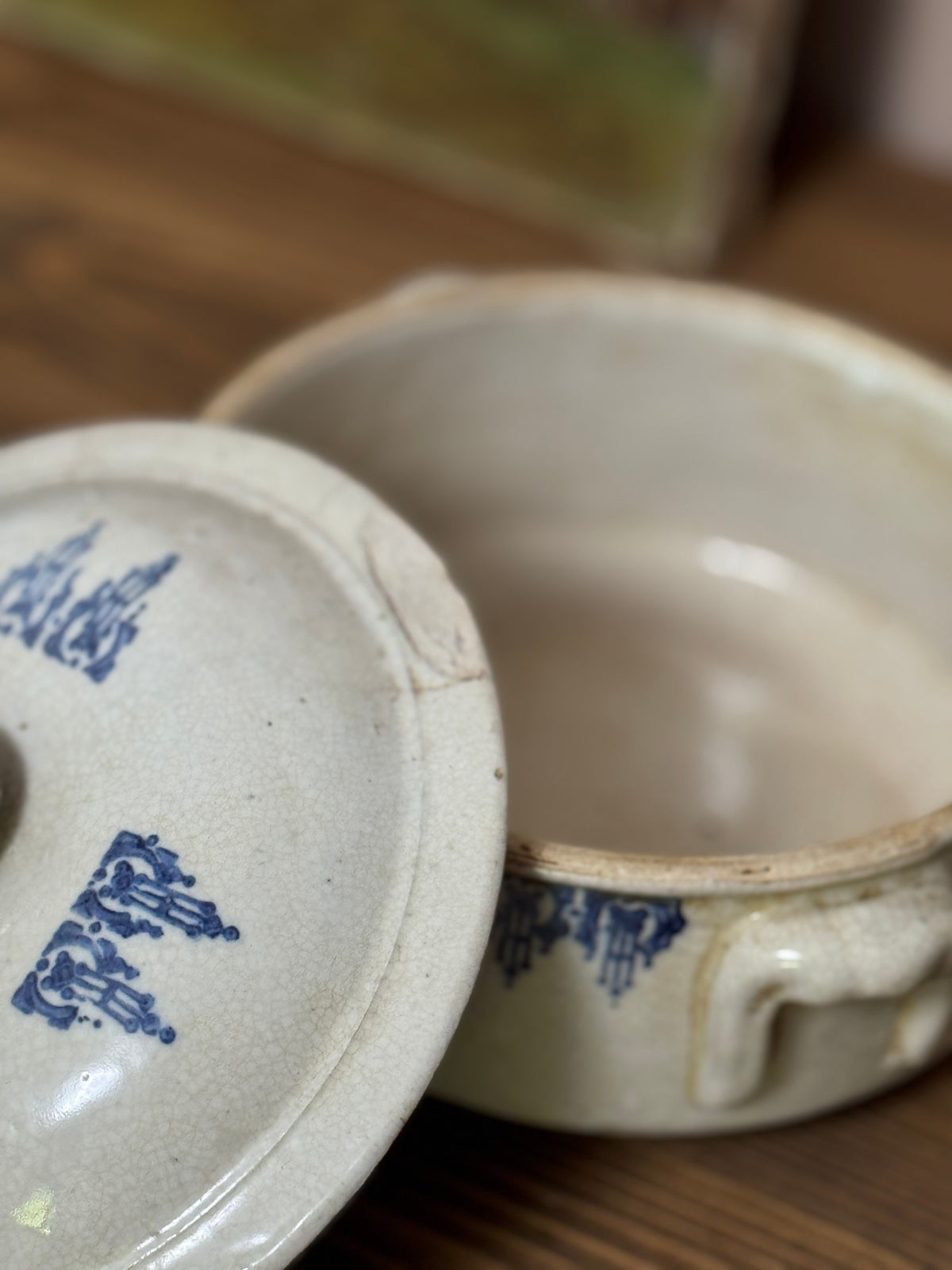
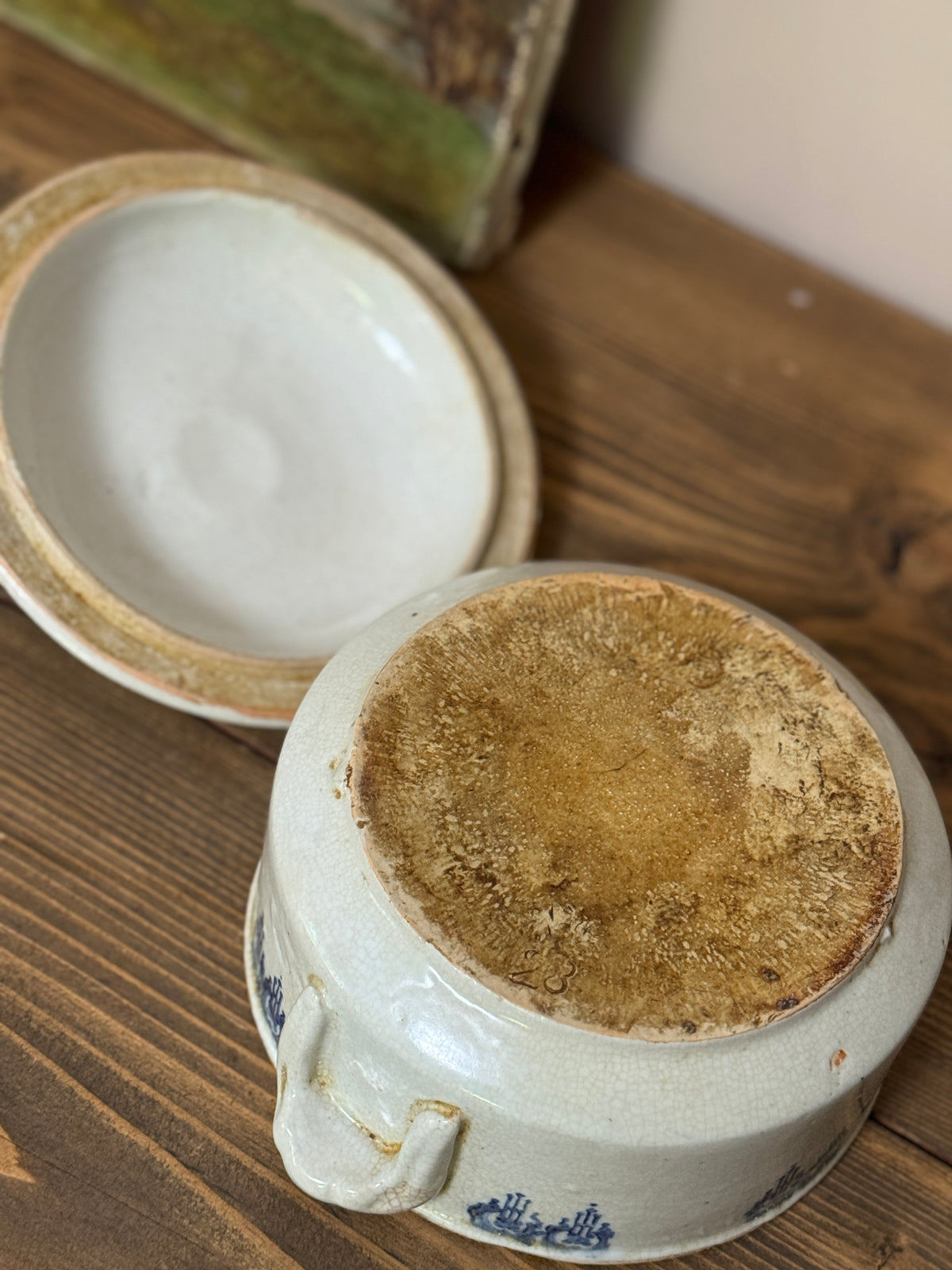
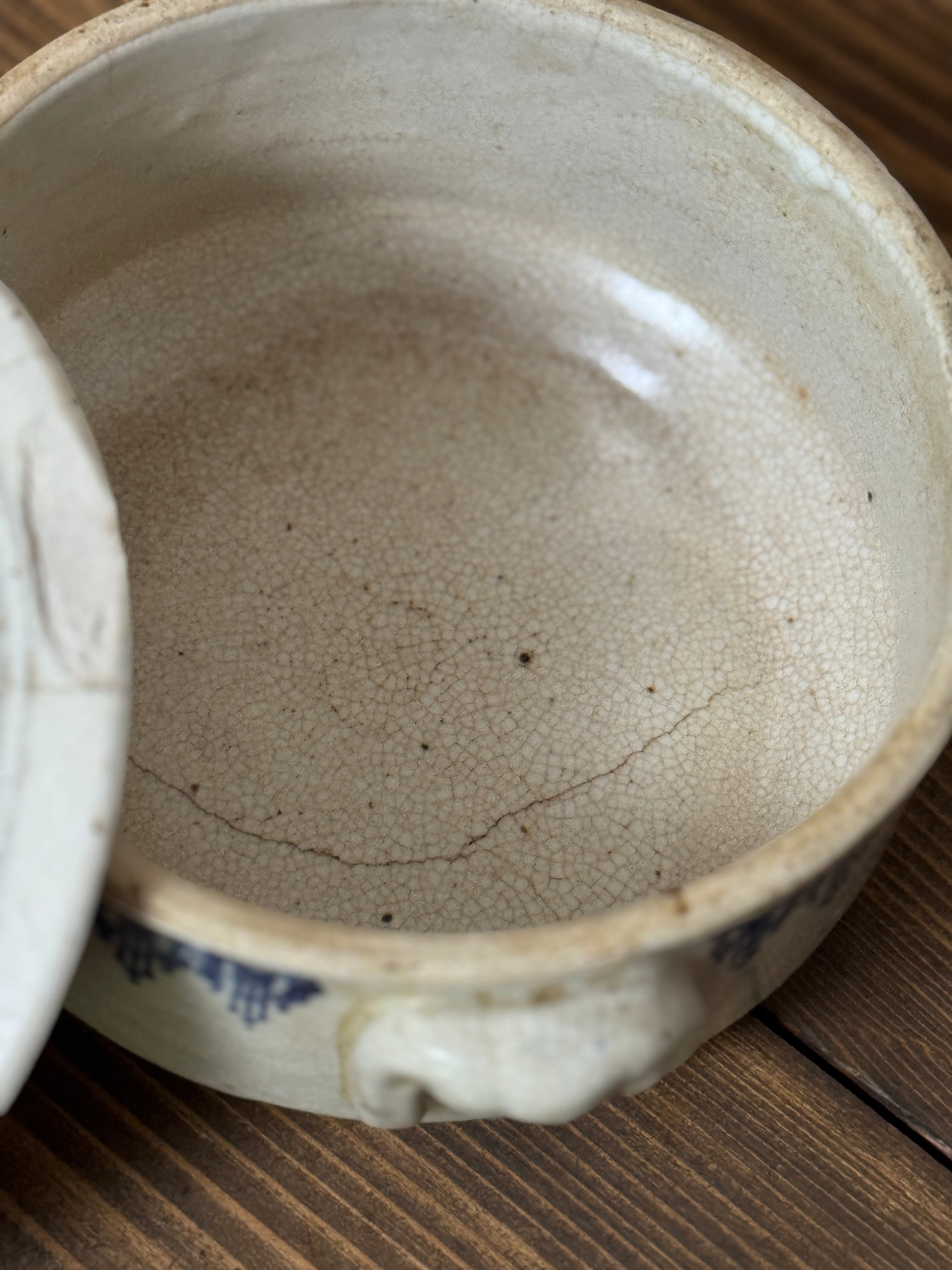
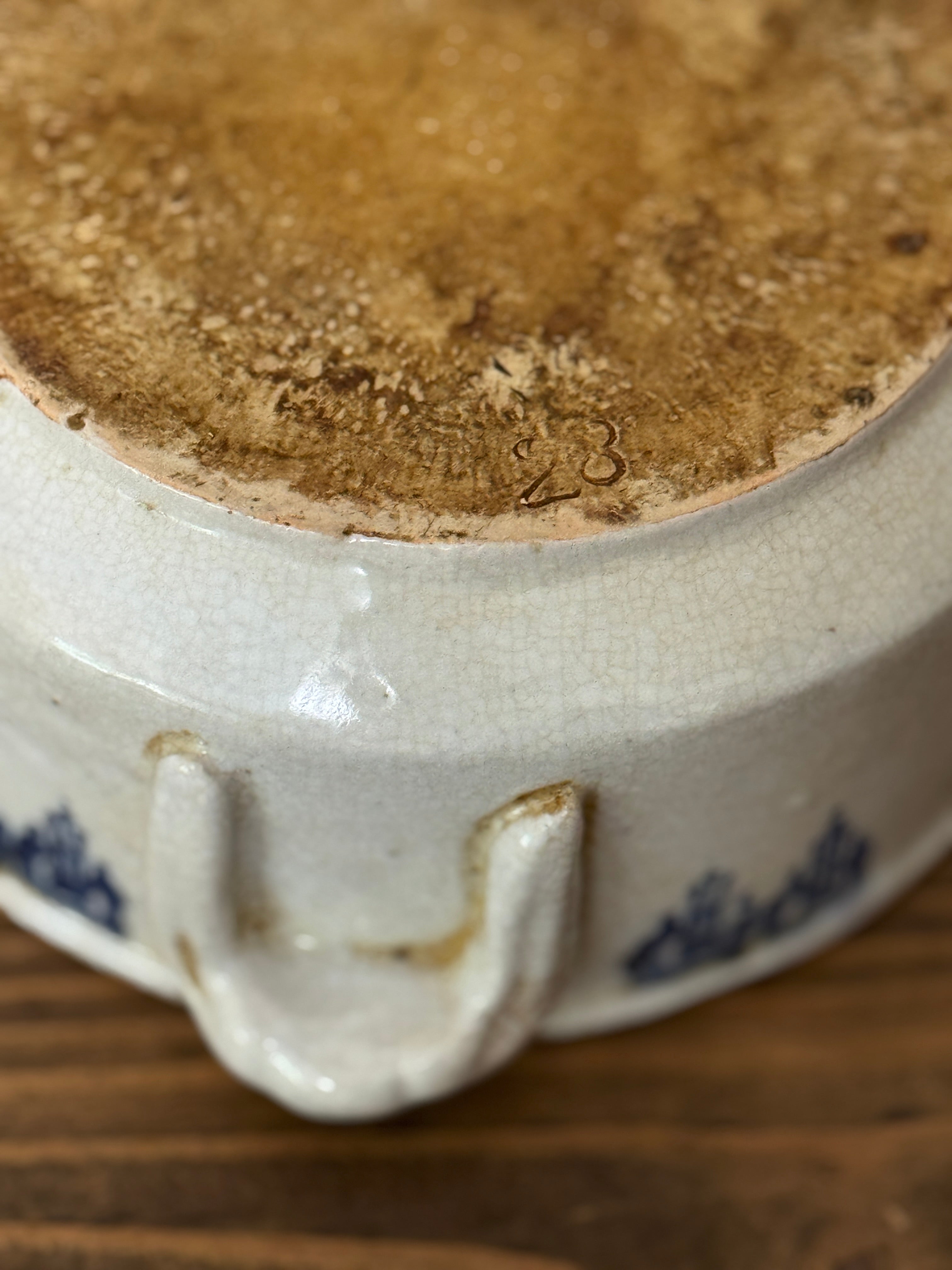
A round covered dish in Saint-Uze stoneware with straight sides, two small square lug handles, and a domed lid with a fluted knob. The decoration is a blue lambrequin motif, a hanging pointed swag with a scrolled top, printed in pairs around the body and in four groups across the lid. The glaze is a warm cream that has crazed all over into a fine network and taken a tan stain across the interior. The base is unglazed and incised 23. Crazing throughout, a hairline crack across the interior base, an old chip with a hairline at the lid rim, and rim wear. Wear consistent with age and use, sold as found.
Historical Context
Saint-Uze is a village in the Drôme, south of Lyon, that sat on a bed of fine white clay. Its potteries turned that clay into a hard, close-grained stoneware through the nineteenth century, plain kitchen and table pieces that could go into the oven, and blue decoration printed onto the cream body was their signature. The lambrequin itself is a border borrowed from textiles, the scalloped pelmet along a bed canopy, and it had been a French faïence motif since Rouen around 1700. Dishes of this shape went from oven to table for stews and baked vegetables, and the lugs are sized for a cloth in each hand.
Styling Ideas
Use it at the table for butter, olives or a warm side dish, or keep it on the counter holding salt, garlic or tea bags. On a bathroom vanity it holds cotton and soap, and with the lid off it takes a small plant.
Choose options