
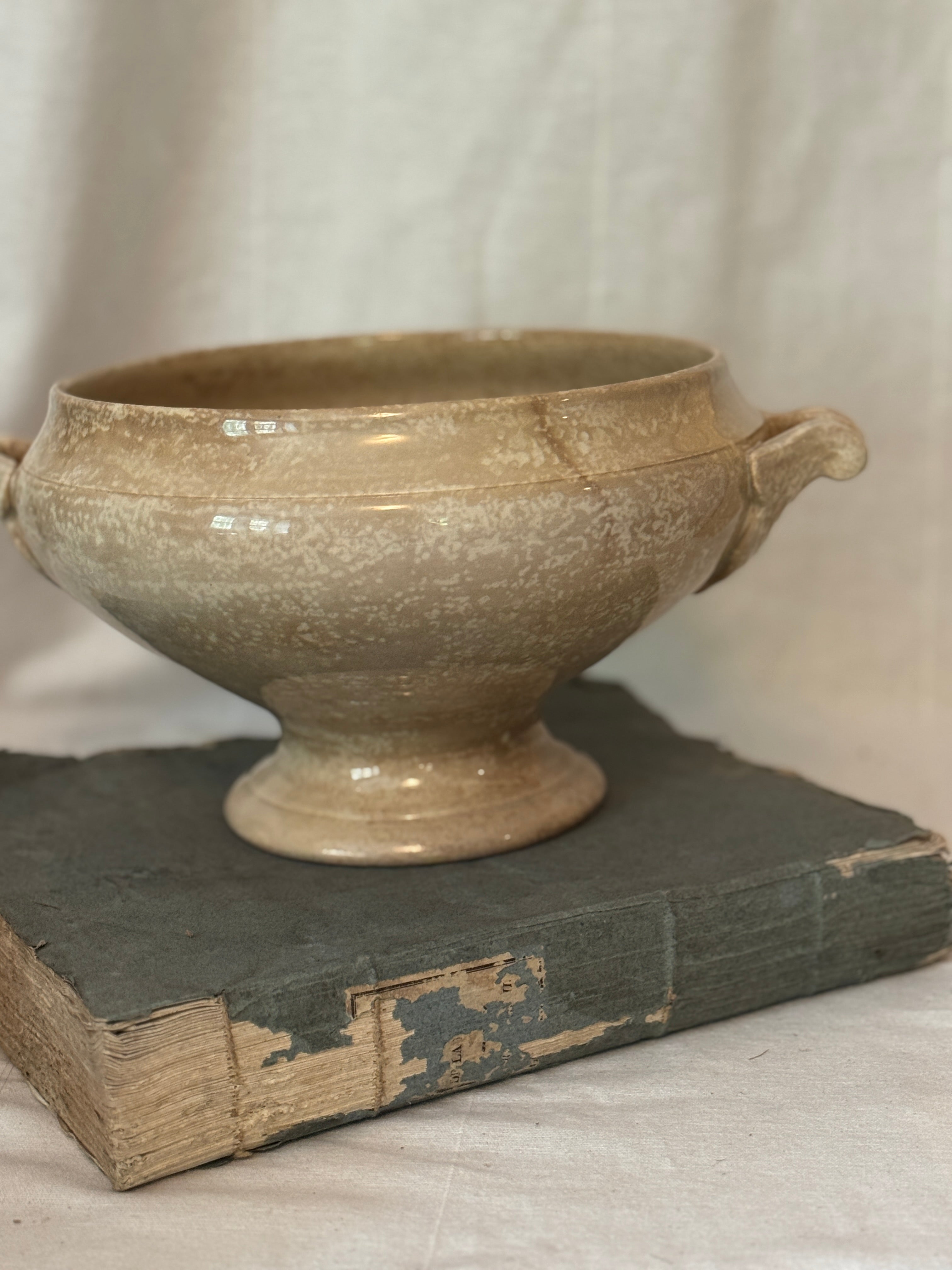
Tan Terre de Fer Soupière
Antique French Saint-Amand Soupière, Early 20th Century
Period
Early 20th century, French, Saint-Amand et Hamage (Nord)
Size
10½ inches wide handle to handle, 8¼ inch opening, 5¾ inches tall
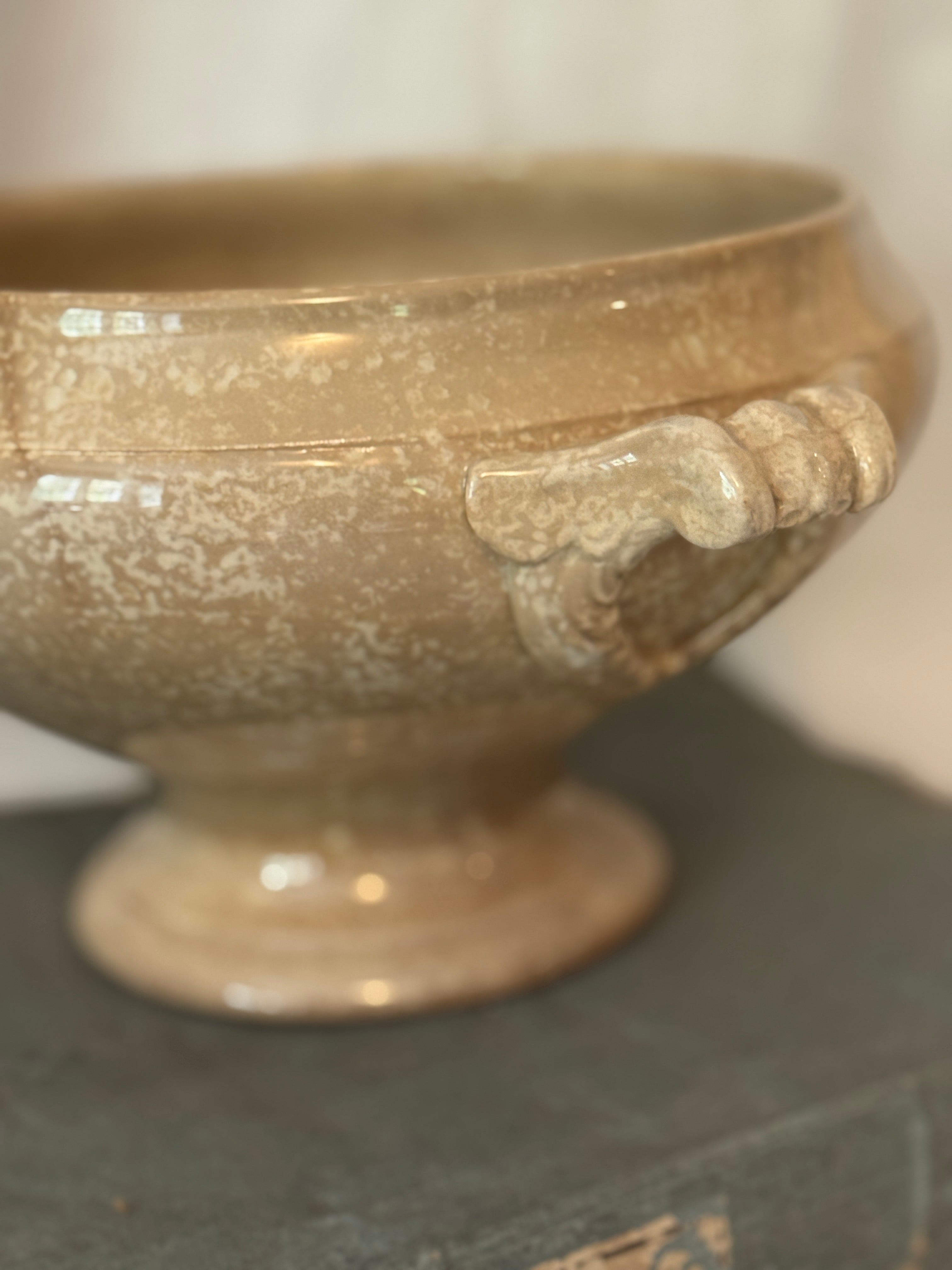
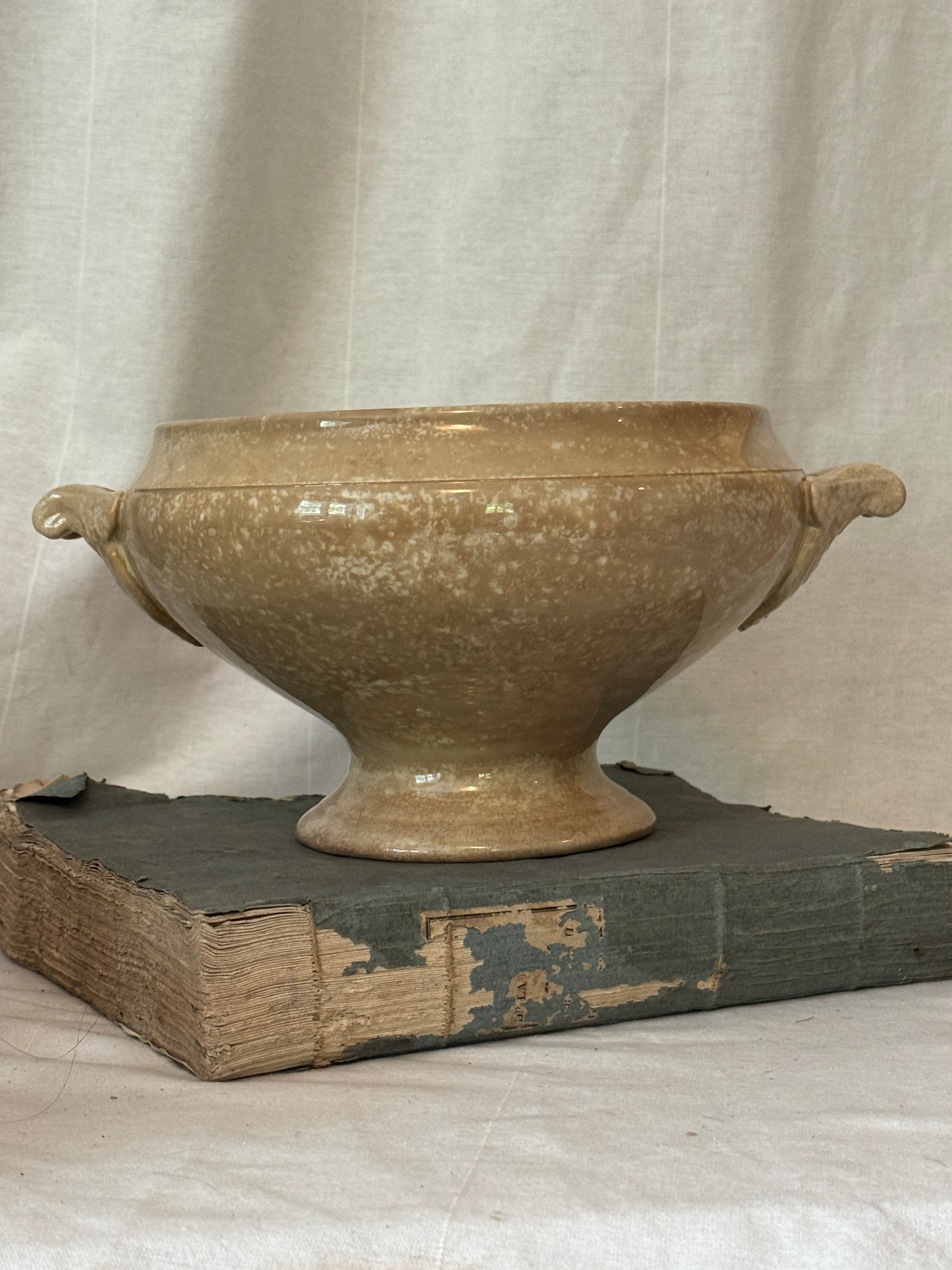
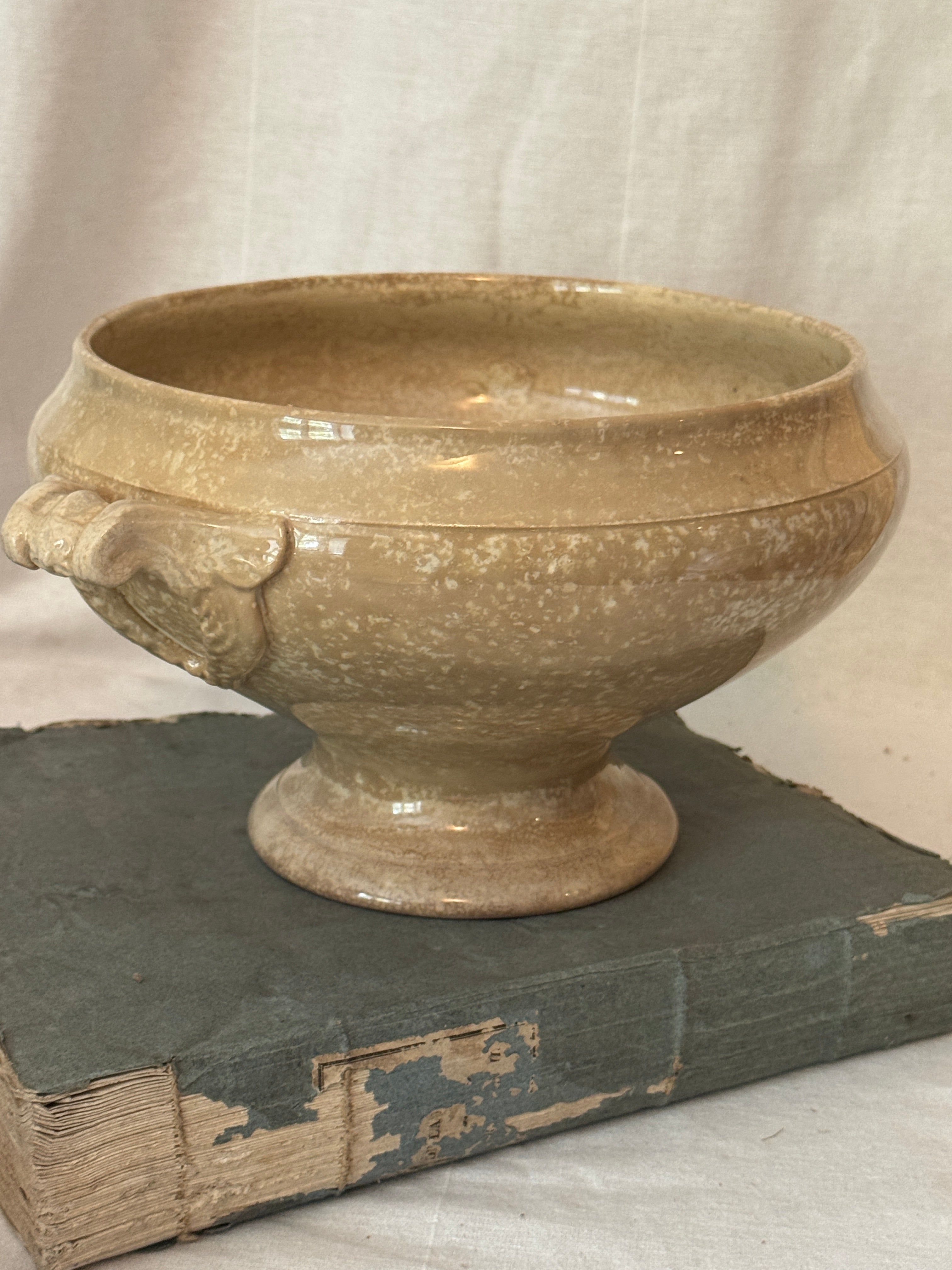
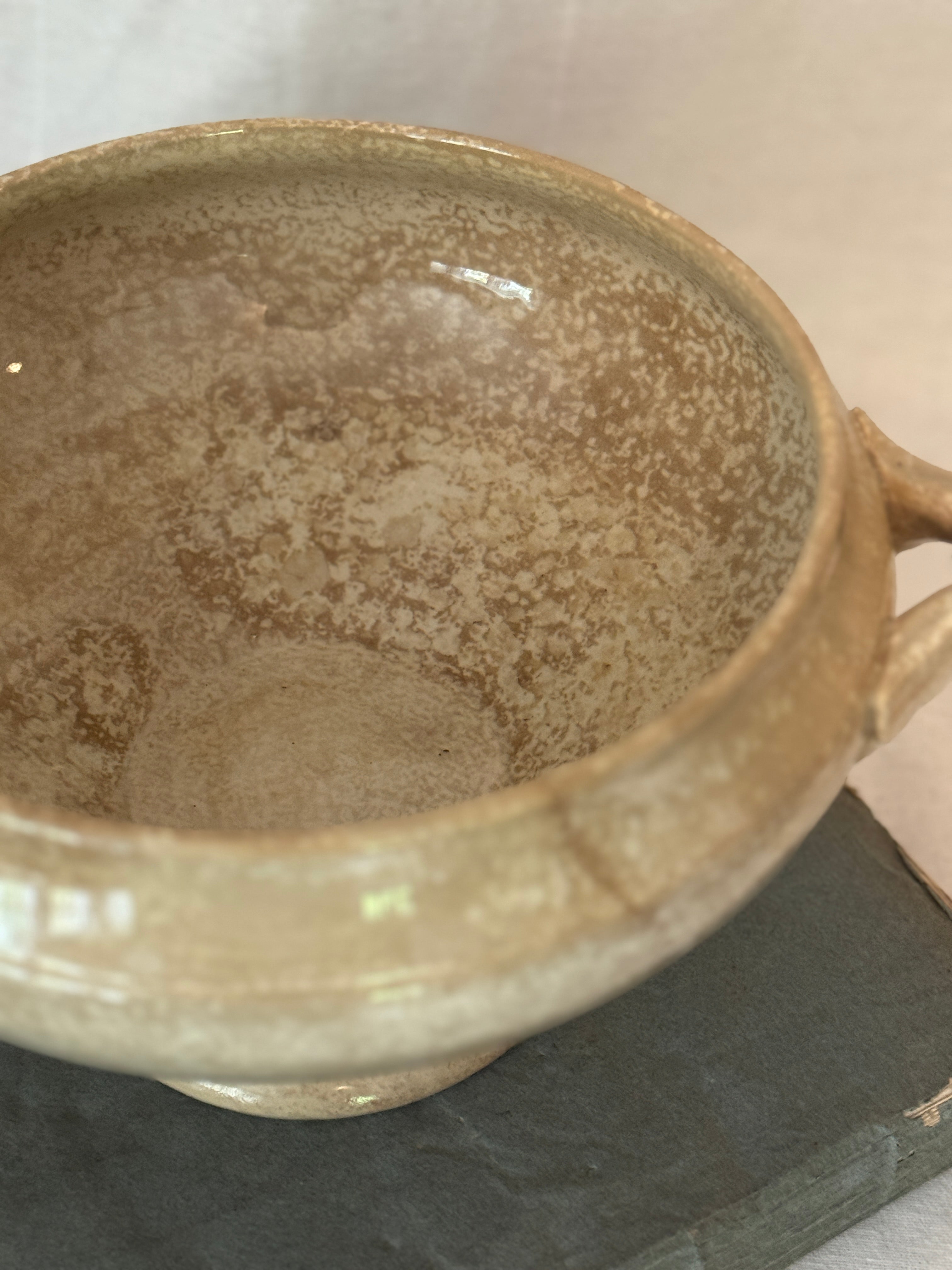
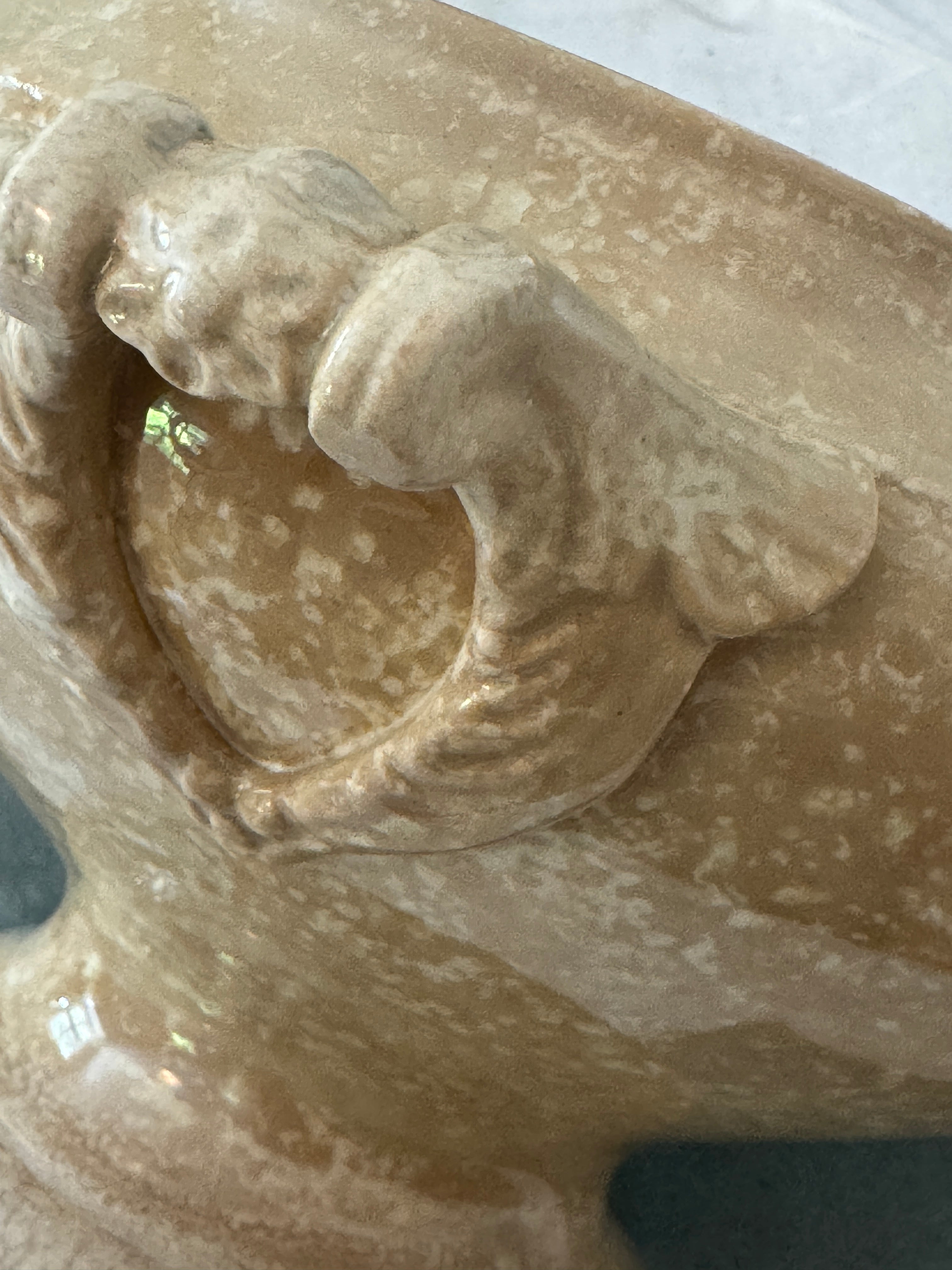
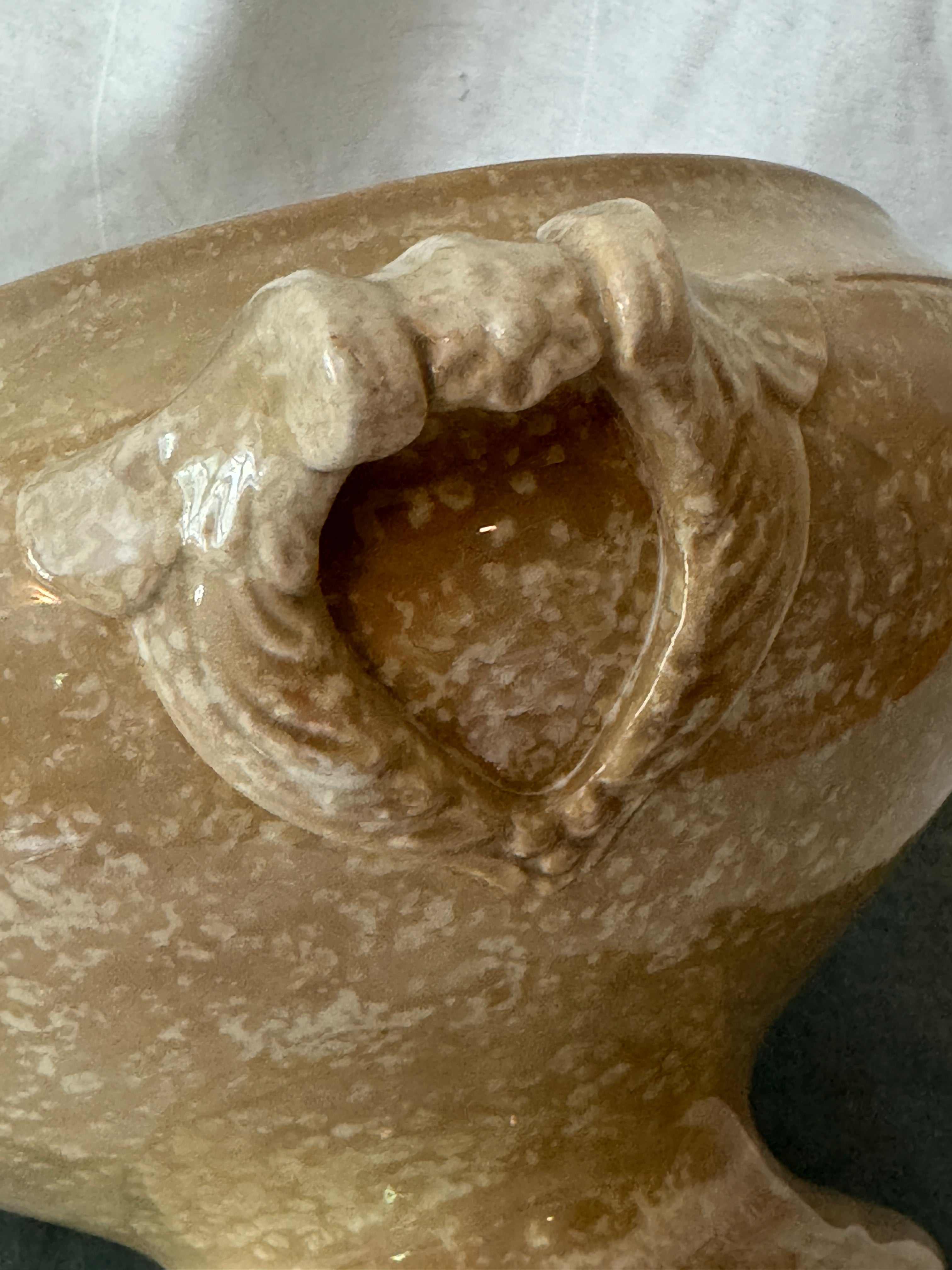
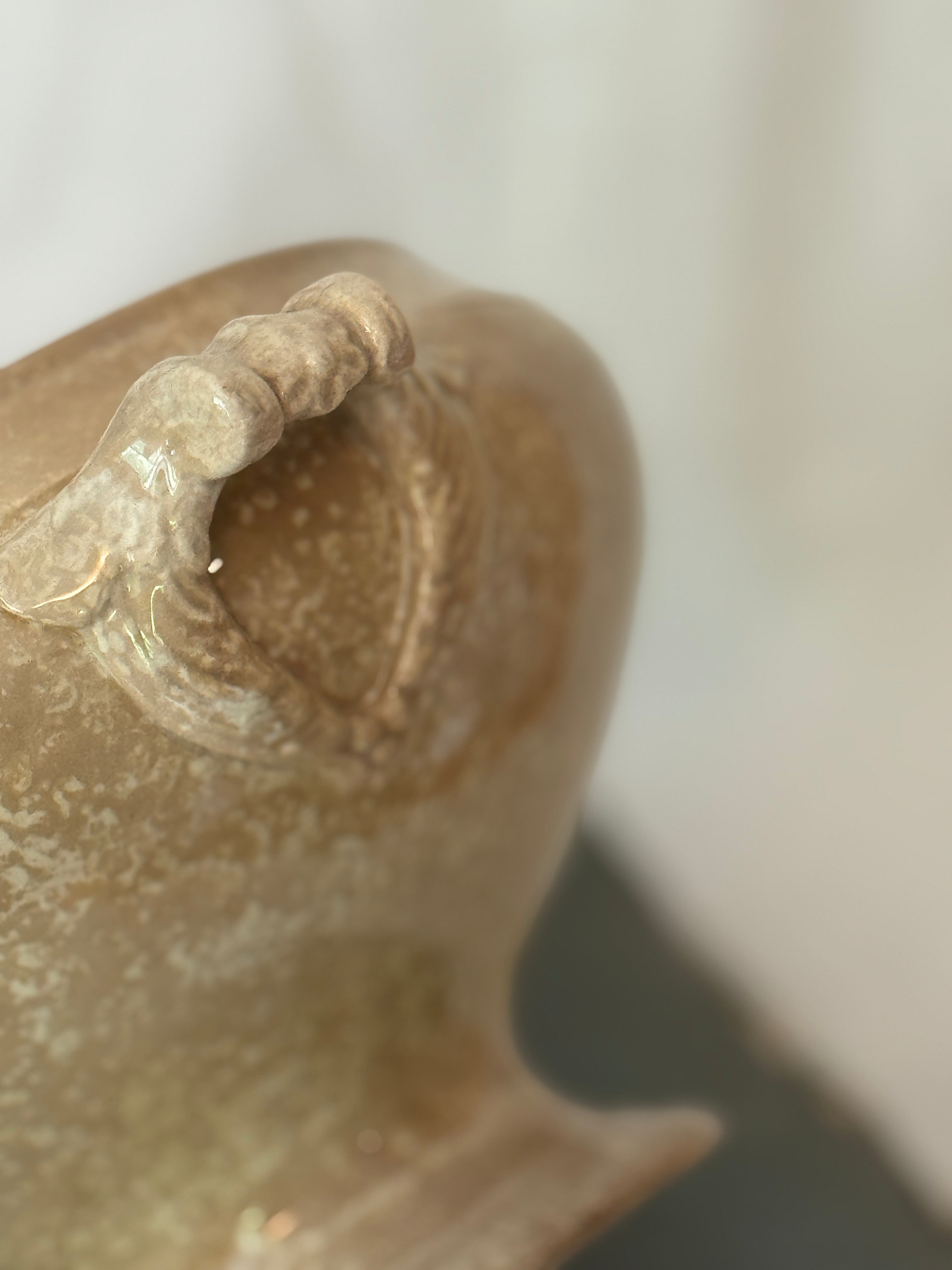
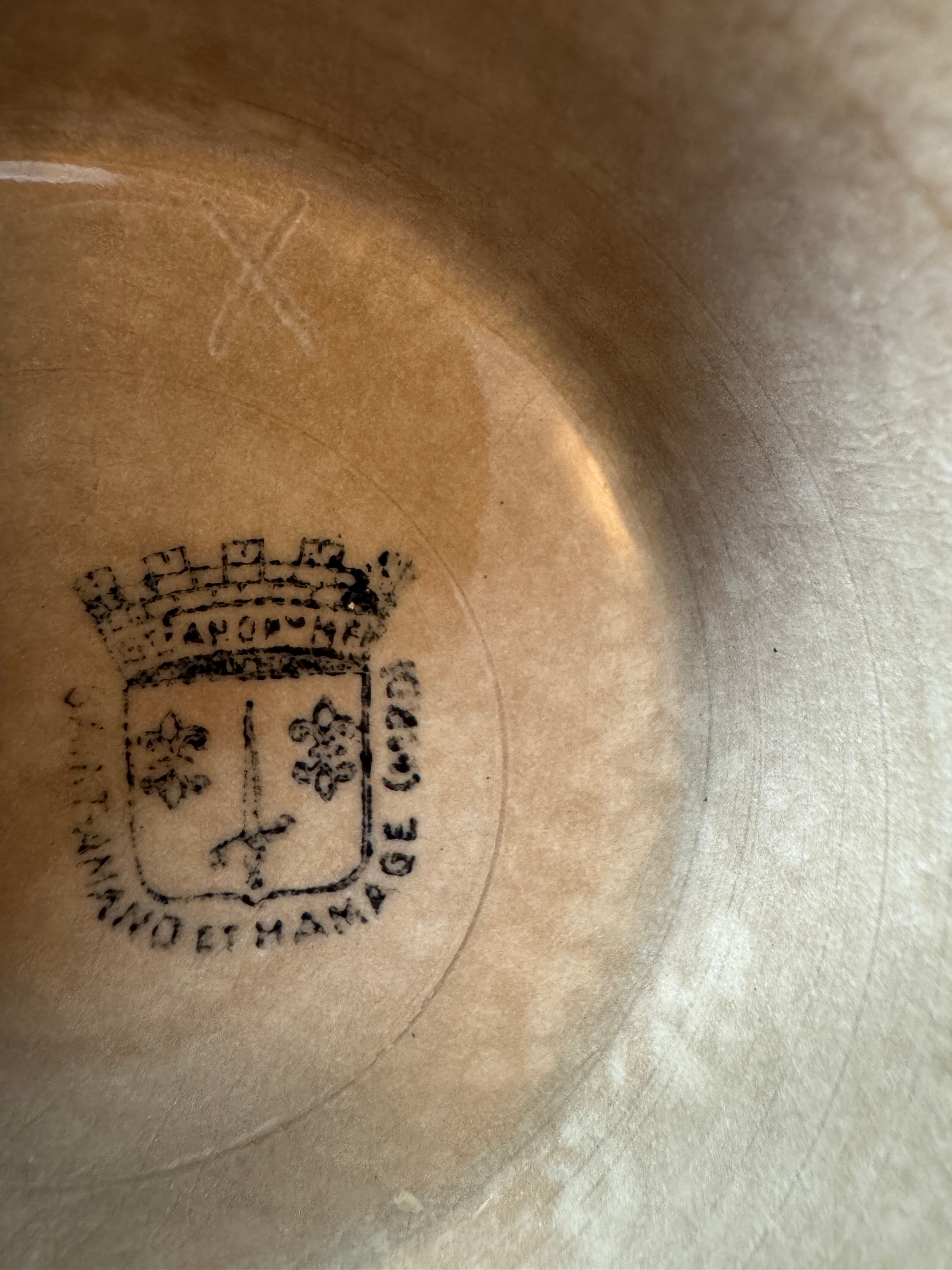
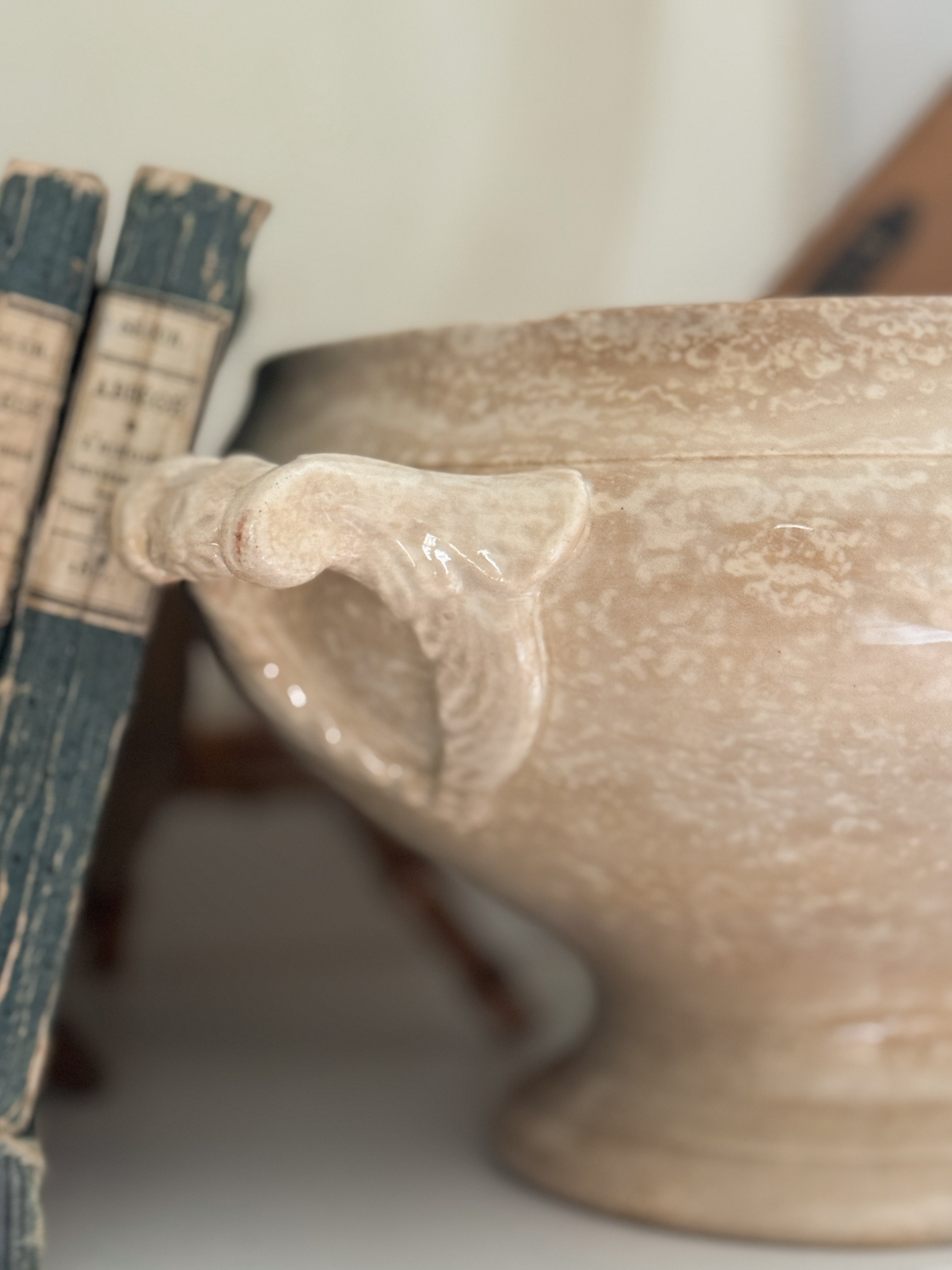
A French soupière from the Saint-Amand et Hamage faïencerie in the Nord, marked on the base with the arms of Saint-Amand-les-Eaux. The footed, twin-handled form is finished in a soft tan terre de fer glaze with an allover fine cream mottling, the effect the French call jaspé, even and warm across the whole body. The handles are molded as scrolling leaves, and the deep bowl rises on a turned pedestal foot.
Historical Context
Saint-Amand-les-Eaux in northern France was one of the country's established faïence centers, and the Saint-Amand et Hamage works produced both decorated tableware and utilitarian pieces in terre de fer, their dense and durable earthenware. The town arms used as the backstamp, a mural crown above a fleur-de-lis shield, mark the period when the two potteries worked together. The mottled jaspé glaze was a practical, forgiving finish that wore well through daily use.
Styling Ideas
A natural centerpiece, filled with fruit, bread, or cut stems, or left empty to show the glaze and the line of the handles. The neutral tan sits easily with wood, linen, and other earthenware, at home on a table, a sideboard, or open shelving.
Choose options