
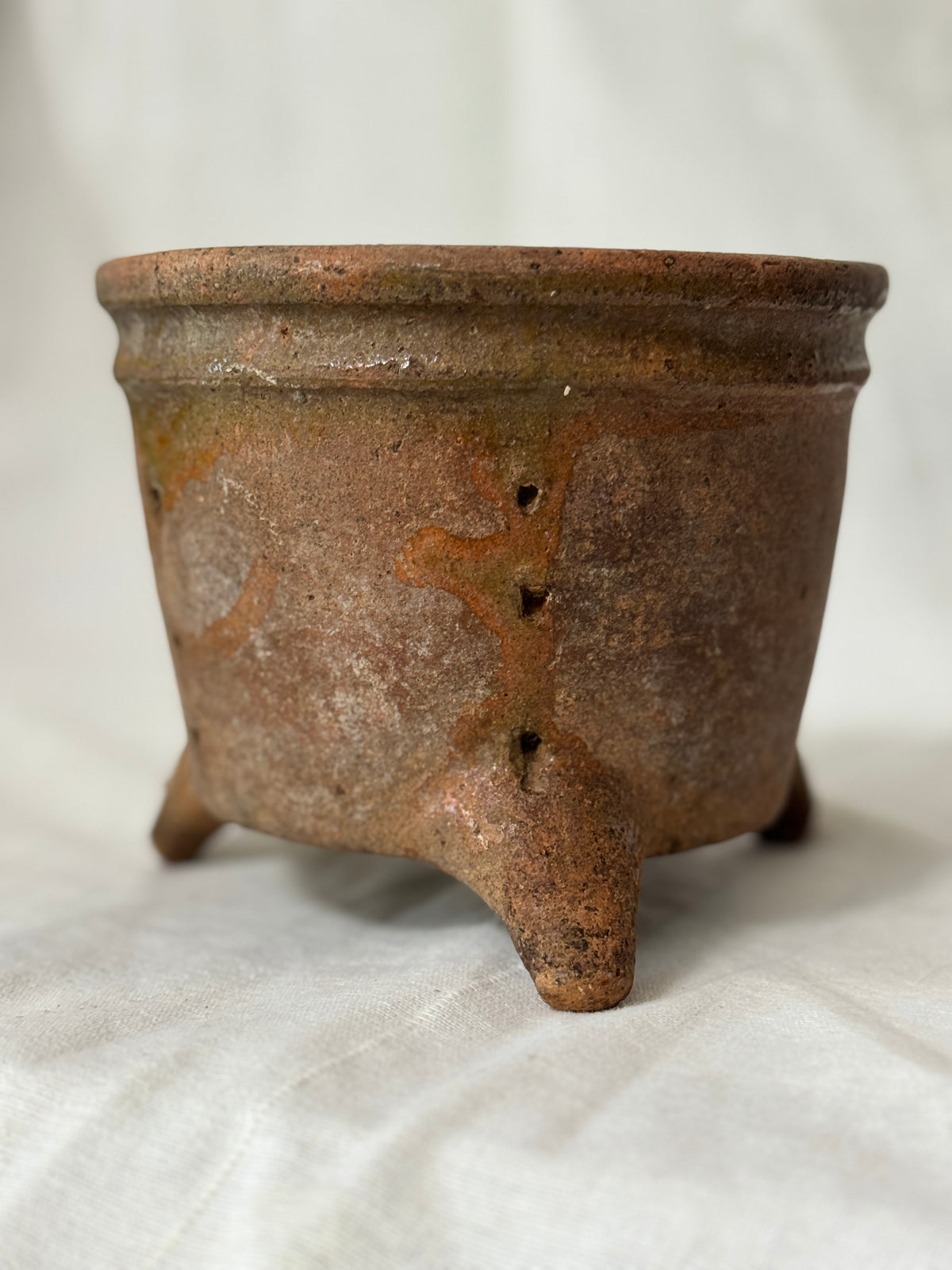
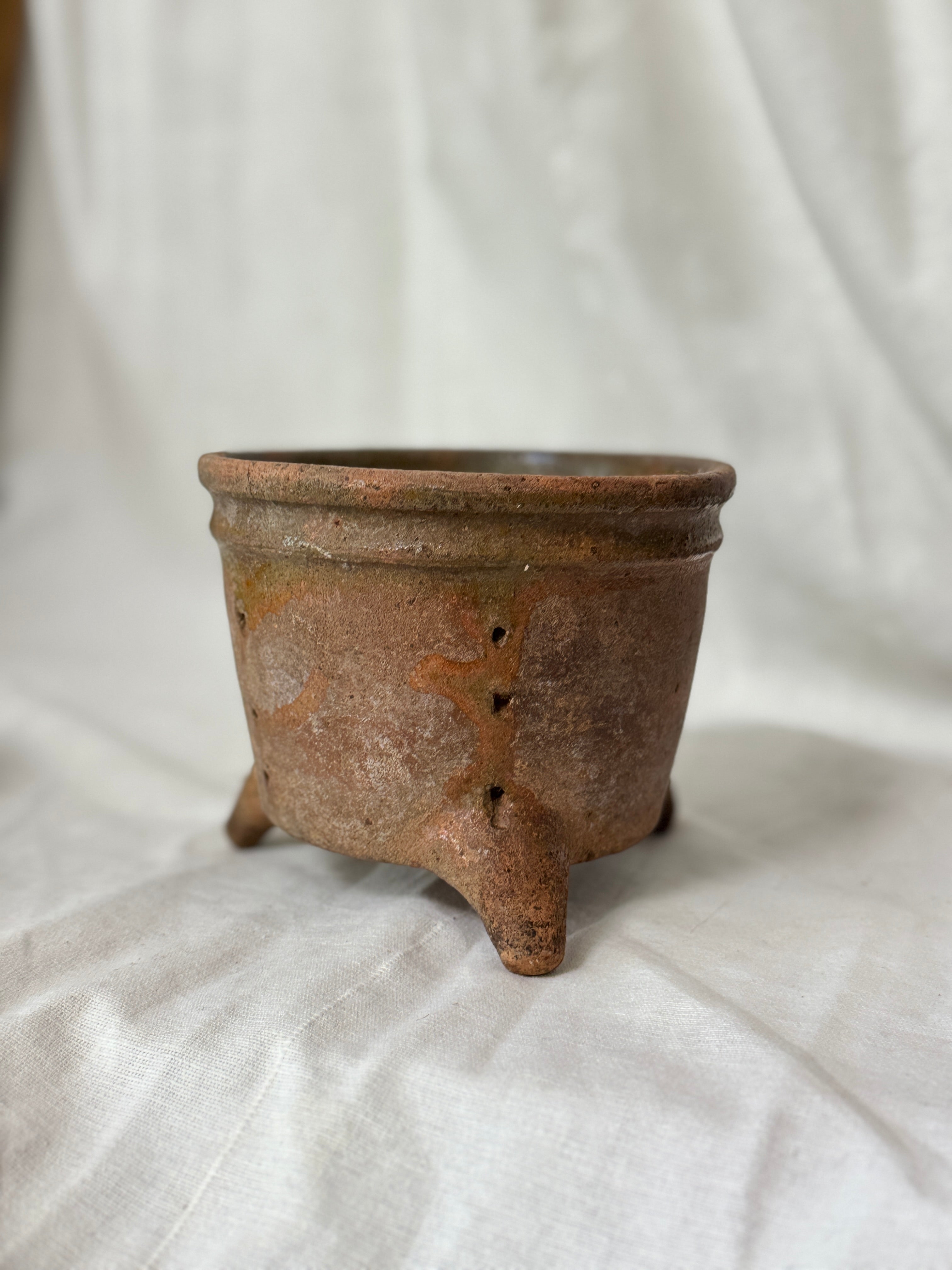
Antique French Terracotta Faisselle on Legs
Period: 19th century
Size: 4⅞ inches tall, 6 inches wide, 6½ inches across the legs
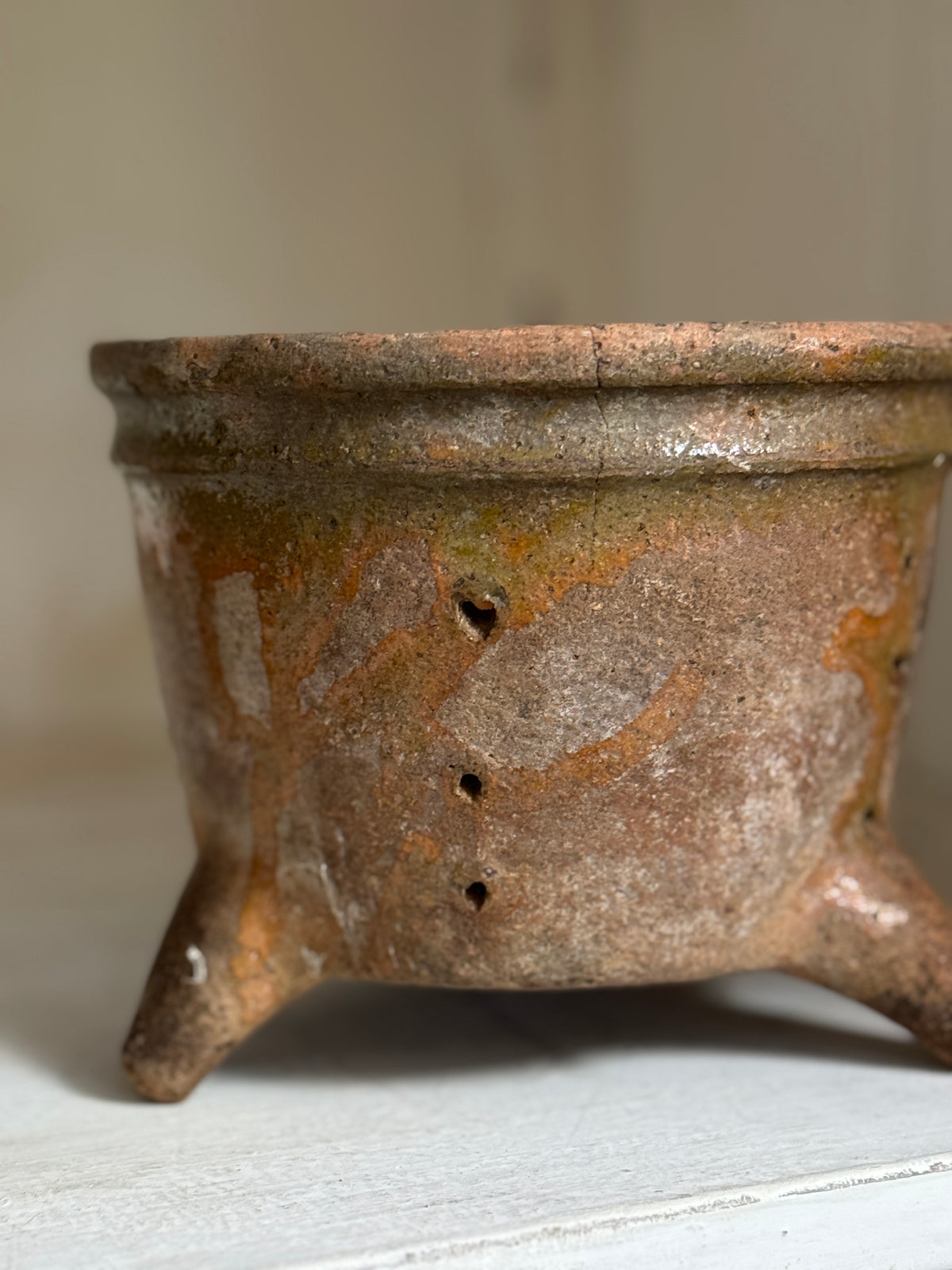
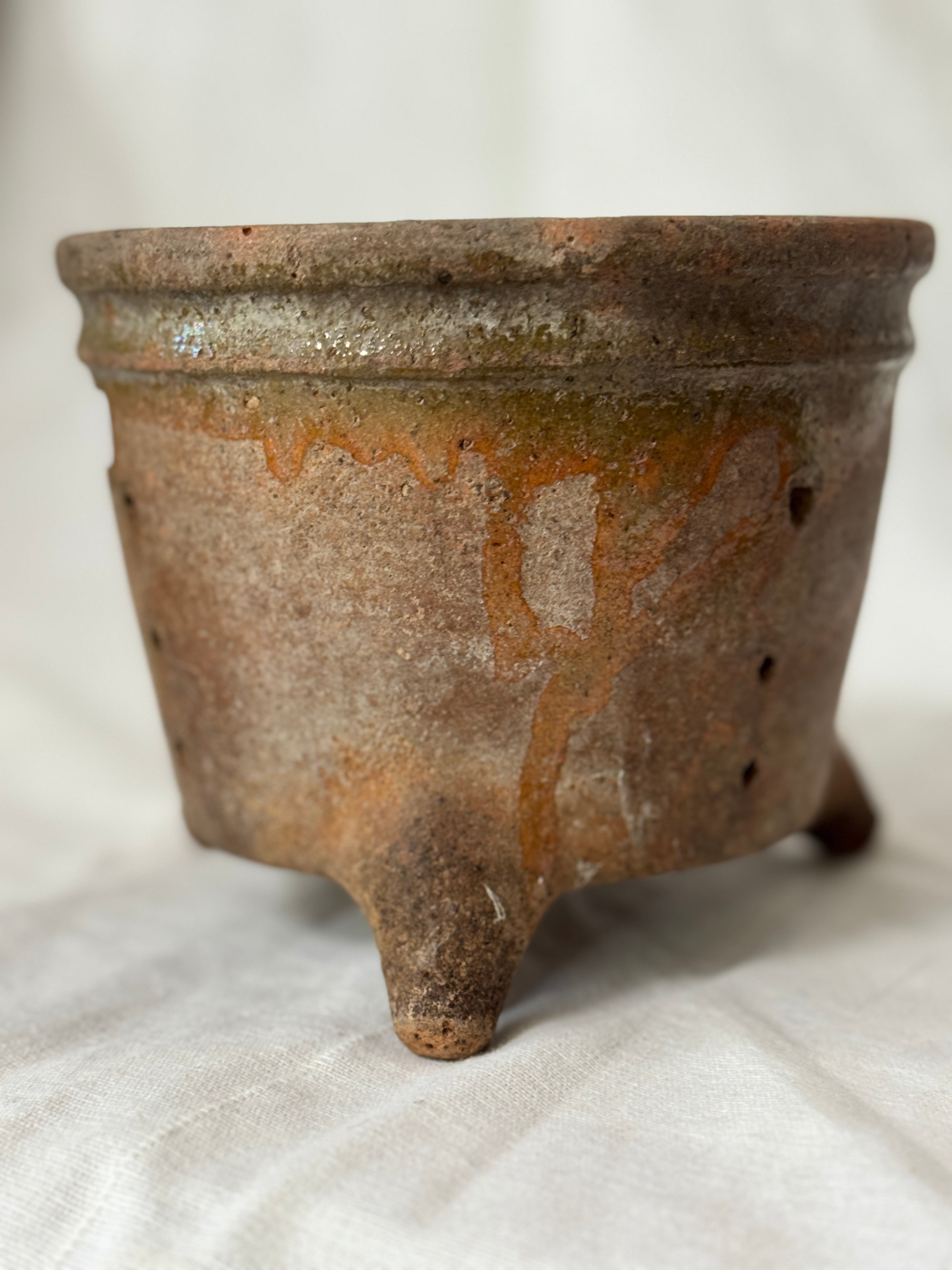
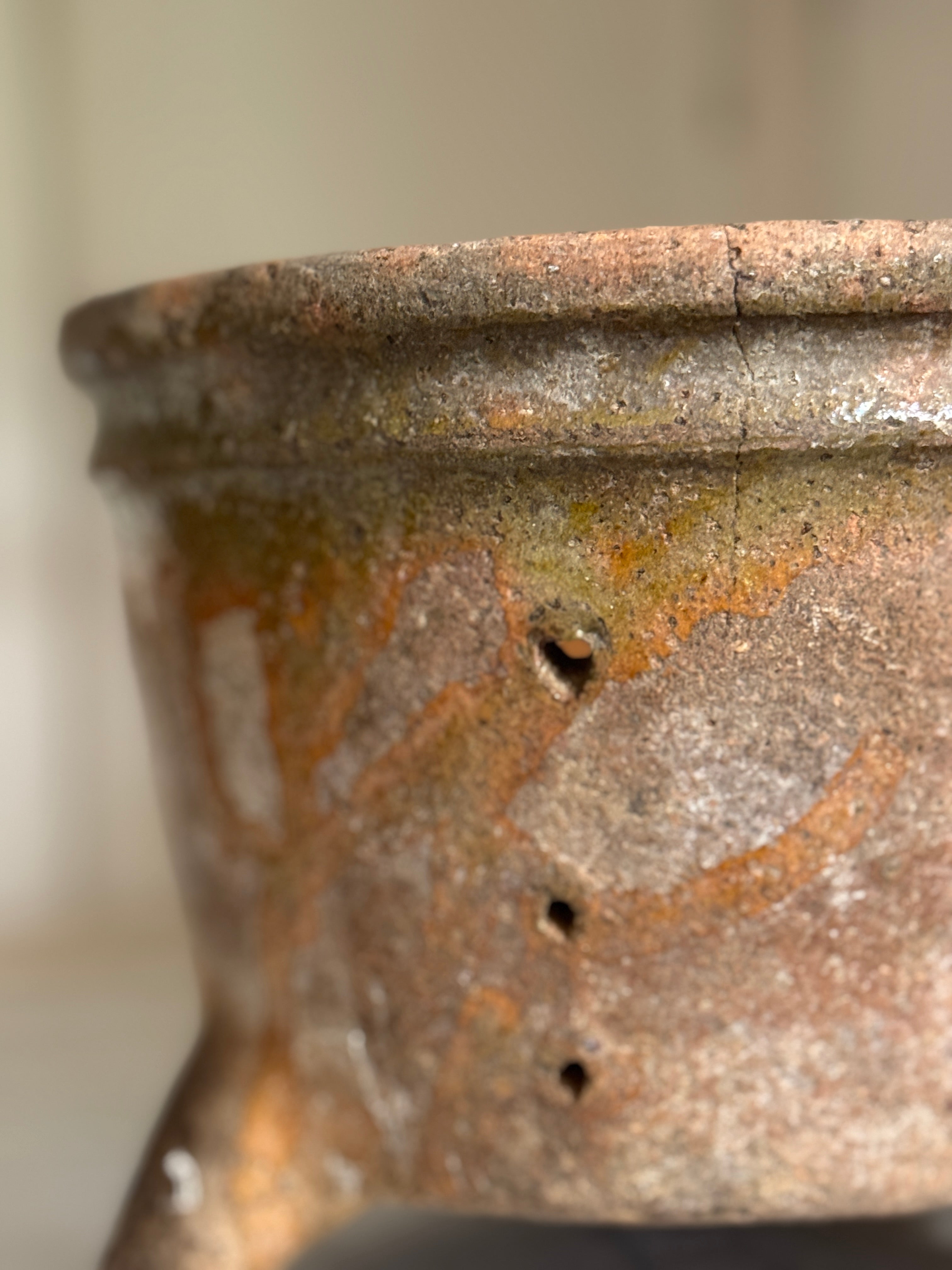
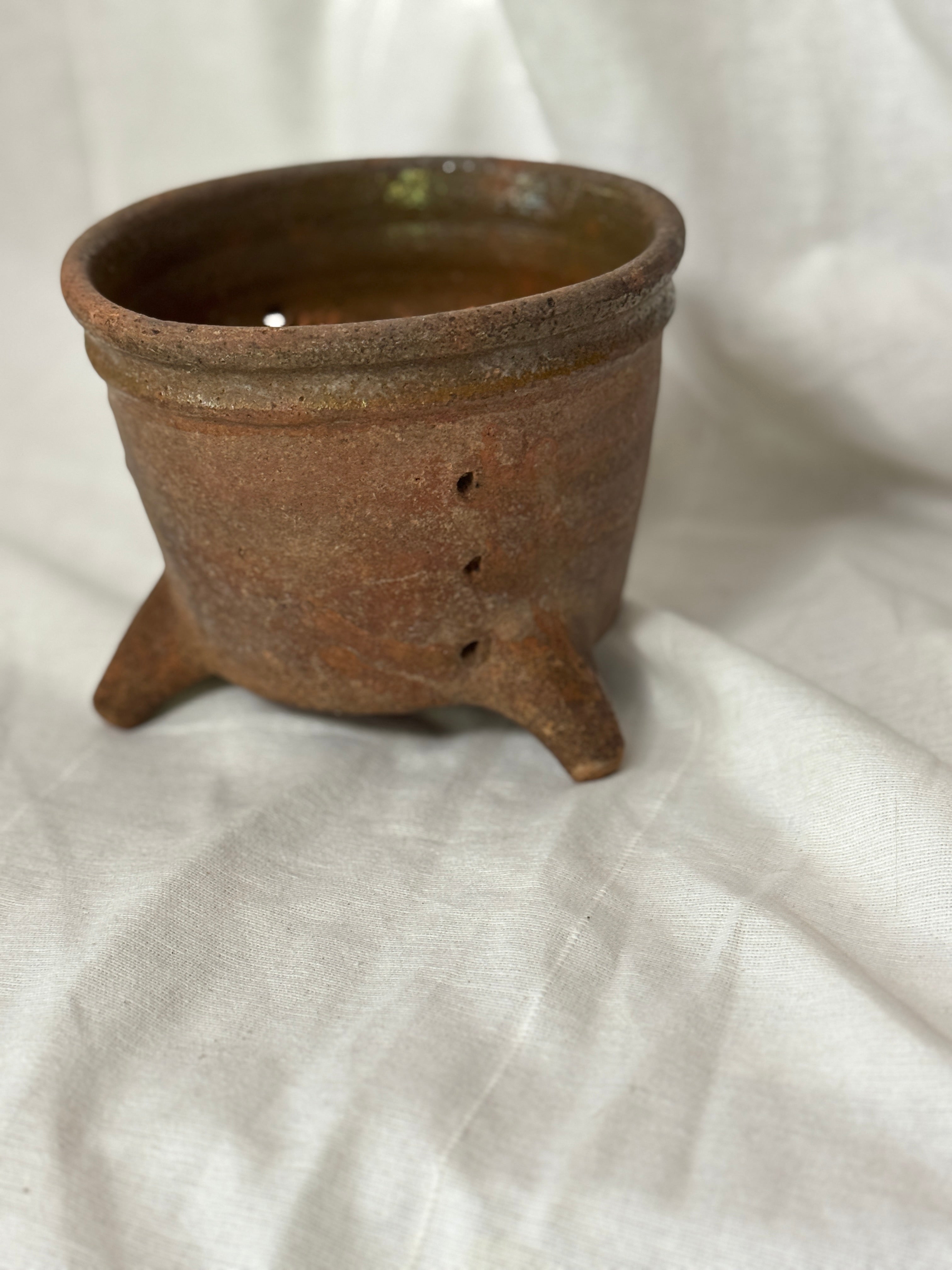
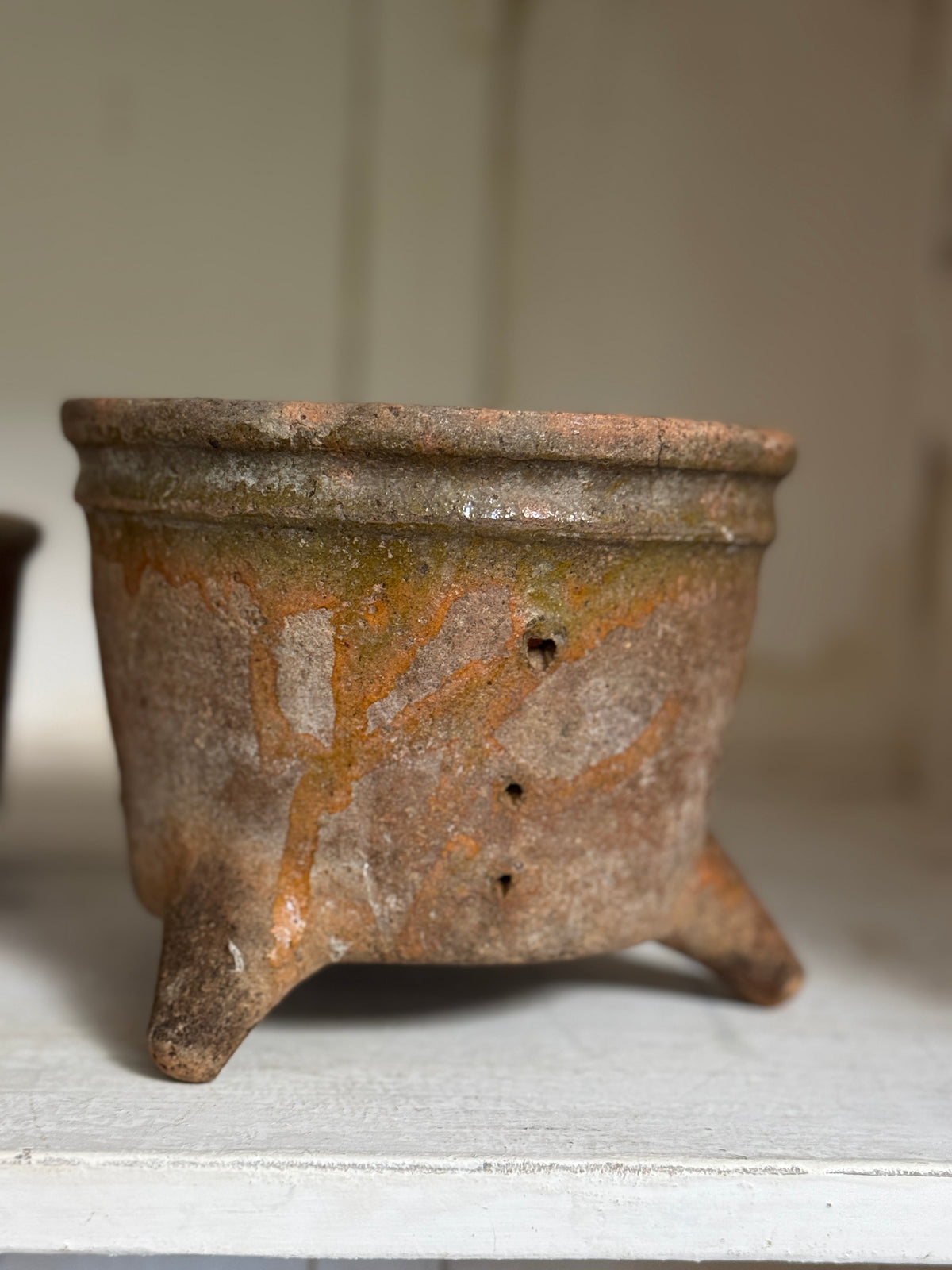
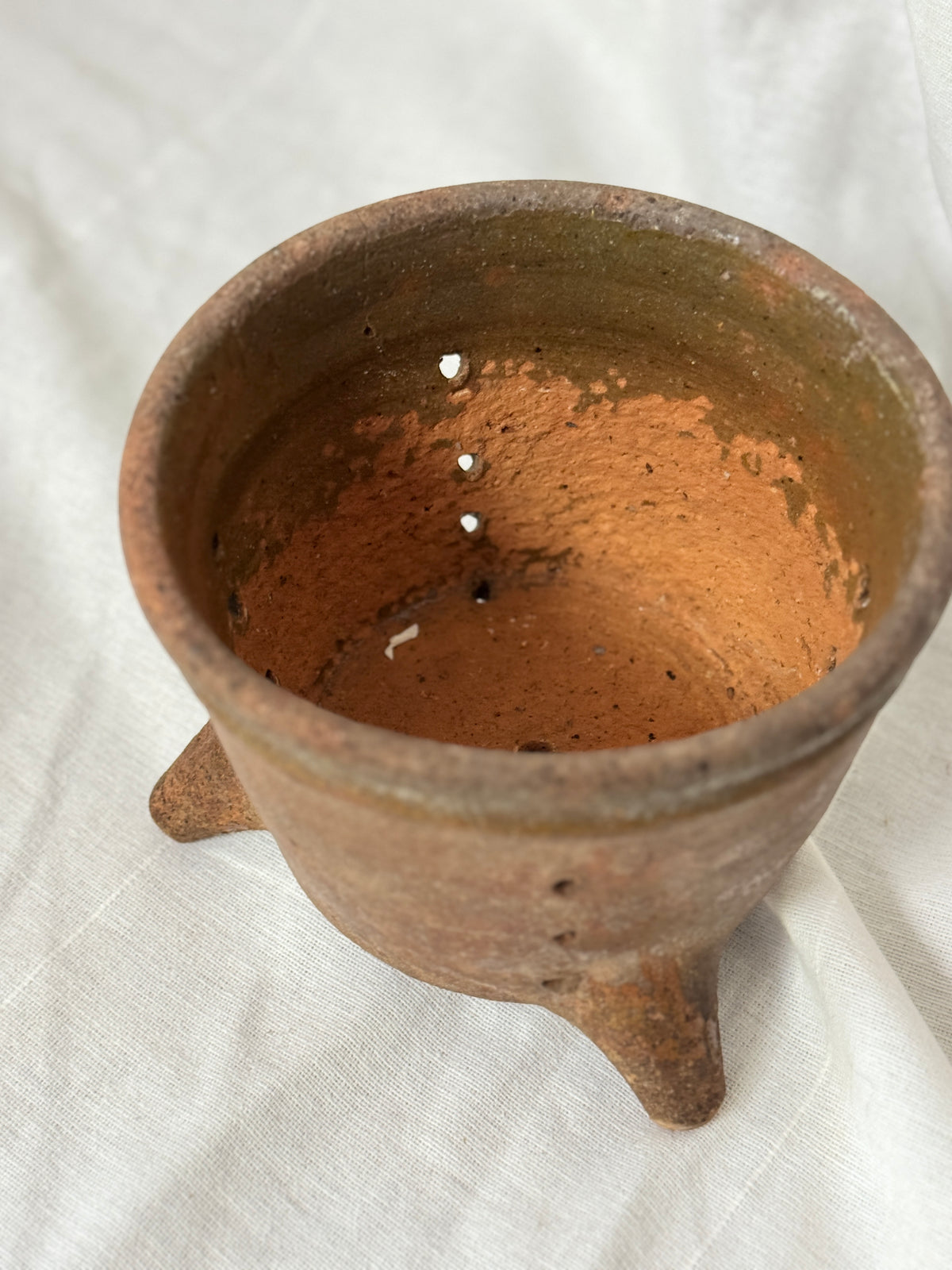
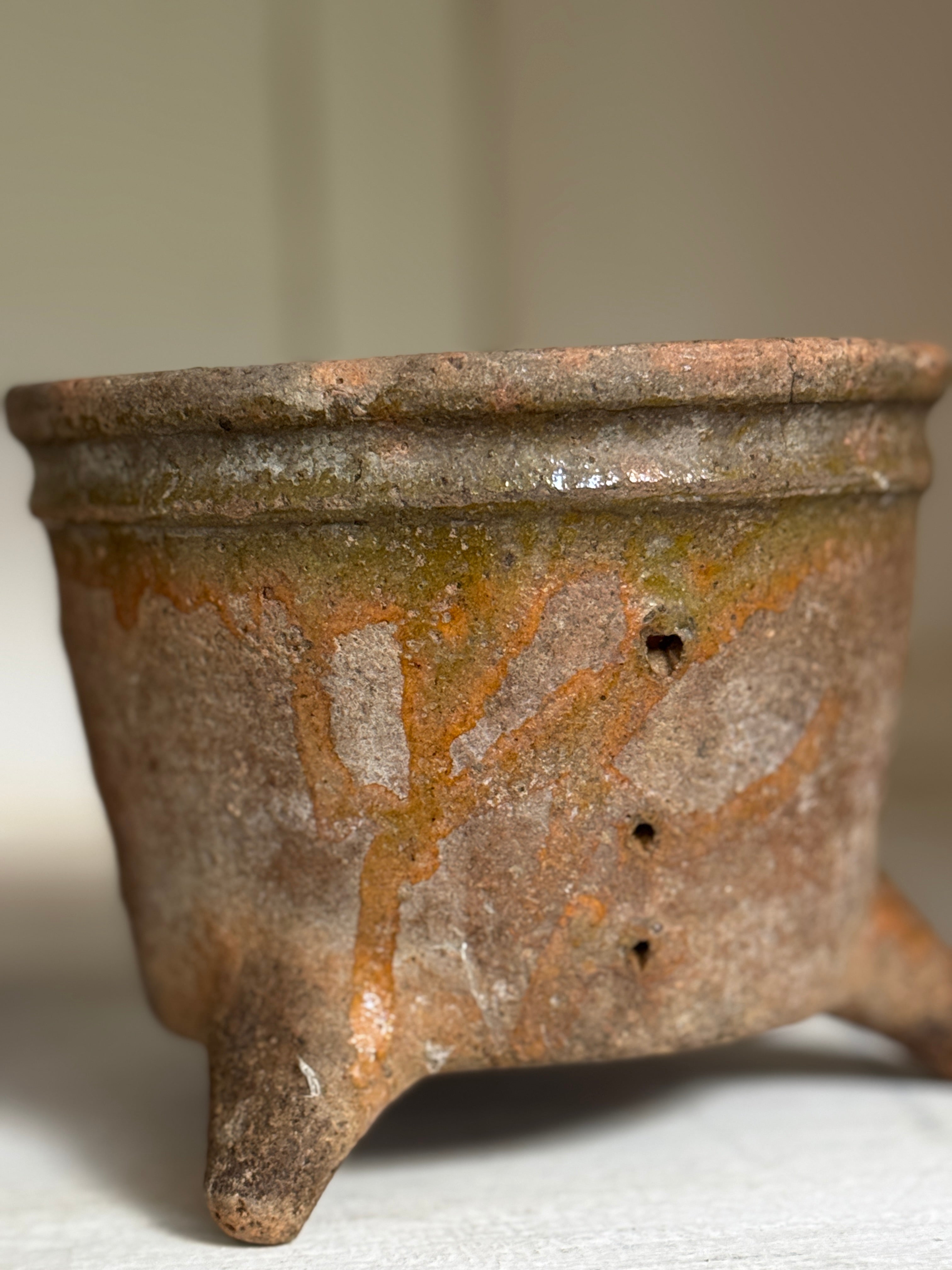
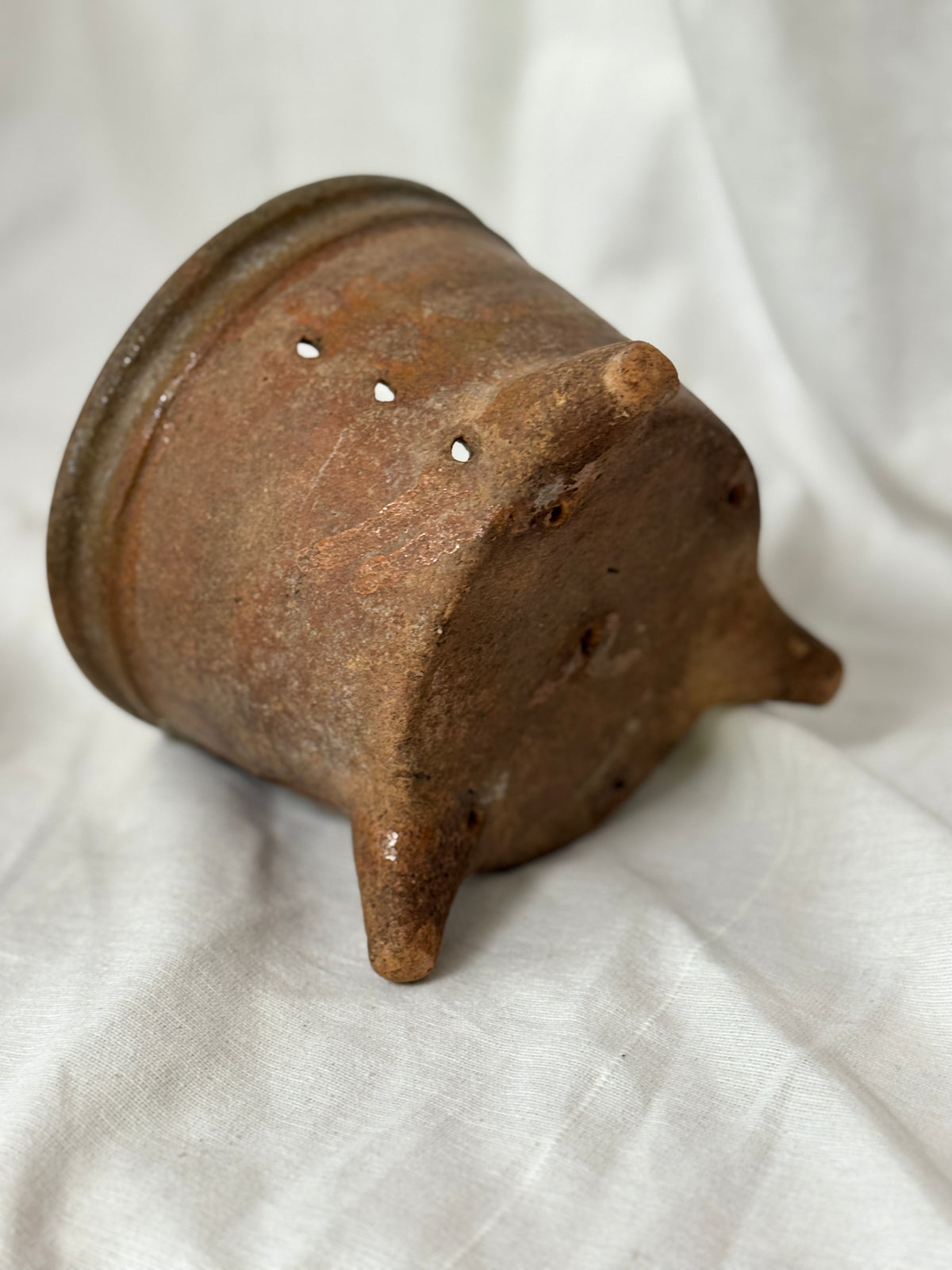
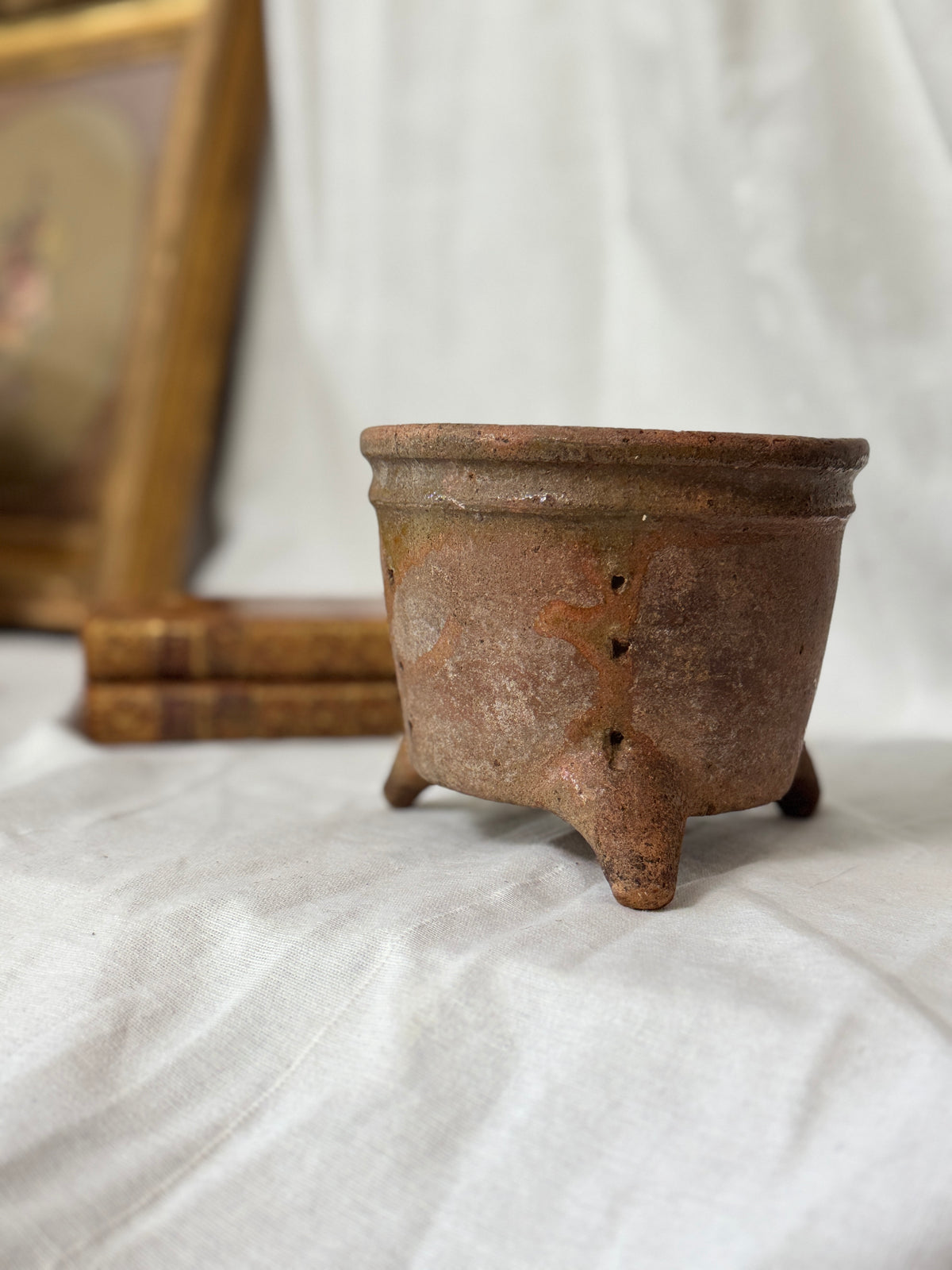
A hand-thrown faisselle raised on three long tapered legs, the perforated pot used to drain fresh cheese. Columns of holes run down the walls and more pierce the base, and the legs lift the pot well clear of the surface so the whey can run off freely. An olive-green ash glaze pools along the rim and runs down into the interior, with amber drips falling down the outside of the body. The glaze is uneven and directional, the mark of ash settling on one side of the pot during a wood firing rather than glaze applied by hand. Throwing rings are visible inside, with bare clay showing at the center of the base. Wear consistent with age and use, sold as found.
Historical Context
Faisselles were standard equipment in the French farmhouse dairy. Fresh curd went in, the whey drained out through the walls and base, and what stayed behind was fromage frais or the start of a firmer cheese. The pierced form is purely functional, and the legs are the practical part, holding the base holes open above whatever the pot was set on.
Styling Ideas
The legs give it lift and the drips give it a surface, so it holds a shelf on its own without needing to be filled. Set it where light comes across the glaze. It also works as a cachepot with a small plant dropped inside, or on a counter holding garlic and shallots where the air can move through.
Choose options