
Antique French Faisselle, Cheese Strainer
Period: 19th century
Size: 3¾ inches tall, 5 inches wide
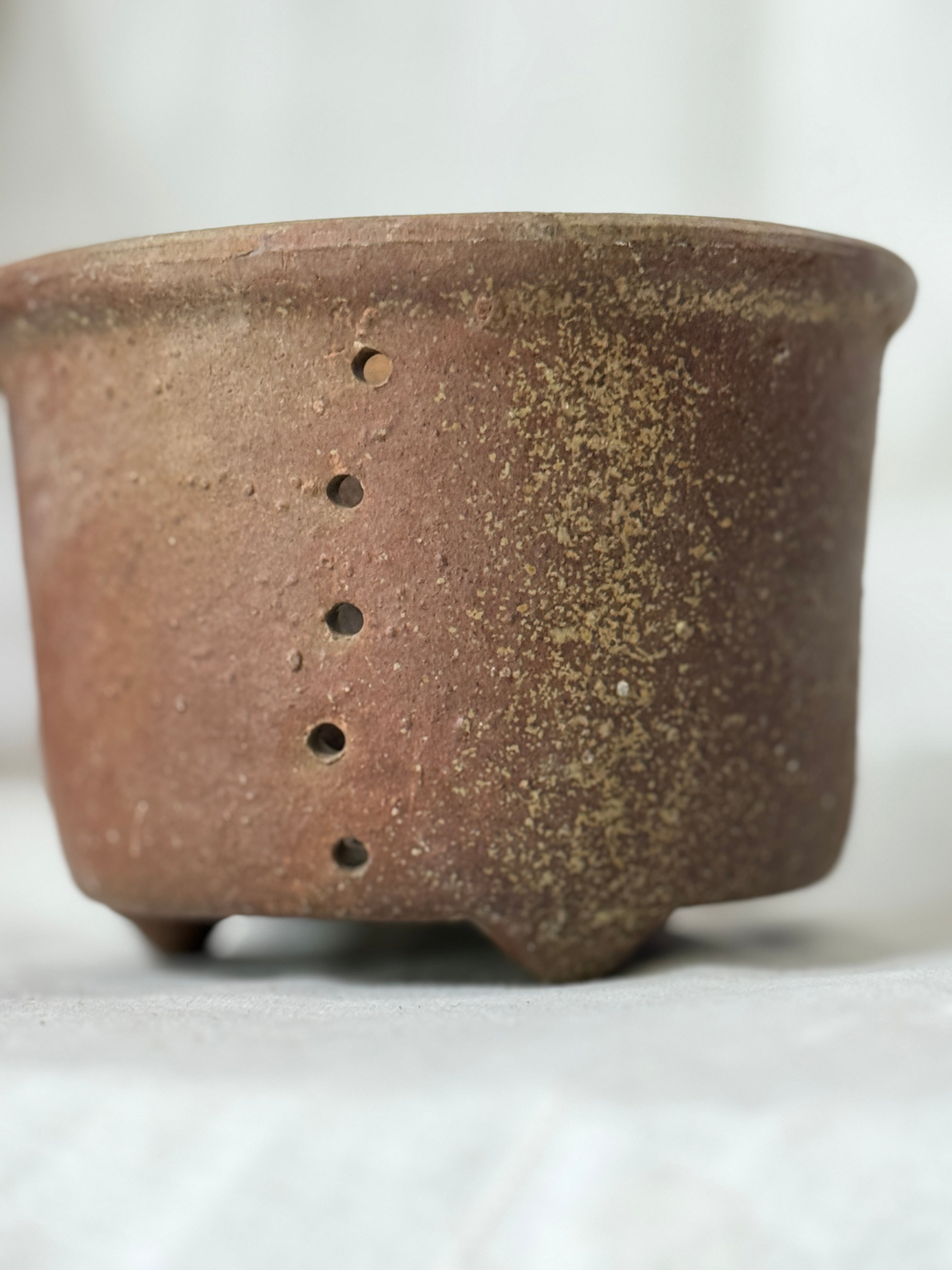
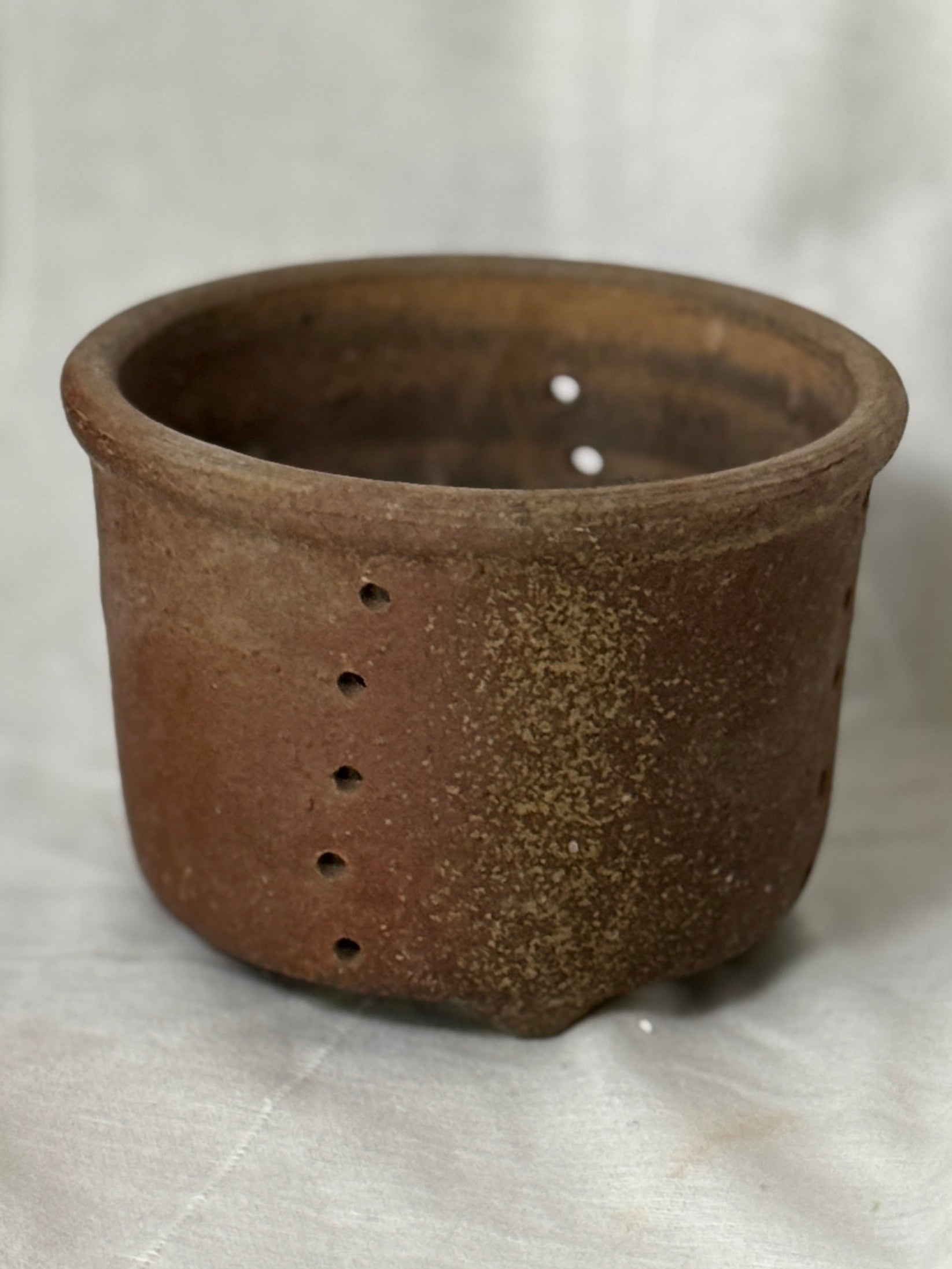
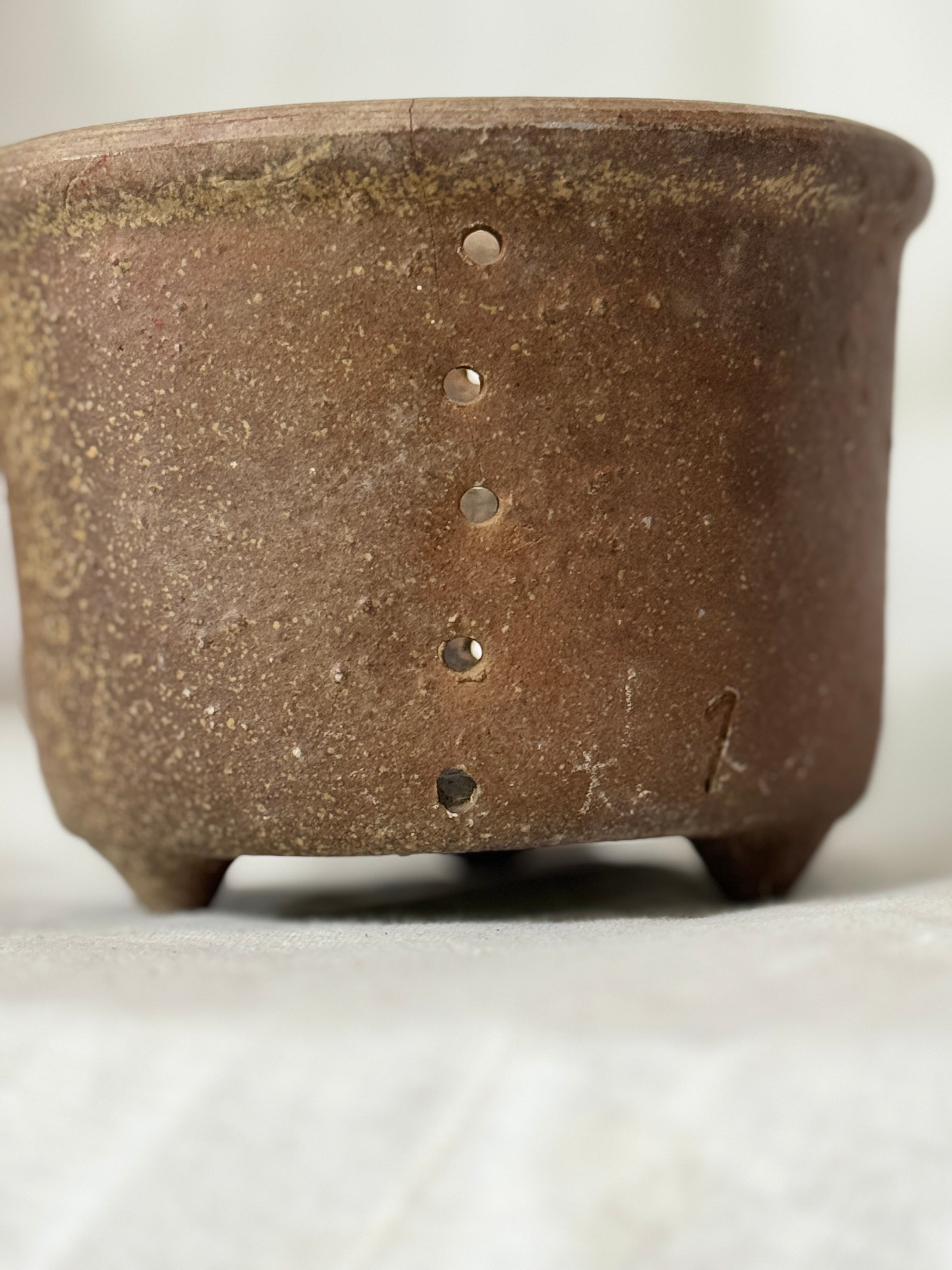
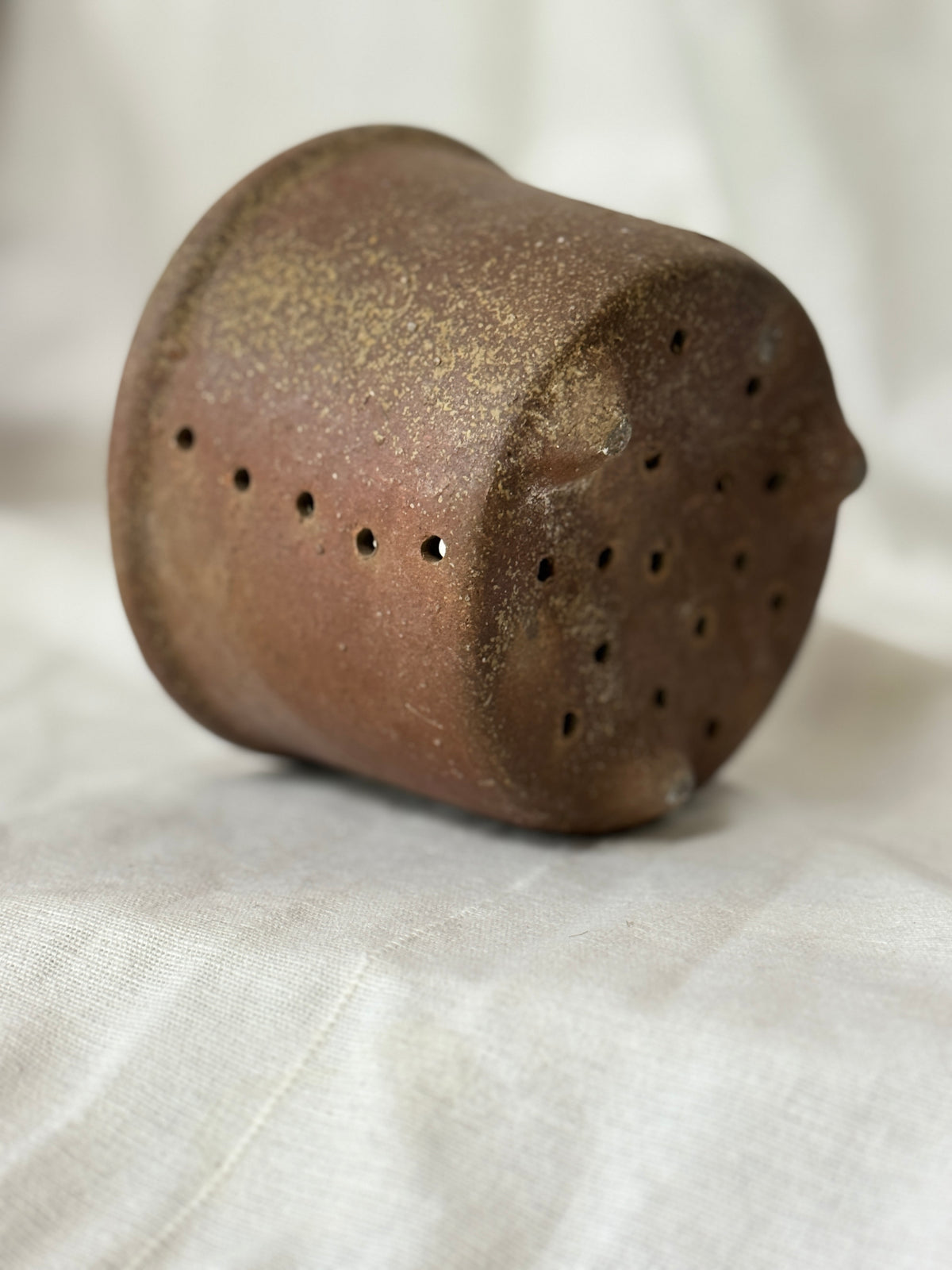
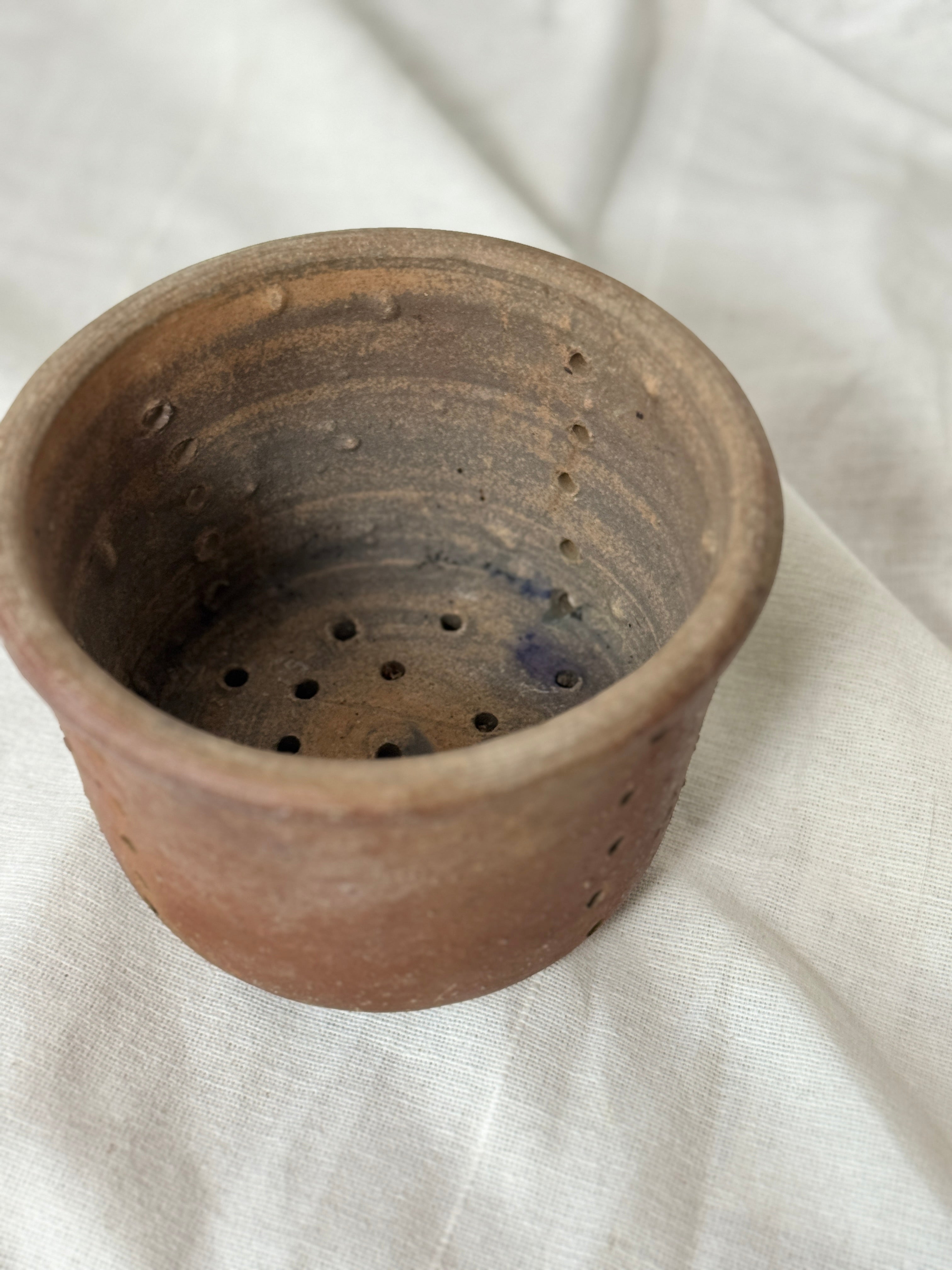
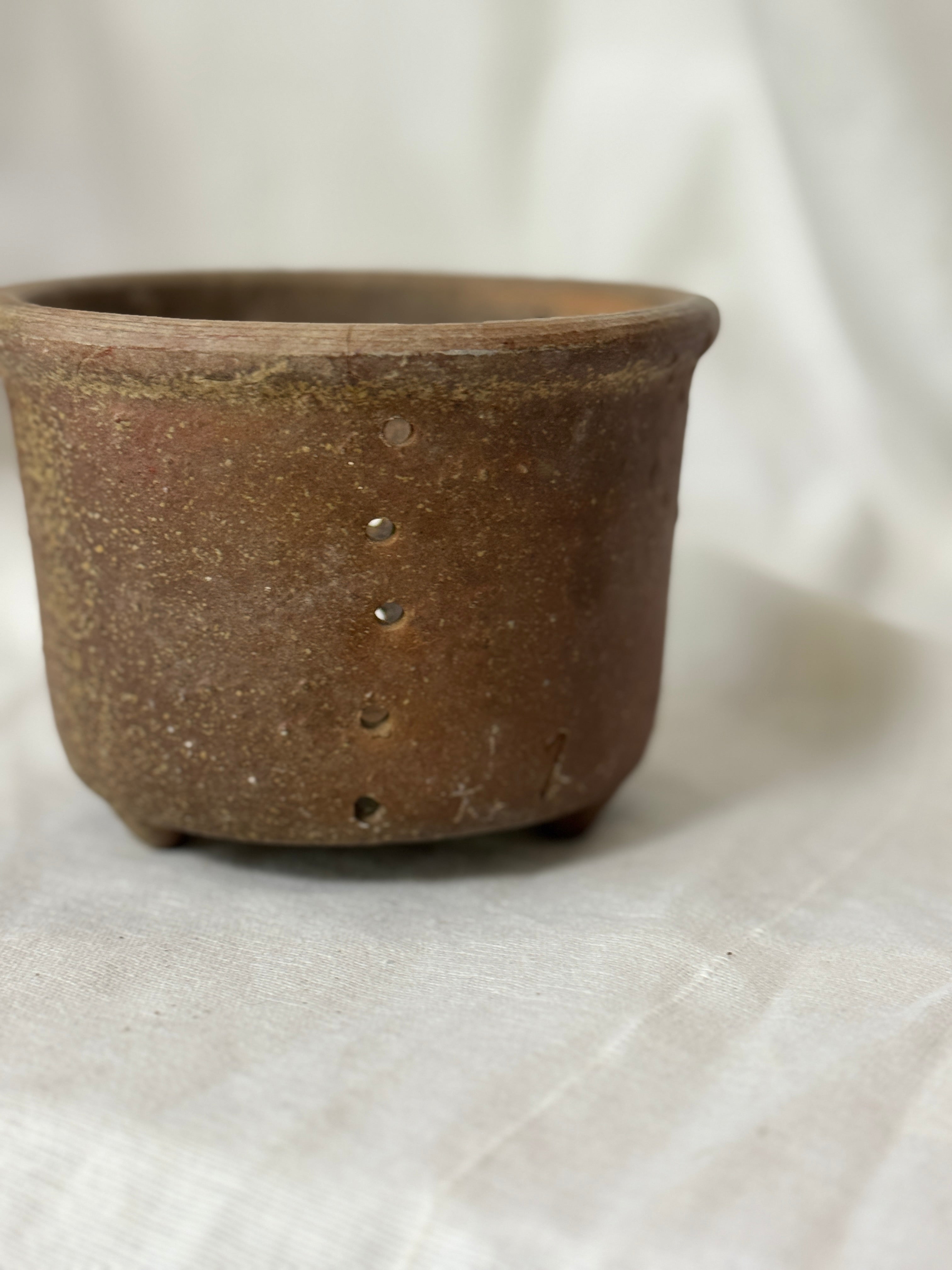
A hand-thrown faisselle in grès, the perforated pot used to drain fresh cheese. Columns of holes run down the walls and a dense field of them covers the base, and three small applied feet lift the pot so the whey can run clear underneath. The stoneware body is a warm reddish brown, unglazed and dense and smooth to the hand, with throwing rings still visible inside. A yellowish-green speckled deposit spreads across one side, kiln ash that settled on the pot during a wood firing. Faint incised marks near the base no longer read. Wear consistent with age and use, sold as found.
Historical Context
Faisselles were standard equipment in the French farmhouse dairy. Fresh curd went in, the whey drained out through the walls and base, and what stayed behind was fromage frais or the start of a firmer cheese. Every region made them, thrown plain and left unglazed. The word comes from the same root as the modern faisselle cheese still sold in its plastic strainer today.
Styling Ideas
The holes are what make it, so give it light. Set on a shelf or a windowsill it reads as sculpture, and it works as a cachepot with a small plant dropped inside, or holding garlic and shallots on a counter where the air can move through.
Choose options