
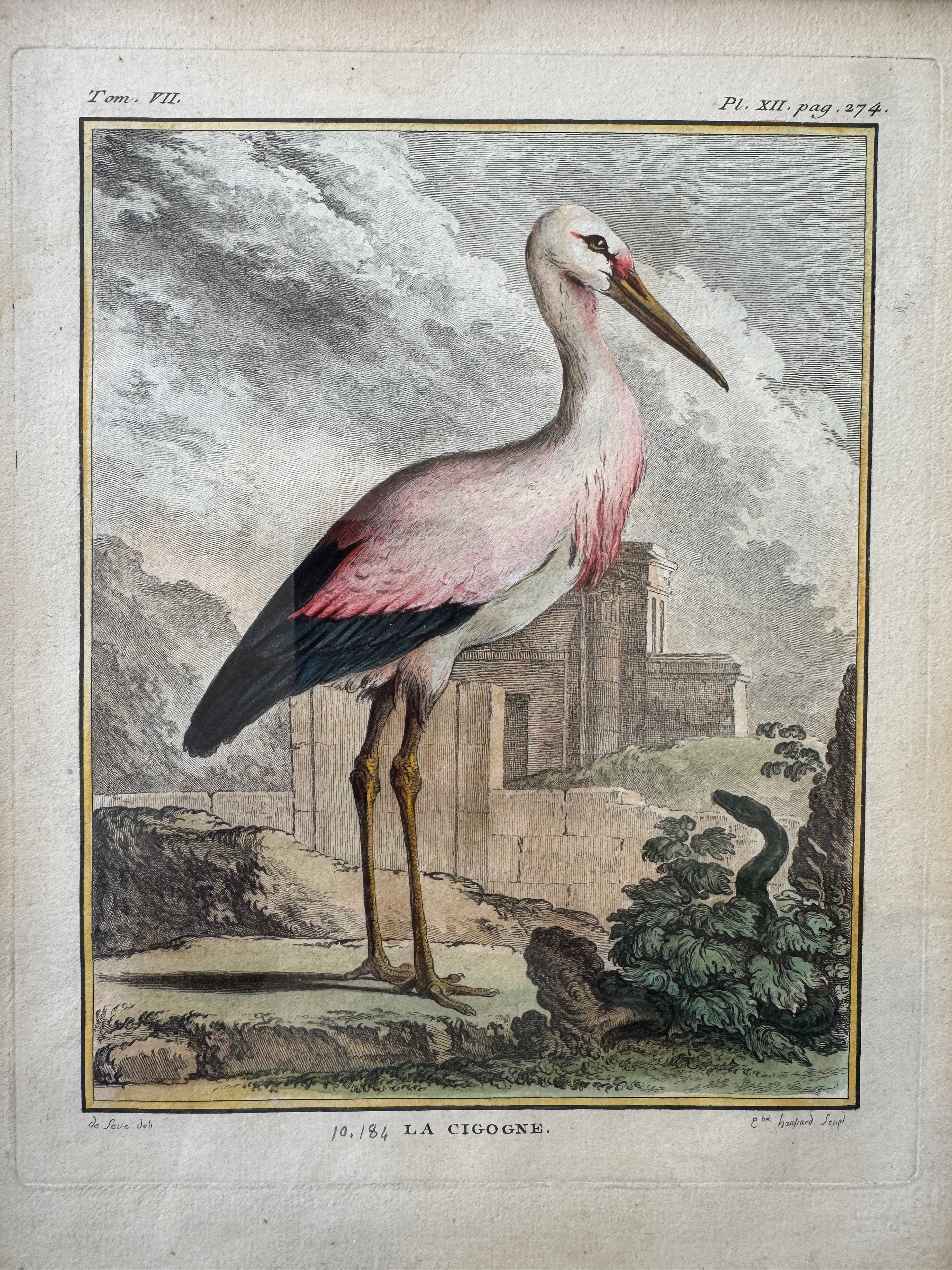

Antique French de Buffon Bird Engraving, La Cigogne, Hand Colored, 18th Century
Period
1770 to 1783, French
Size
9¼ x 11½ inches, framed
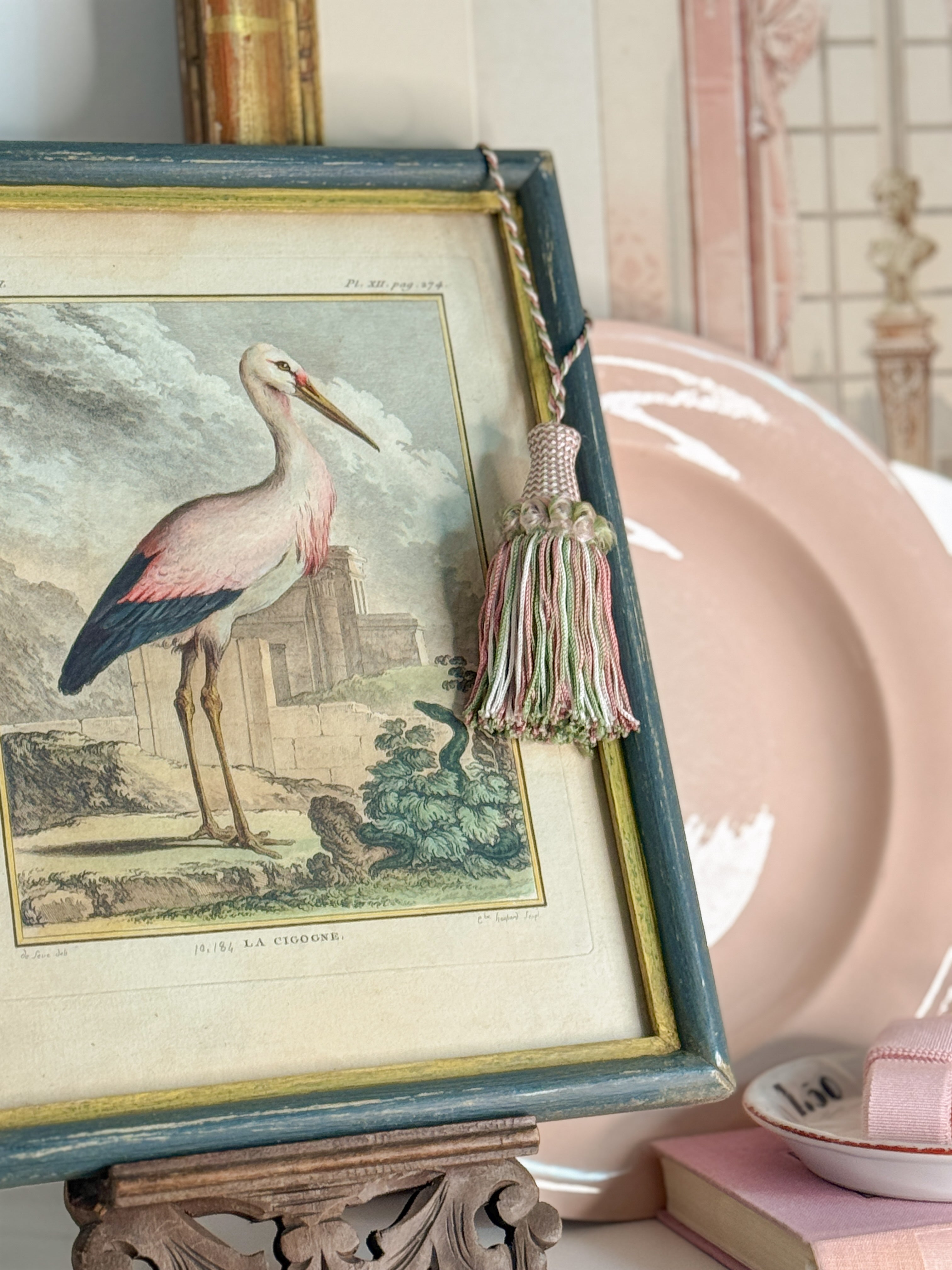
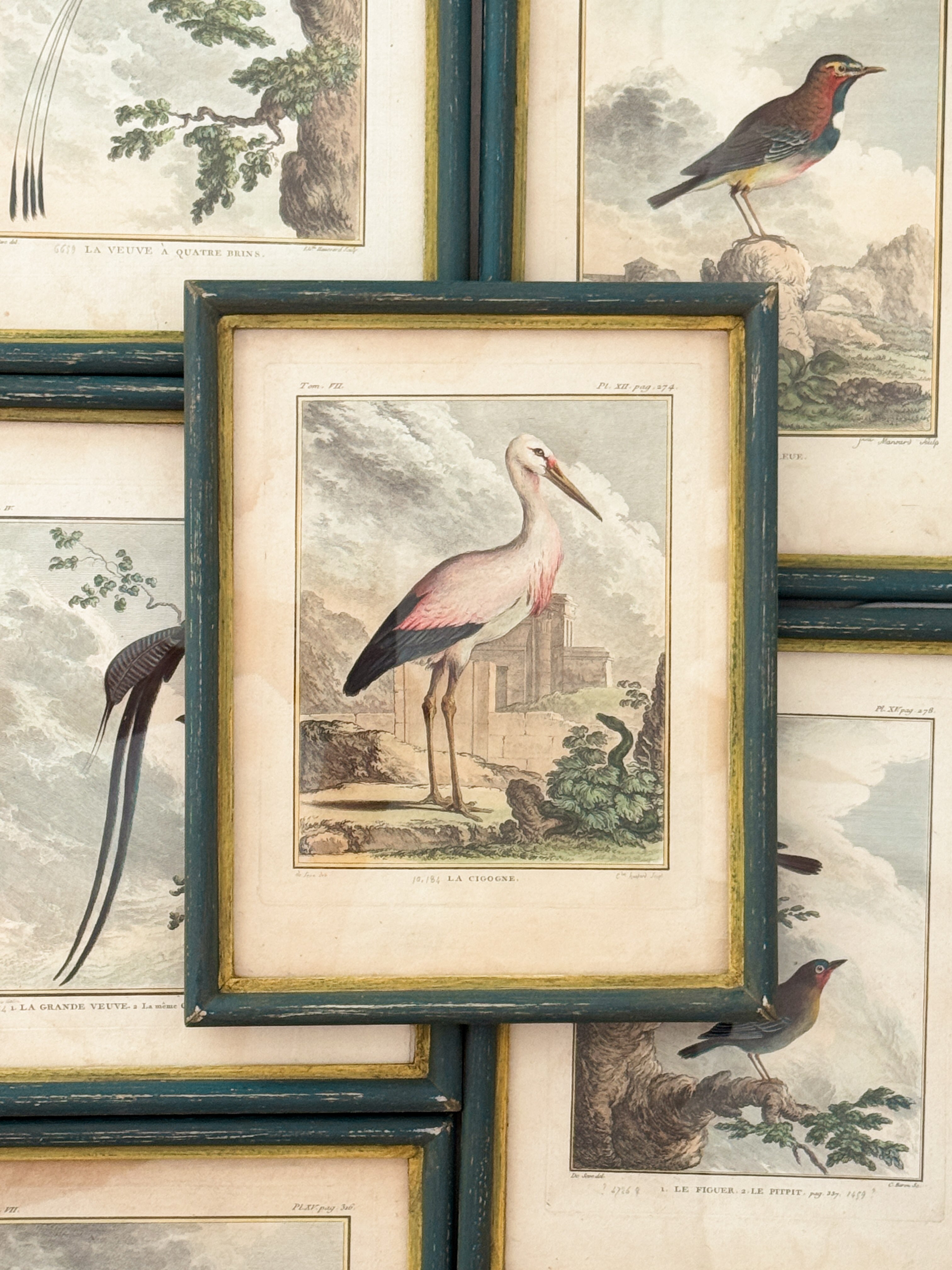
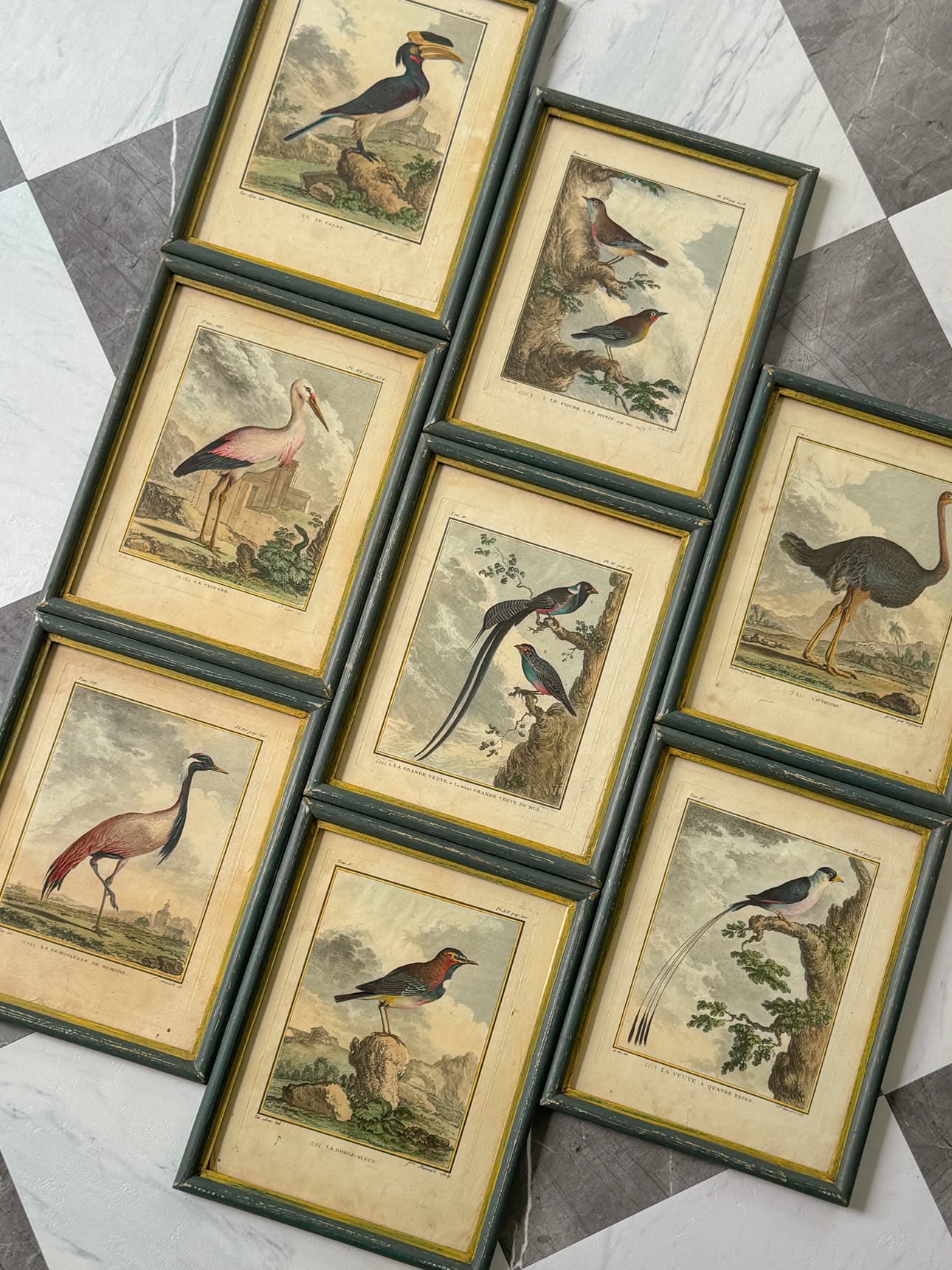
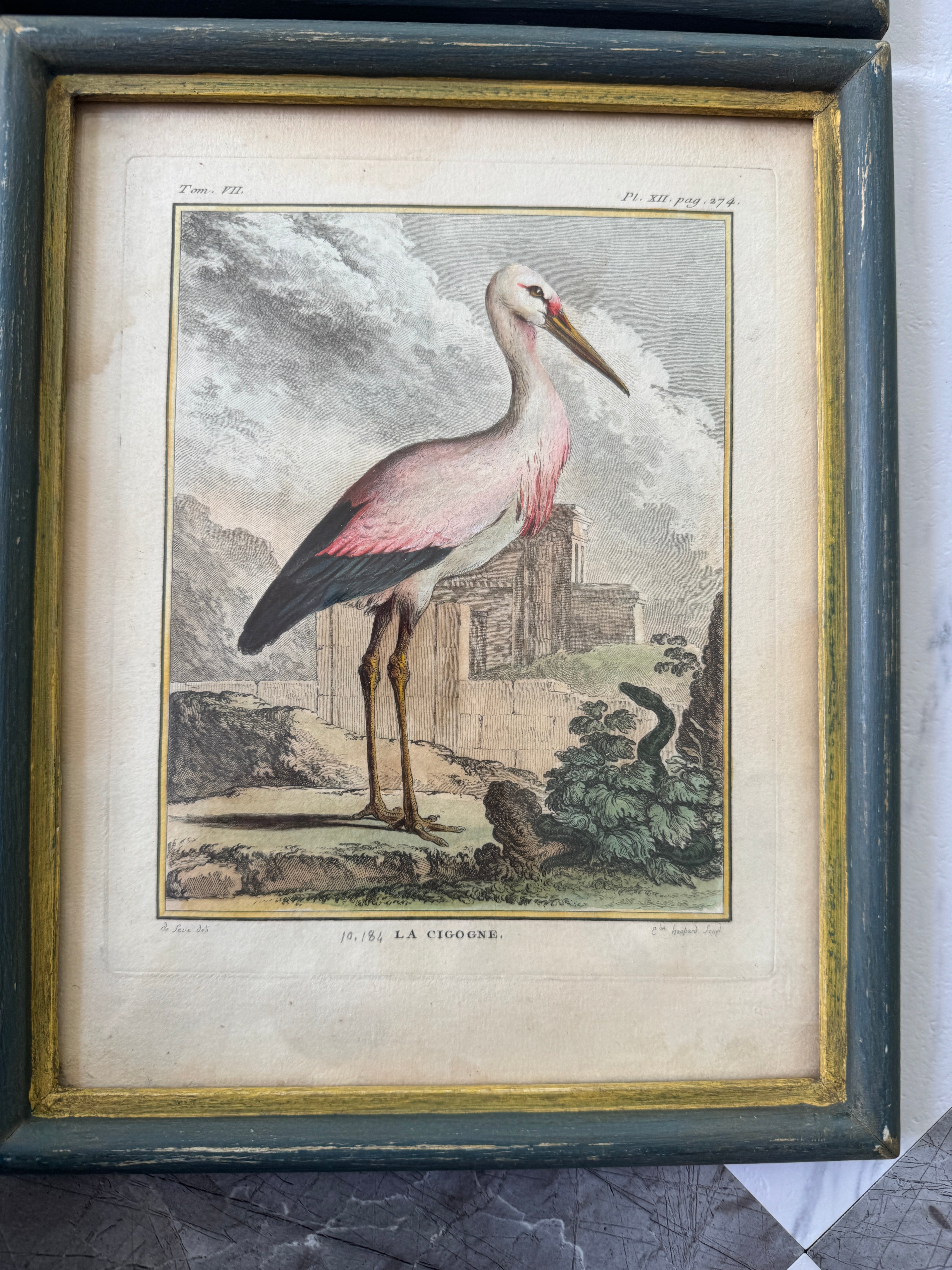
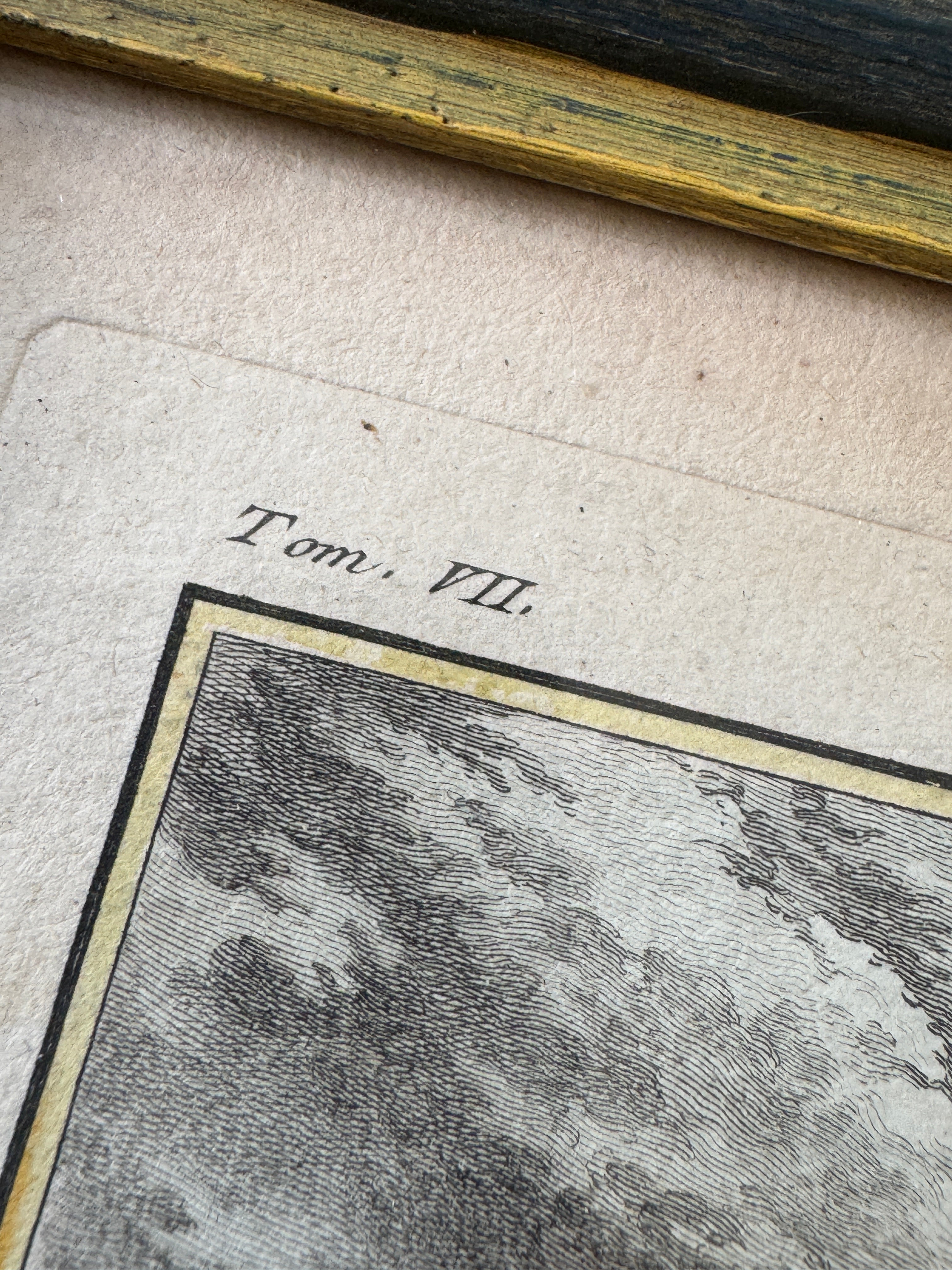
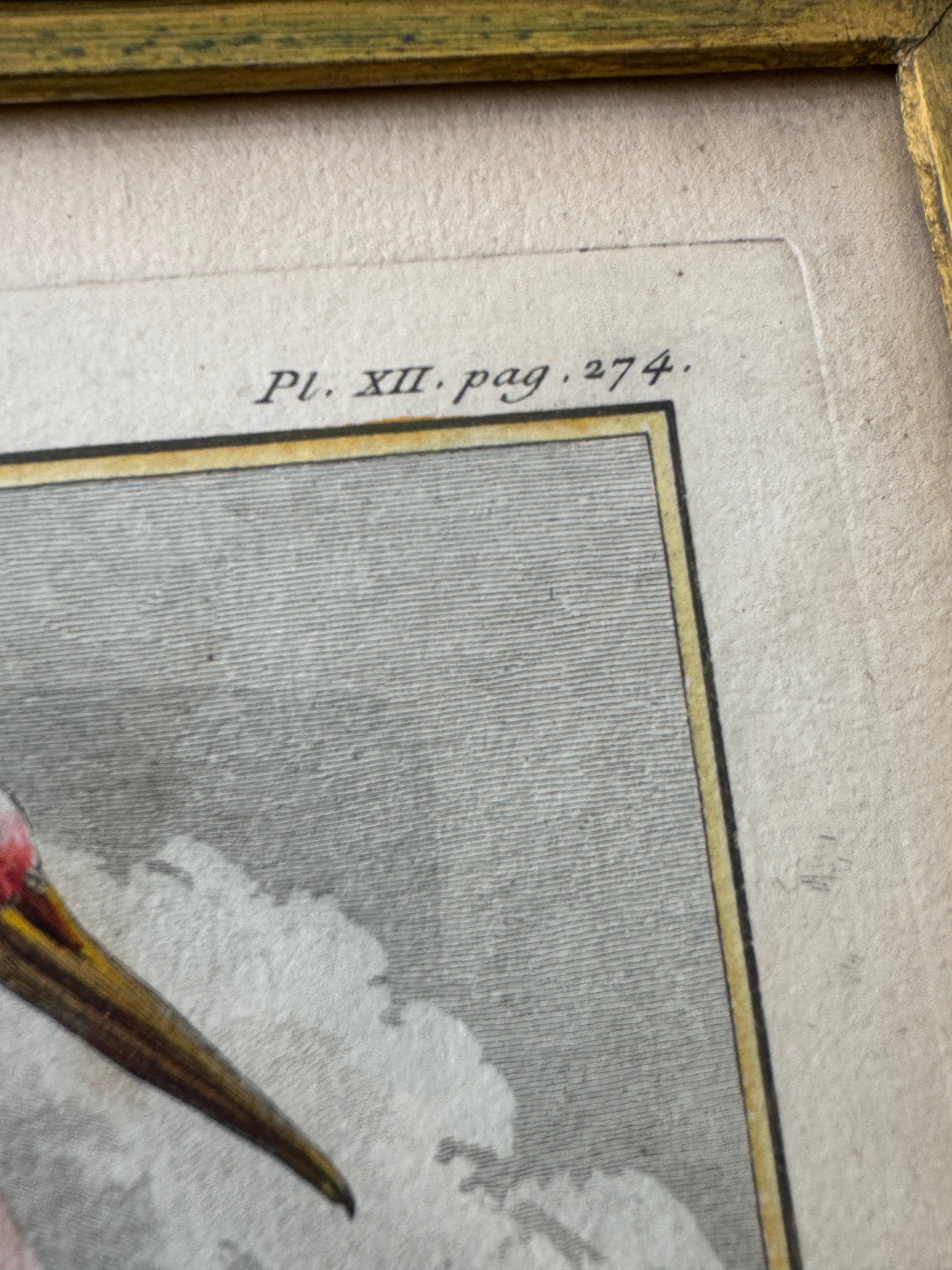
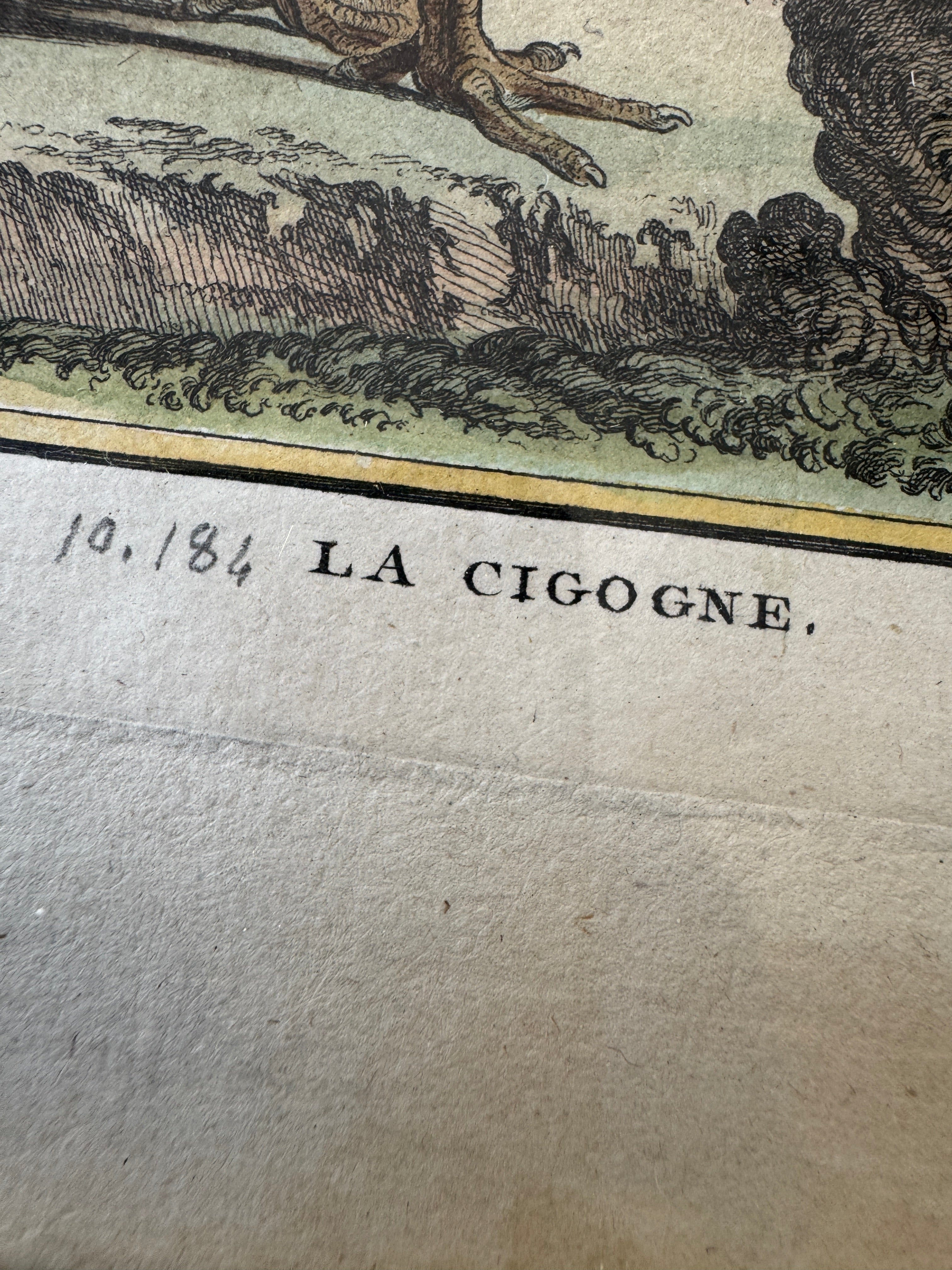
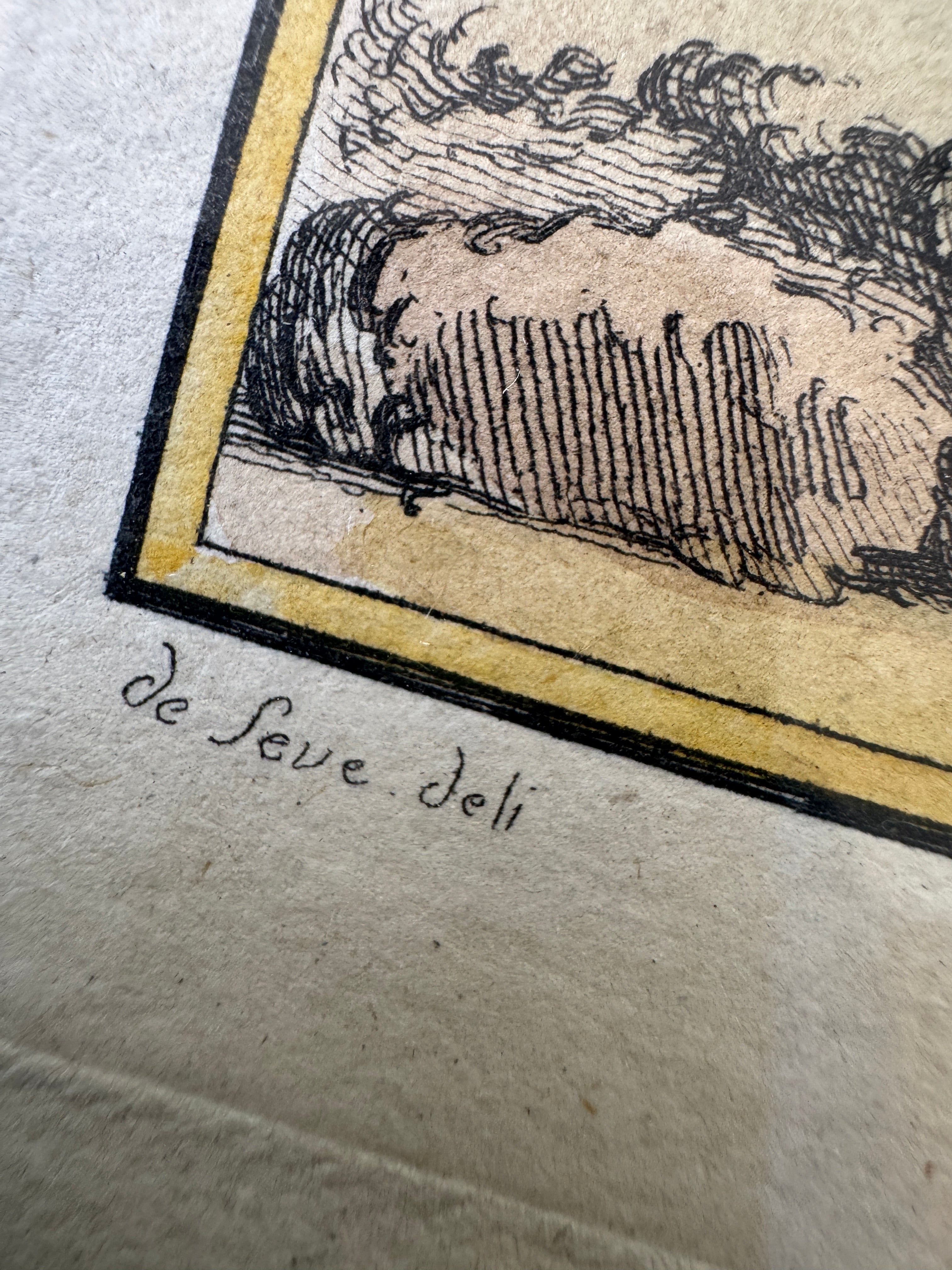
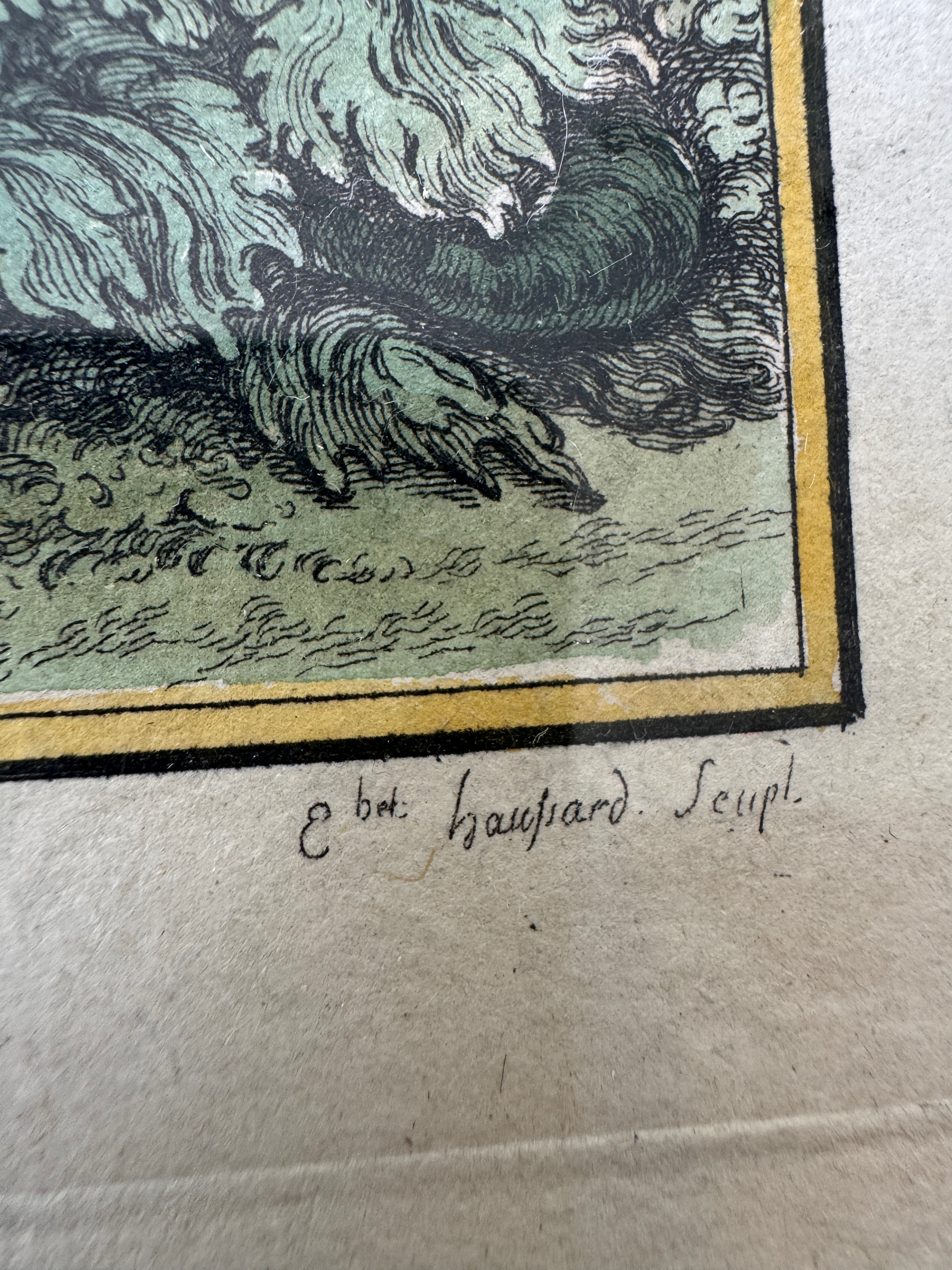
A hand colored copperplate engraving of the white stork, from Buffon's Histoire naturelle, drawn by Jacques de Sève and engraved by Haussard. Marked pg. 184, pl. 10.
The bird stands in profile with the weight on one leg, the long red bill and legs carried in a warm coral against the white of the body and the black of the wing. Behind it a classical ruin stands among trees, with a serpent worked into the foreground at the right. Thin translucent washes over the engraved line let the hatching that models the wing show through.
The paper has warmed to ivory with scattered foxing through the margins. The frame is painted blue gray with a yellow ochre inner fillet, distressed to bare wood at the corners and along the rails. Sold as found.
Historical Context
The white stork is a long distance migrant. European birds winter in sub-Saharan Africa and cross at Gibraltar or the Bosphorus, riding thermals rather than flapping, which is why the routes bunch at the narrow crossings. The species nests on roofs and chimneys and has been protected by custom in Alsace and across northern Europe for centuries. The serpent at its feet is conventional, since the stork was long credited with clearing snakes from the fields.
Georges-Louis Leclerc, comte de Buffon, ran the Jardin du Roi in Paris and gave the rest of his life to the Histoire naturelle, thirty-six volumes published between 1749 and his death in 1788, with eight more added afterward by his successors. He wrote it in French and aimed it at any educated reader, and the first edition sold out in six weeks and went on into English, German, Swedish, Italian and Russian. The nine volumes on birds were written with Guéneau de Montbeillard, and Jacques de Sève drew close to two thousand plates across the whole work.
Choose options