
Green Transferware Compotier, Footed
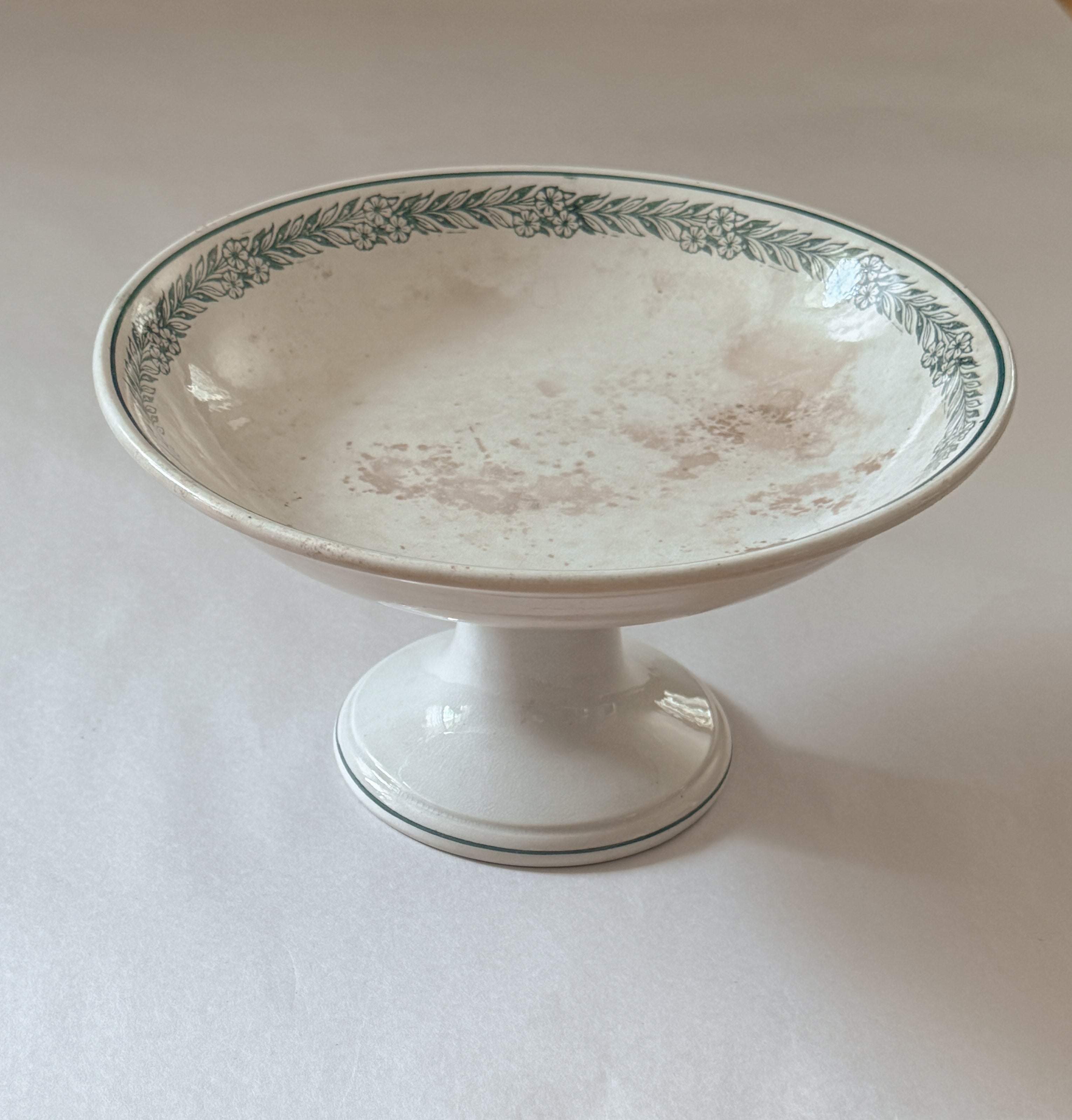
Antique French Compotier, Green Transferware, Footed Fruit Stand
Period
Circa 1900, French
Size
9¼ inches across, 5¼ inches tall, 4½ inch foot
A compotier in green transferware. The body is faïence fine, transfer printed on white under a thin fused glaze.
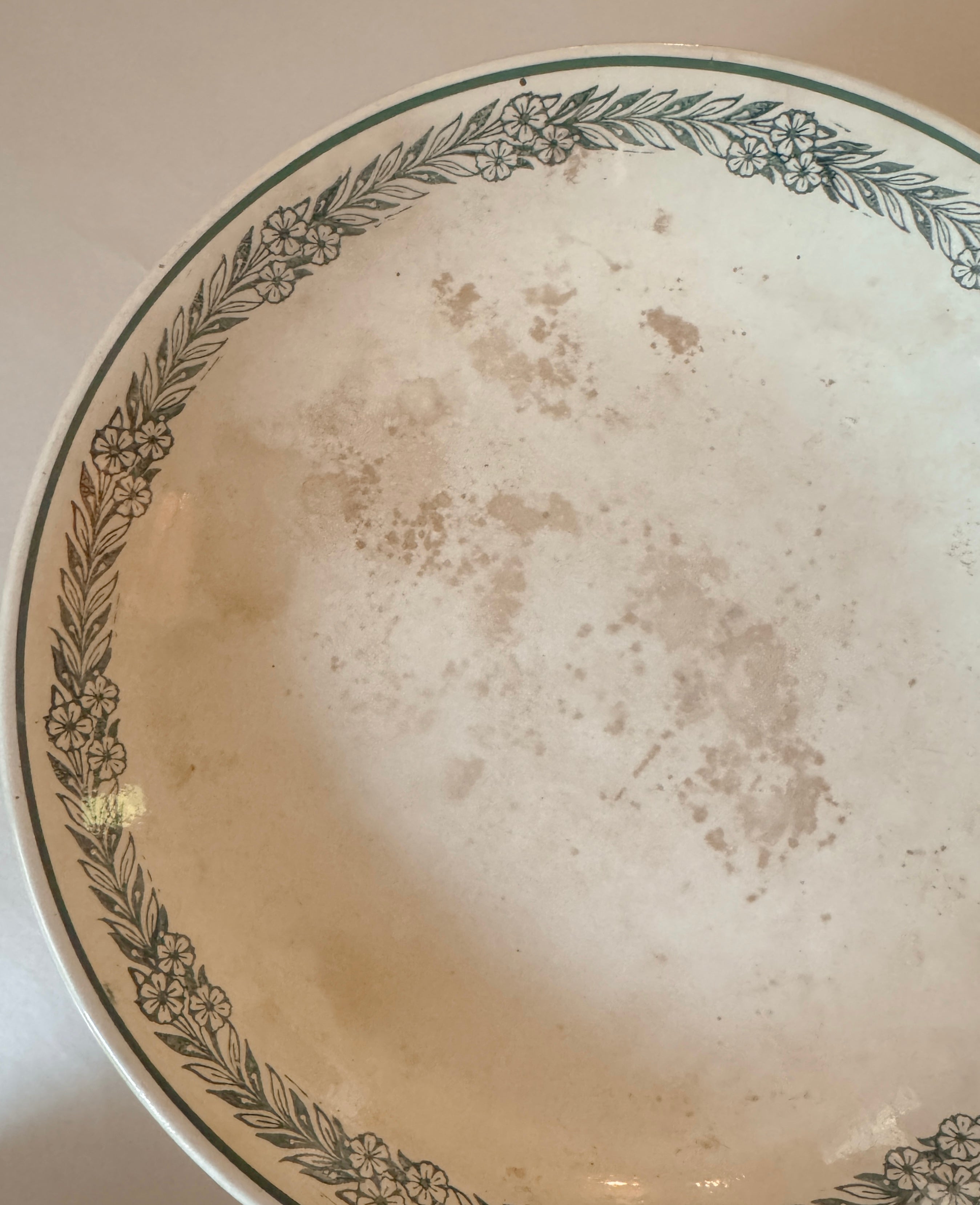
Bowl and foot were thrown separately and joined while the clay was still soft, and the join reads as a slight ridge where the bowl meets the stem. A green line at the base of the foot answers the green line at the rim. The border is a flowering branch, one continuous stem with long lanceolate leaves and clusters of flat five-petal blossoms sprouting along it.
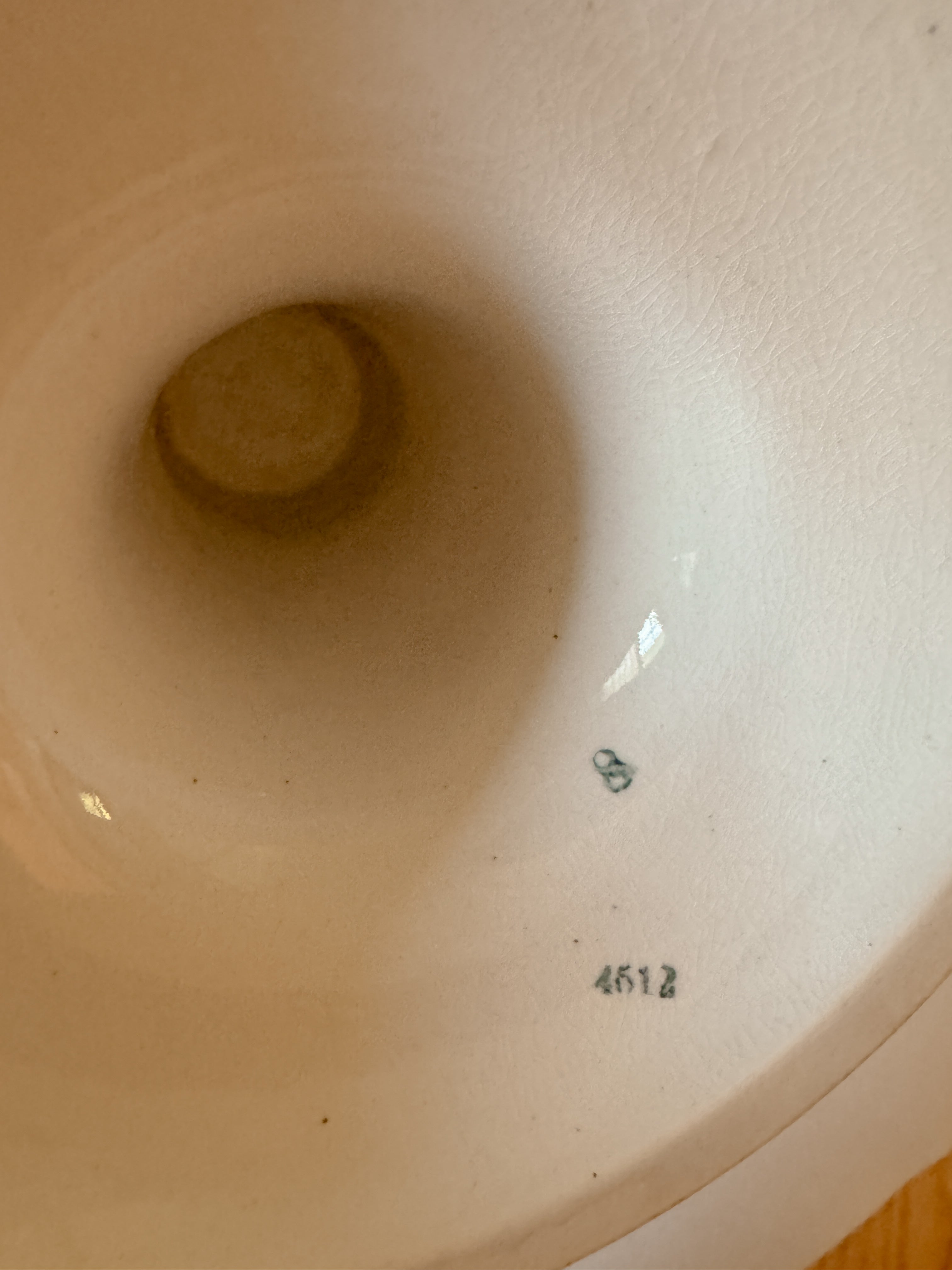
Unmarked. Heavy tea-brown staining across the well, dense toward the center, with fine crazing throughout.
Historical Context
The compotier was a fixture of the French dessert service, and its point is height: fruit raised above the table, on display and clear of everything else. The border is a garland, an old device given a new form at the turn of the century. Where the neoclassical version used laurel, tight and symmetrical, this one carries a flowering branch.
Styling Ideas
Use it on a kitchen island with fruit, or near a prep area with onions, garlic and shallots. In a bathroom it can hold soaps or hand towels, and on a vanity it can hold accessories as a catch-all. It can also be styled as a riser in a vignette, holding books or a sculptural piece.
Choose options