


White Glazed Confit Crock
Antique European Earthenware Confit or Storage Crock, Southern France or Italy, 19th Century
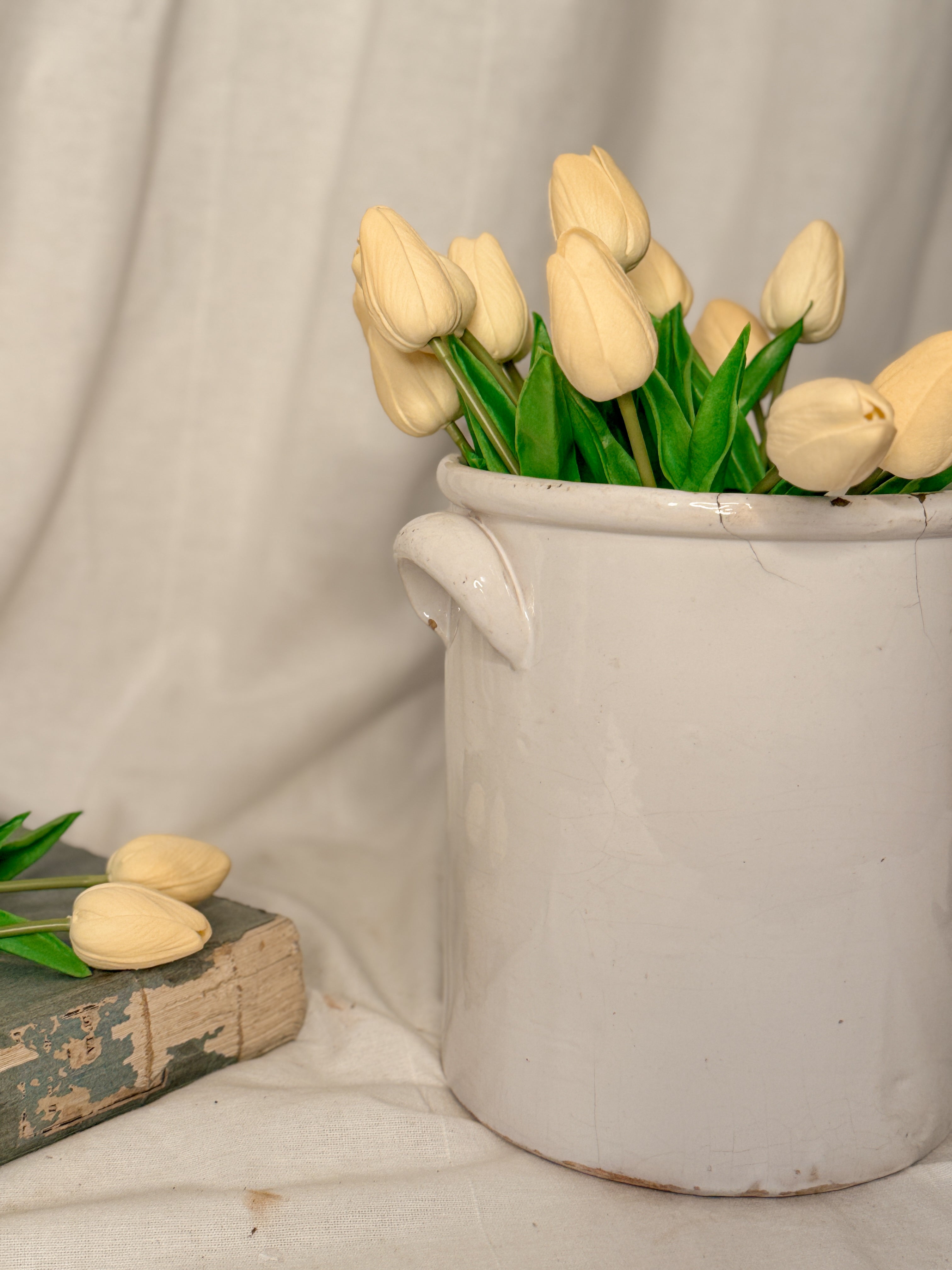
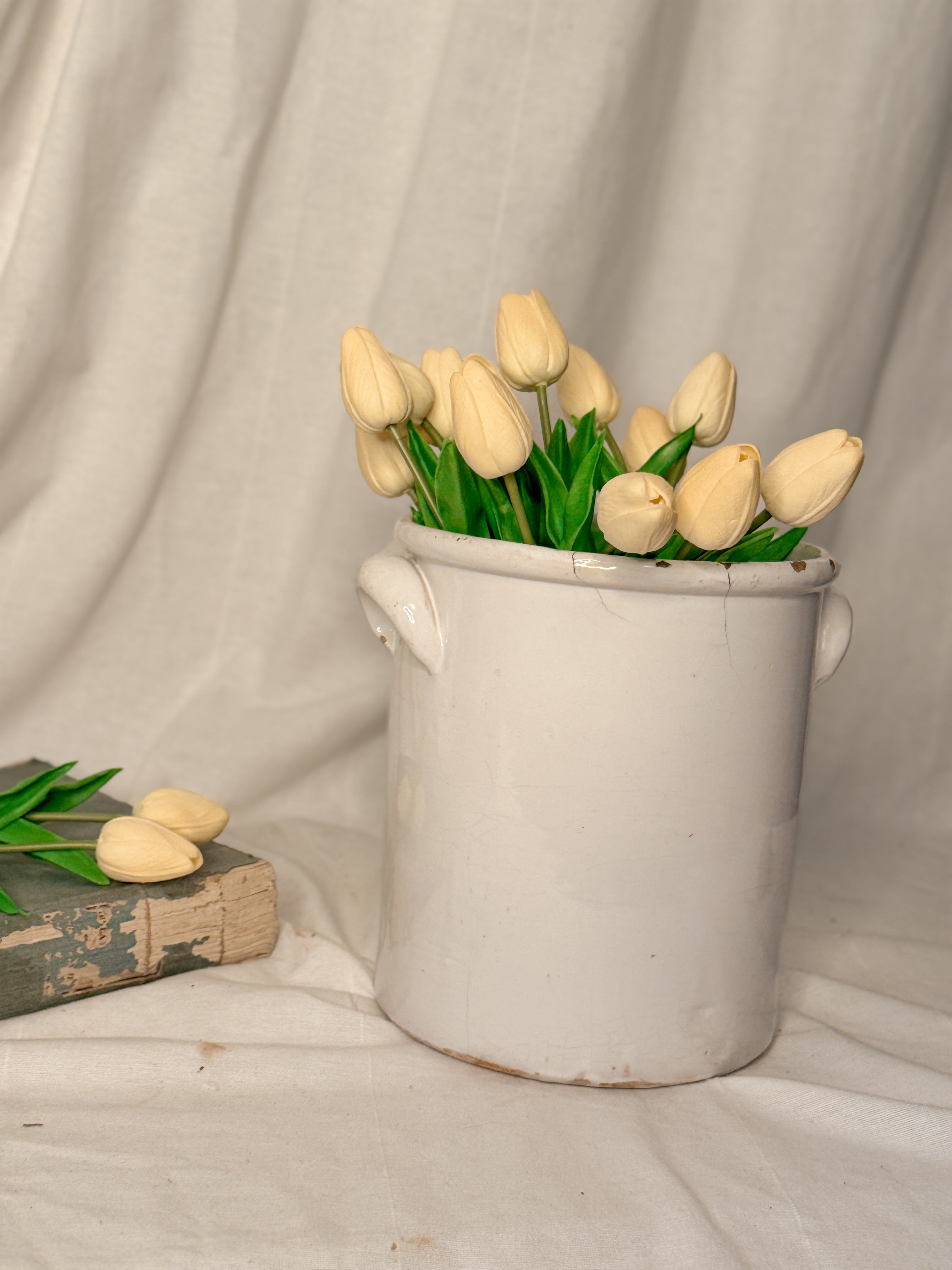
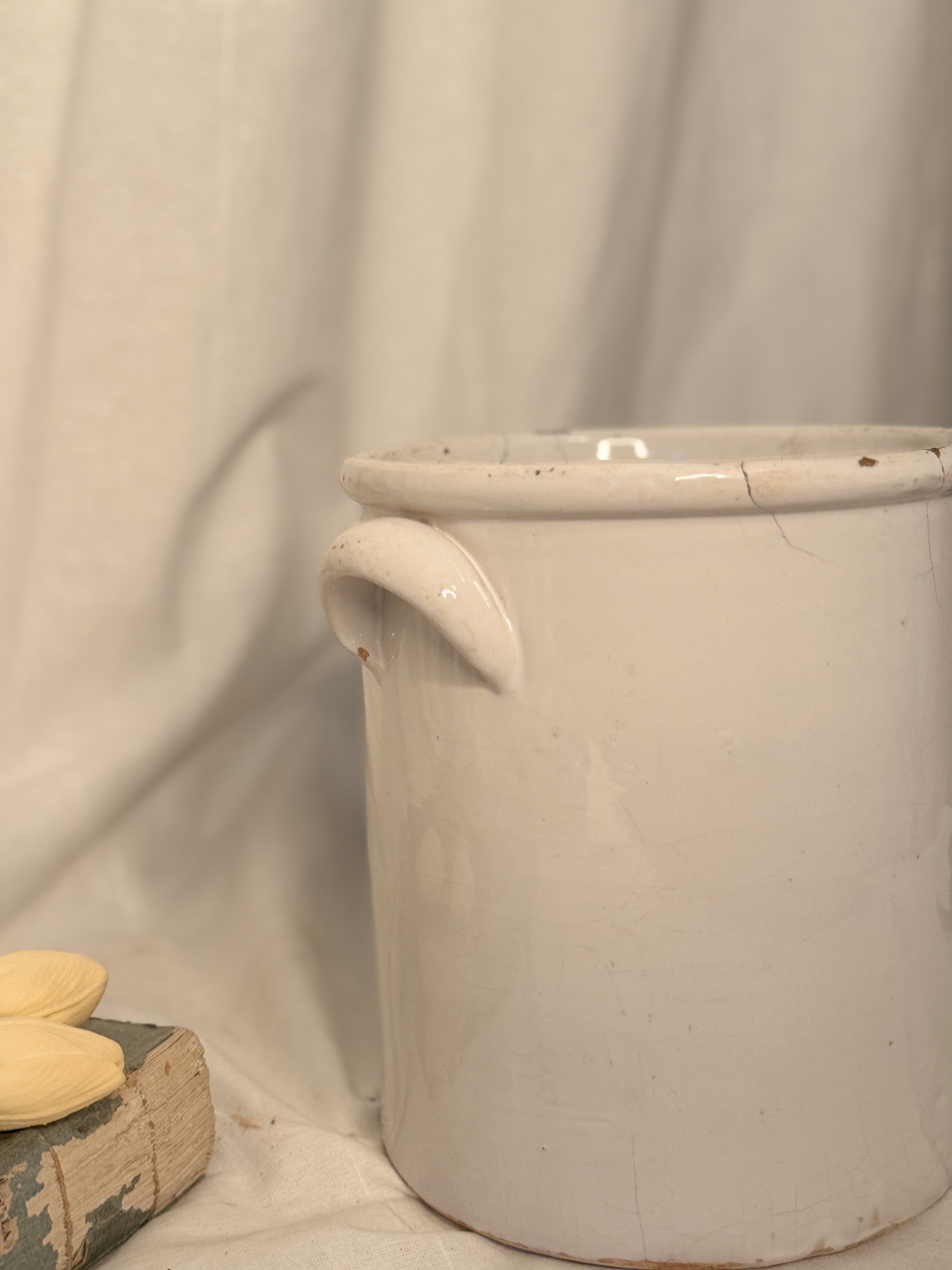
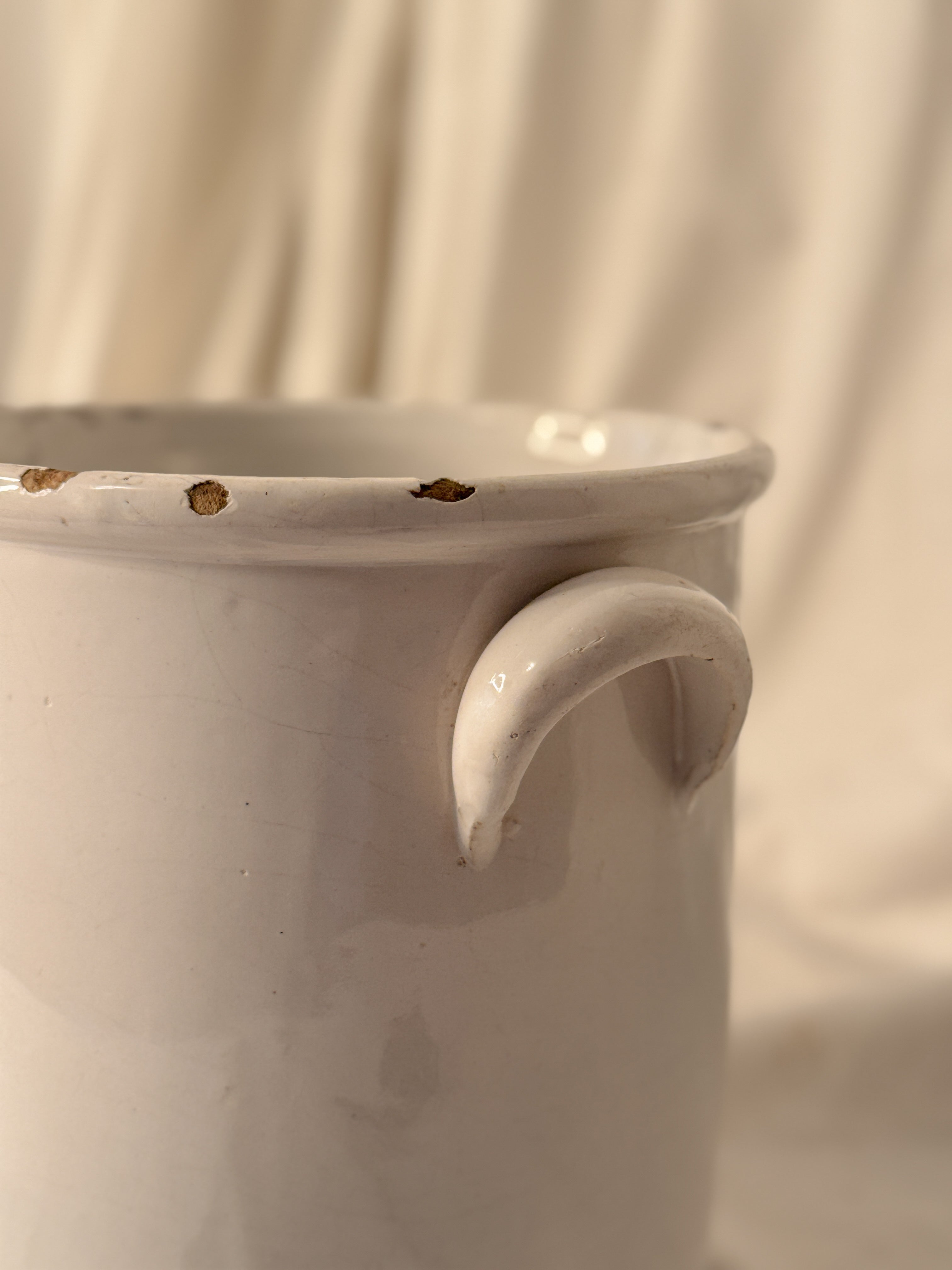
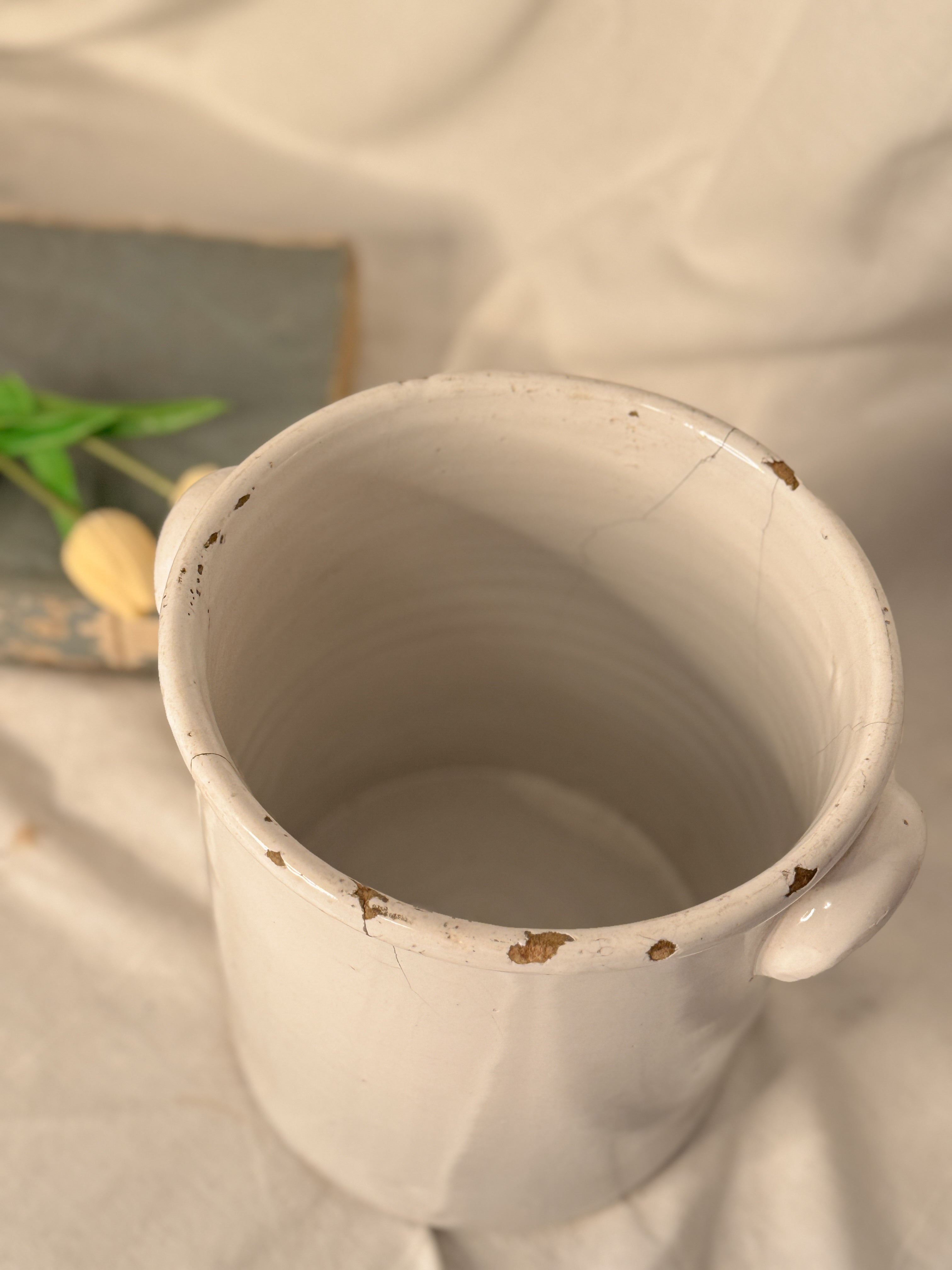
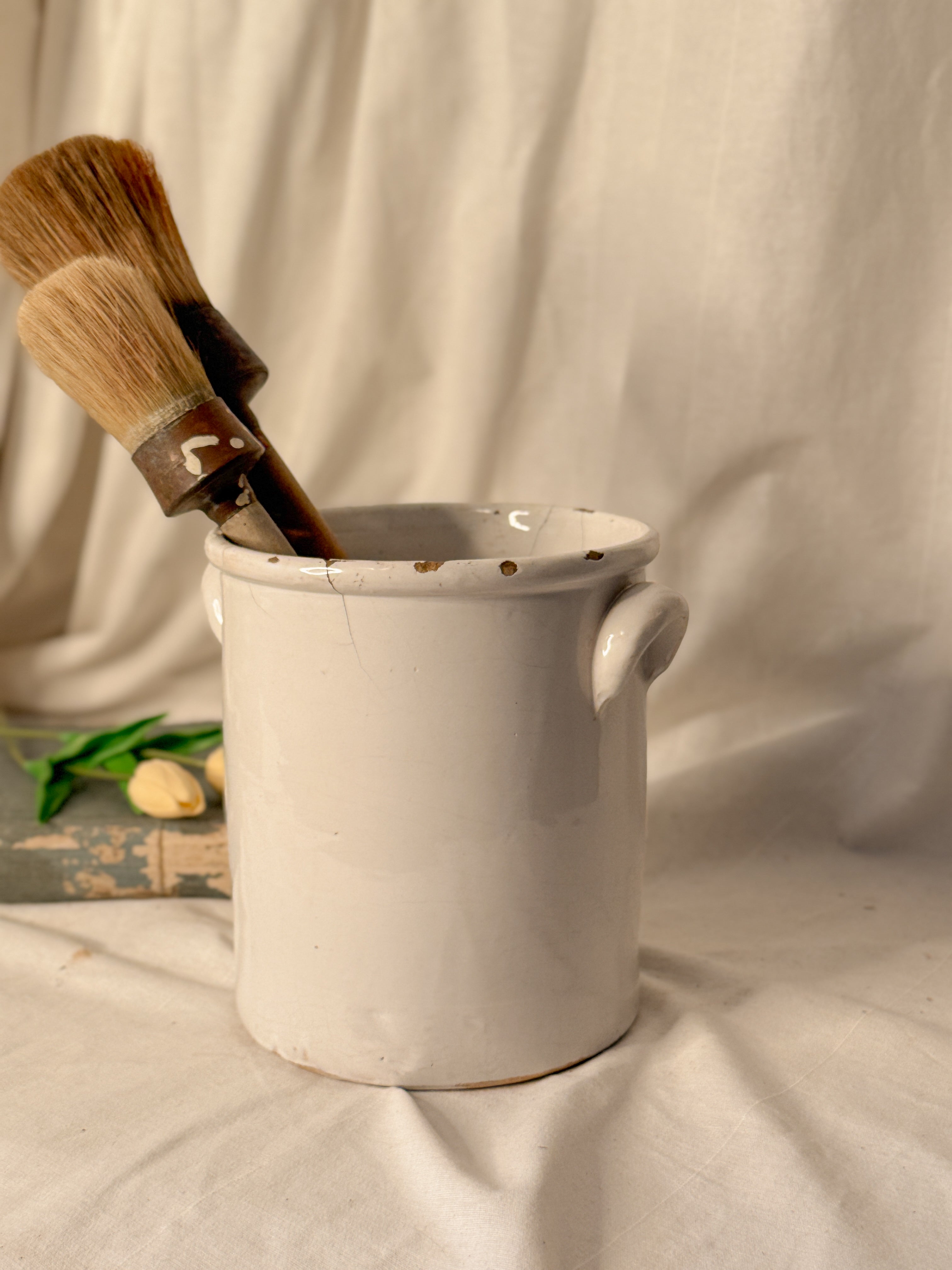
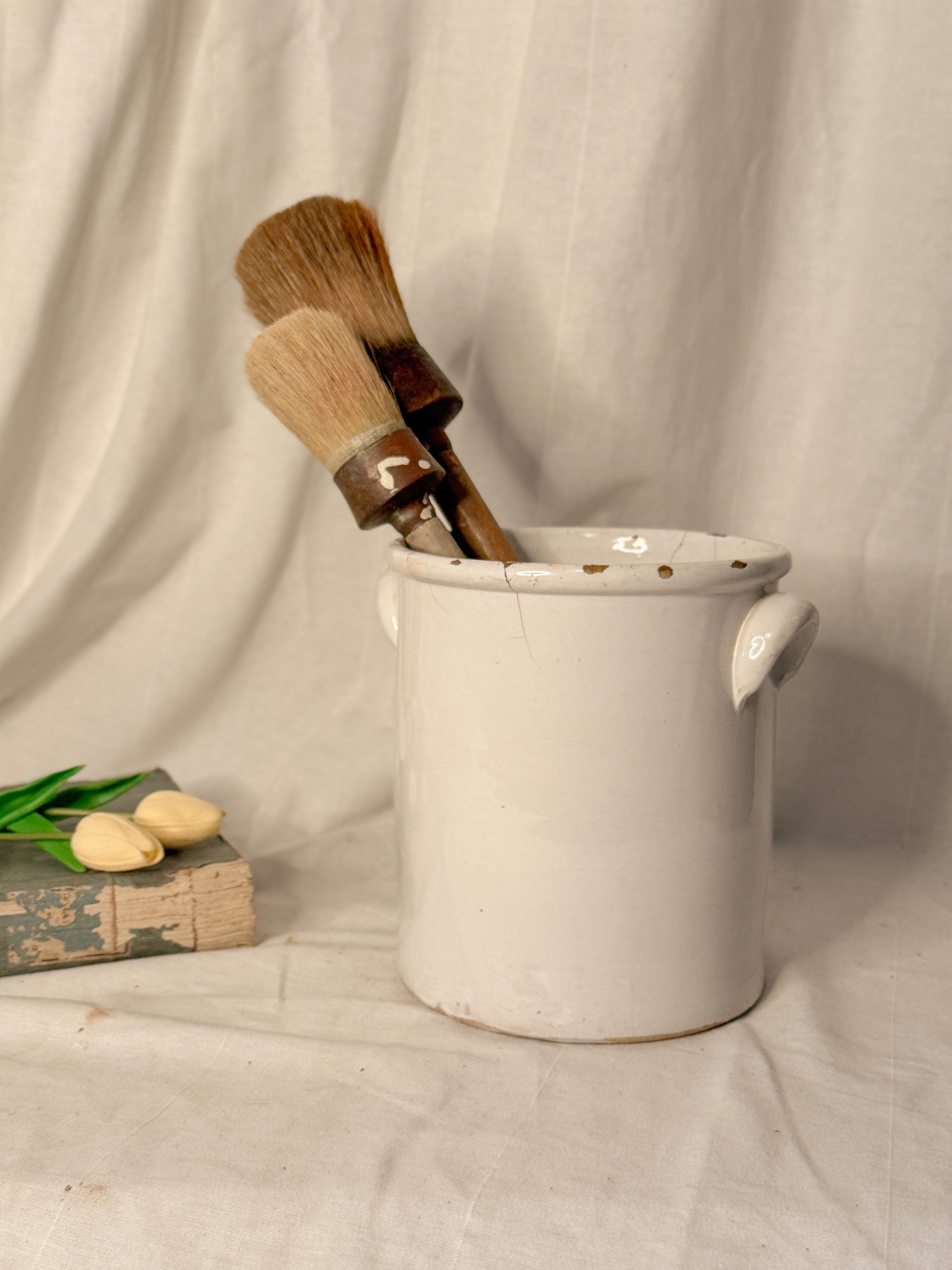
A heavy, hand-thrown earthenware crock from the 19th century, with a buff clay body covered in a soft white glaze that has crazed finely across the surface. Two small applied handles, called oreilles, sit just below the rolled rim.
The sides are glazed all the way down while the base is left bare, unlike the yellow southern confit pots that are glazed halfway and meant to be buried to their waterline in a cool cellar. This crock was stored above ground instead, on a shelf or worktable in a pantry, holding rendered fat, cheese, or preserved vegetables sealed against the air.
The rim has small chips and there are hairlines descending from the rim. The crazing throughout is consistent with age and use.
Dimensions: 8⅞ inches tall, 7¾ inches across the mouth, 9¼ inches wide at the handles.
Styling: display it in a kitchen next to a stack of cookbooks, or on an open shelf where the white glaze catches the light. It also works as a vessel for a loose arrangement of roses or ranunculus, or as a counter crock for wooden utensils.
Choose options